Our Science
Galectin-3: The Pleiotropic Conductor of Chronic Systemic Disease
Galectin-3
Low-Complexity Domain : A Lasker Award-Winning Insight into 2025's Basic Medical Research
For decades, scientists ignored parts of proteins that didn't have a rigid, fixed shape, calling them "junk" or "disordered." The 2025 Lasker Award—one of the highest honors in medicine—was awarded to researchers who proved the opposite: these flexible regions, called Low-Complexity Domains (LCDs), are actually the "control centers" of cellular life.
How this connects to Galectin-3 (Gal-3)?
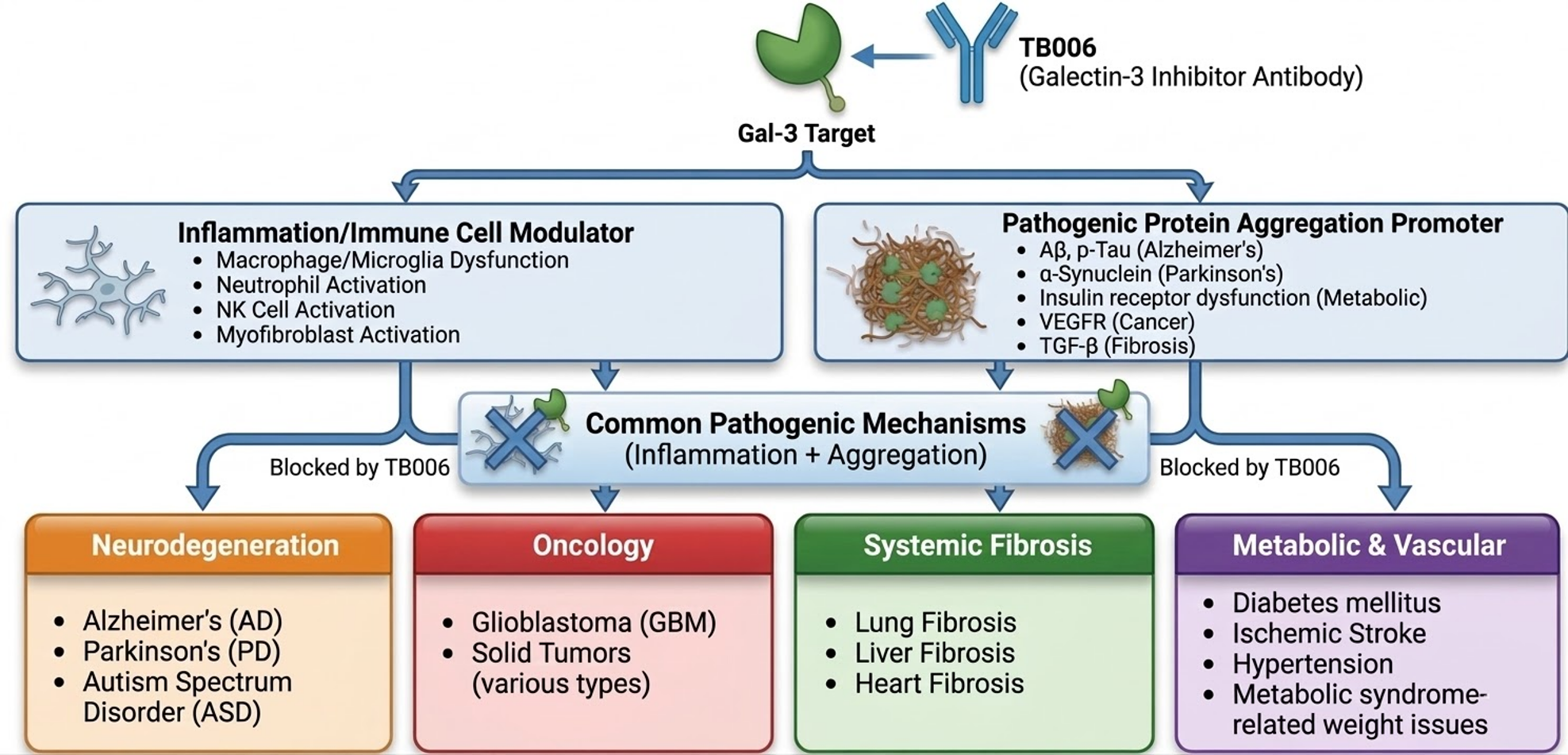
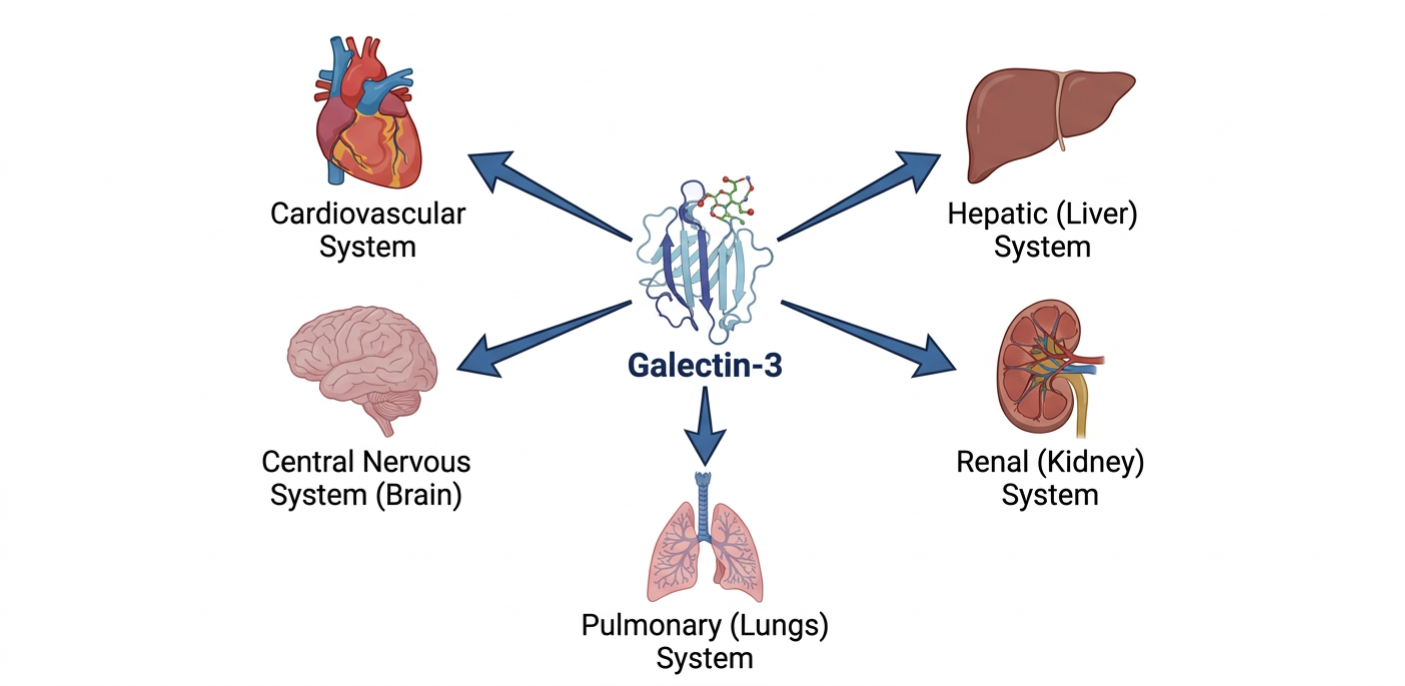
Galectin-3 is a prime example of a protein that uses an LCD to do its job. While the Lasker Award celebrates the discovery of LCDs as a whole, this science explains exactly why Gal-3 is such a powerful "common denominator" in so many diseases:
The "Sticky String" Theory: Think of most proteins like rigid Lego bricks, but an LCD is like a long, sticky string. Galectin-3 uses its "sticky string" (its LCD) to grab onto other proteins and clump them together.
A Universal Language of Damage: Whether it’s in your heart or your liver, your body responds to injury in similar ways: inflammation (swelling) and fibrosis (scarring). Gal-3 is the primary messenger that tells the body to keep producing scar tissue long after it should have stopped.
The Aging Connection: Gal-3 helps spread "senescence"—a state where old cells stop working but refuse to die, instead leaking "toxic" signals to healthy neighbors. By driving this process, Gal-3 acts as a common driver for many diseases we typically associate with getting older.
Because these mechanisms—inflammation, fibrosis, and senescence—are the bedrock of nearly all age-related chronic diseases, Galectin-3’s LCD serves as a high-leverage therapeutic target.
Its recognition by the 2025 Lasker Award underscores that by inhibiting this single protein, we may unlock treatments for a vast spectrum of seemingly unrelated indications, from heart failure to neurodegeneration.