Galectin-3 and Obesity
Obesity, Inflammation, and Metabolic Health
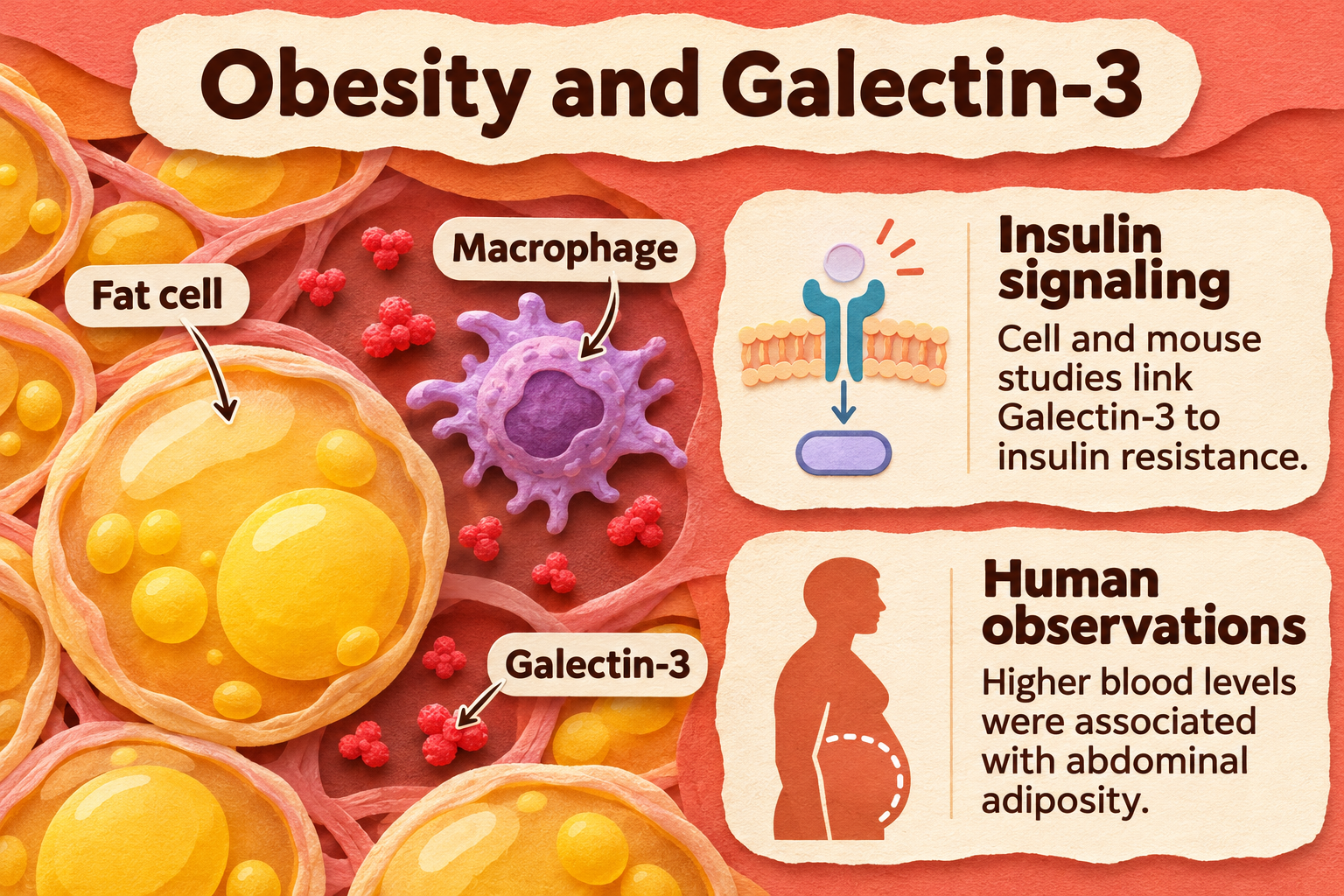
Obesity involves excess adiposity and can be accompanied by changes in inflammation and glucose regulation. Researchers study Galectin-3 (Gal-3) because it connects immune-cell activity with the way tissues respond to insulin. In obesity models, macrophages accumulate in tissues that respond to insulin and contribute to chronic inflammation. [1]
How Galectin-3 Can Affect Insulin Signaling
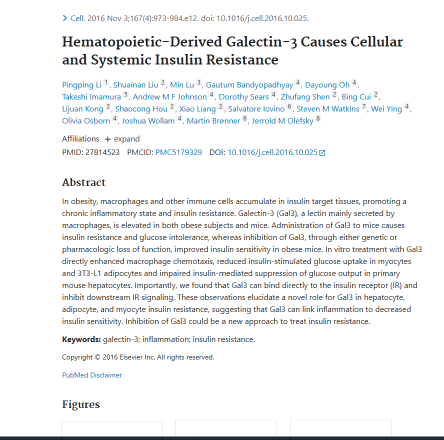
A 2016 study found that Galectin-3 could bind the insulin receptor and interfere with downstream signaling. Cell experiments examined glucose handling in muscle, fat, and liver cells. In obese mice, genetic or pharmacological reduction of Galectin-3 activity improved insulin sensitivity. These experiments identify a potential mechanism linking immune cells to metabolic dysfunction. [1]
What Has Been Observed in People?
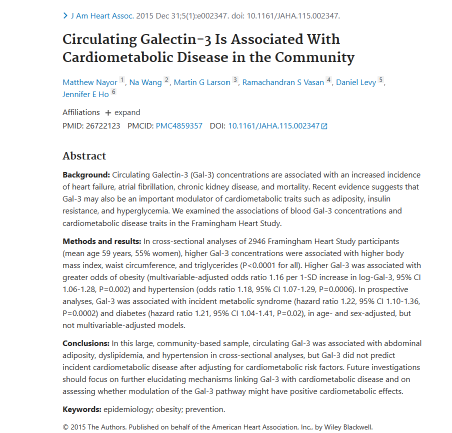
In 2,946 Framingham Heart Study participants, higher circulating Galectin-3 was associated with greater body mass index, waist circumference, and other cardiometabolic traits. However, its association with future metabolic disease weakened after adjustment for established risk factors. This observational study supports studying Galectin-3 alongside the broader metabolic picture. [2]
Why the Experimental Findings Need Context
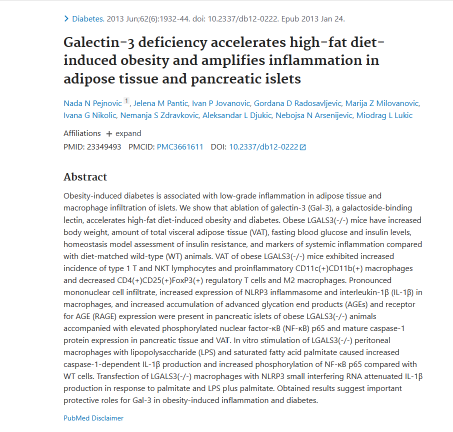
A separate mouse study reported that Galectin-3 deficiency accelerated weight gain and worsened inflammation in fat tissue and pancreatic islets during high-fat feeding. Taken together, the studies show that outcomes depend on the experimental setting, including how Galectin-3 is altered. [3]
What the Research Adds
The evidence connects Galectin-3 with insulin signaling, immune-cell activity, and adipose tissue inflammation. Its therapeutic relevance will require human intervention studies that measure metabolic outcomes and account for these different biological effects. [1][2][3]
Scientific Foundations: The Evidence for Galectin-3 and Obesity
-
![]()
Journal: Cell
Hematopoietic-Derived Galectin-3 Causes Cellular and Systemic Insulin Resistance (2016)
-
![]()
Journal: Journal of the American Heart Association
Circulating Galectin-3 Is Associated With Cardiometabolic Disease in the Community (2015)
-
![]()
Journal: Diabetes
Galectin-3 deficiency accelerates high-fat diet-induced obesity and amplifies inflammation in adipose tissue and pancreatic islets (2013)