Galectin-3 and Metastatic Cancer: How Cancer Cells Spread and Where Galectin-3 Is Being Studied
What Is Metastatic Cancer?
Metastatic cancer occurs when cancer cells spread from where the cancer began and form tumors elsewhere in the body. For example, breast cancer that spreads to the lung is still breast cancer. To establish a distant tumor, cells may enter blood or lymph vessels, survive the journey, and grow in a new tissue. [1]
Where Might Galectin-3 Fit In?
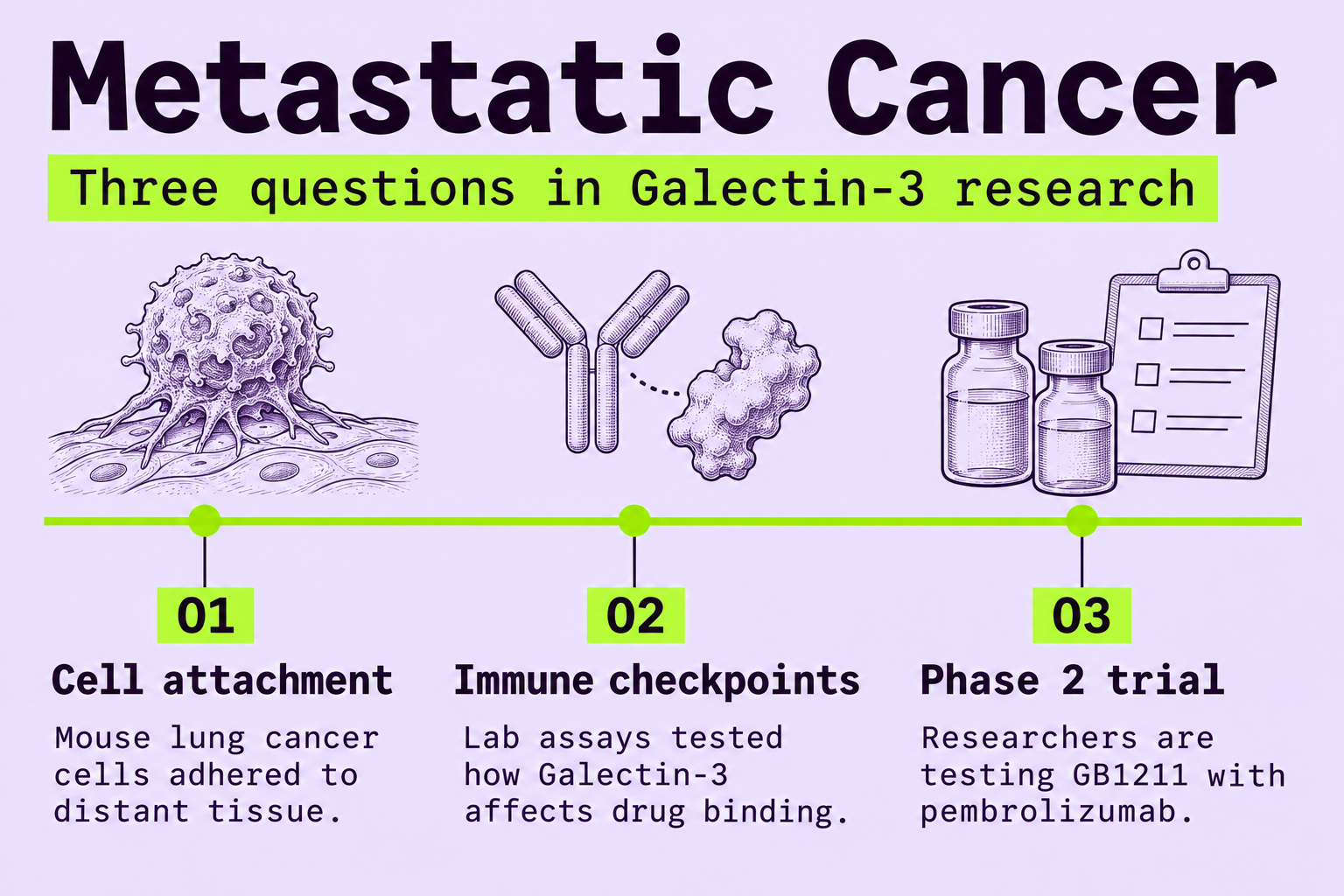
Galectin-3 (Gal-3) is a protein that binds certain sugars, including sugars carried on proteins at the cell surface. In a mouse model of lung adenocarcinoma, researchers found that cells with metastatic potential displayed sugar structures that bound Galectin-3 and helped the cells adhere to tissue at distant sites. [2]
The experiment addressed attachment at a distant site, one step in a much longer process. It gives researchers a specific interaction to study, and its relevance can vary across tumor types and tissues. [2]
A Separate Question About Immunotherapy
Some immunotherapies block the PD-1/PD-L1 pathway so immune cells can respond more effectively to cancer. In laboratory assays, Galectin-3 interfered with the binding of certain checkpoint inhibitors to their targets. The experimental inhibitor GB1211 reversed that interference in the assays. The study also used a mouse tumor model to explore the combination. [3]
What Is Being Tested in People?
A registered randomized phase 2 study compares GB1211 plus pembrolizumab with placebo plus pembrolizumab in patients with metastatic melanoma or head and neck squamous cell carcinoma. The registry describes the question being tested. The cell and animal findings alone cannot establish whether the combination improves patient outcomes. [4]
Scientific Foundations: The Evidence for Galectin-3 and Metastatic Cancer
-
![]()
Journal: Acta Neuropathologica
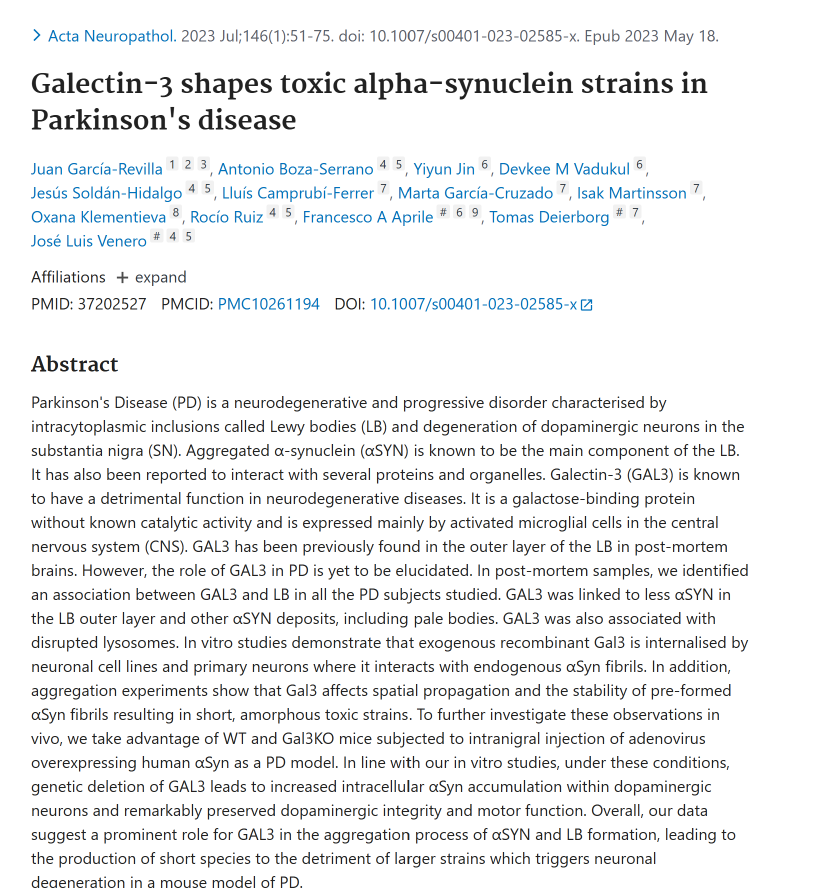
Galectin-3 shapes toxic alpha-synuclein strains in Parkinson's disease (2023)
-
![]()
Journal: Scientific Reports
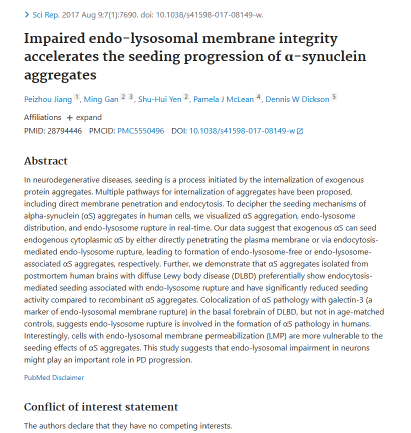
Impaired endo-lysosomal membrane integrity accelerates the seeding progression of α-synuclein aggregates (2017)
-
![]()
Journal: Acta Neuropathologica
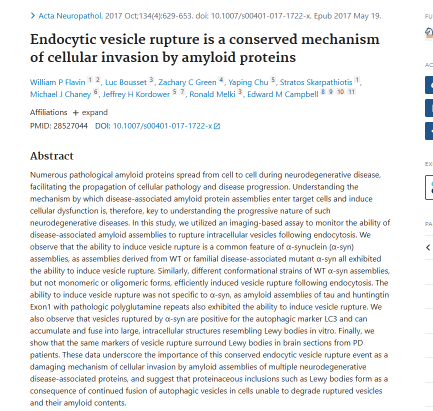
Endocytic vesicle rupture is a conserved mechanism of cellular invasion by amyloid proteins (2017)
-
![]()
Journal: Cell Reports
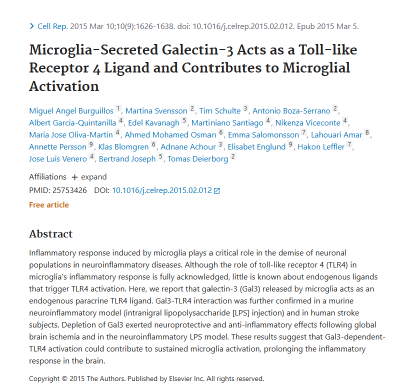
Microglia-Secreted Galectin-3 Acts as a Toll-like Receptor 4 Ligand and Contributes to Microglial Activation (2015)