Galectin-3 and Liver Fibrosis: Connecting Stellate-Cell Activation, Scar Formation, and Clinical Research
What Is Liver Fibrosis?
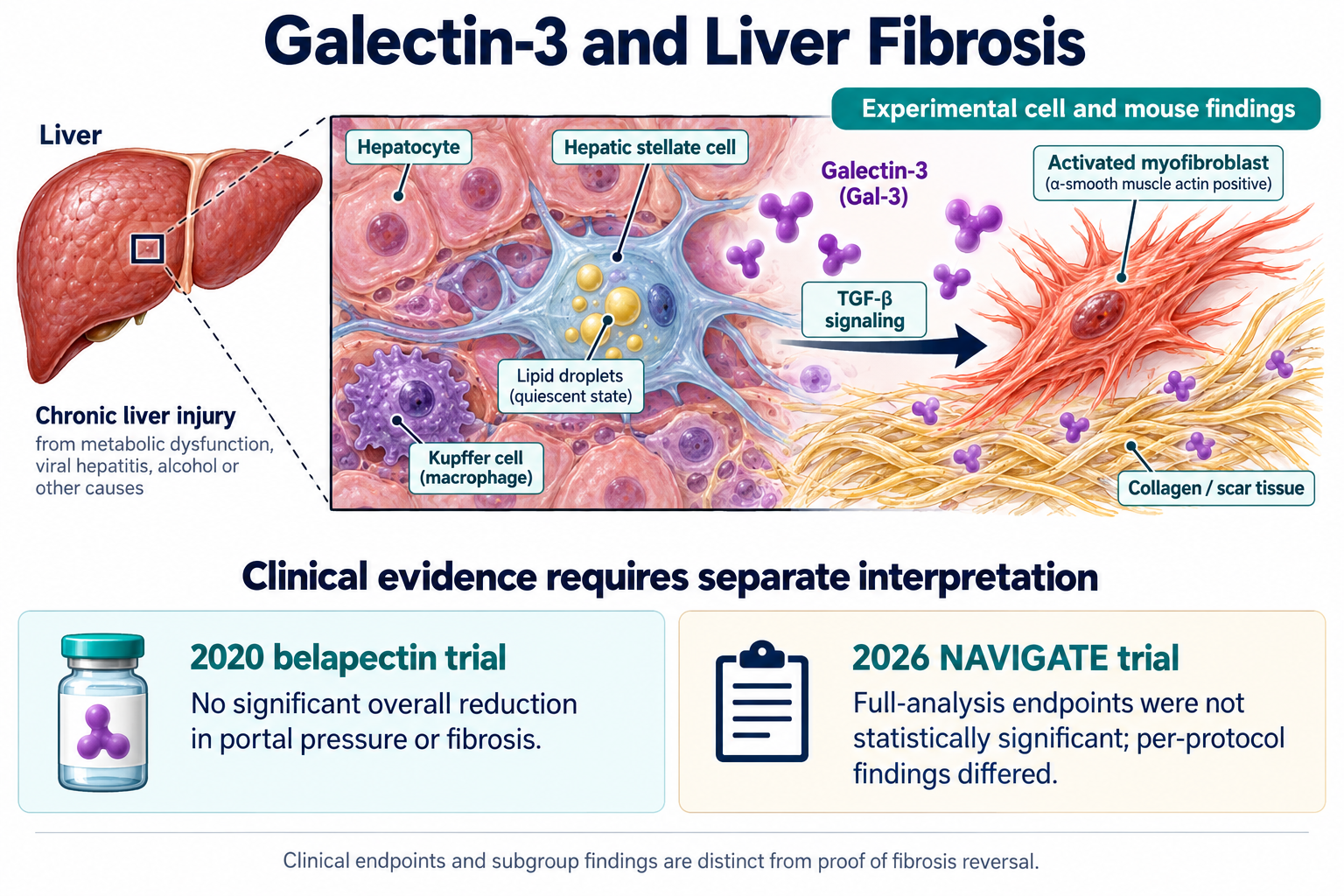
Liver fibrosis is the accumulation of scar-forming material after liver injury. With advanced scarring, liver structure and function can become seriously impaired; cirrhosis is an advanced stage of chronic liver damage.
Long-lasting liver injury can occur in conditions such as metabolic fatty liver disease, alcohol-associated liver disease, and chronic viral hepatitis. Understanding how scarring develops is important because treating an underlying cause and directly modifying fibrosis are different goals. [4]
Galectin-3 (Gal-3) is a carbohydrate-binding protein investigated for its effects on scar-producing cells and its potential as a target in clinical research.
Galectin-3 Helps Regulate Scar-Producing Cells
Hepatic stellate cells are central to liver-fibrosis research. When activated, they can develop into myofibroblasts, which produce collagen and other extracellular-matrix components.
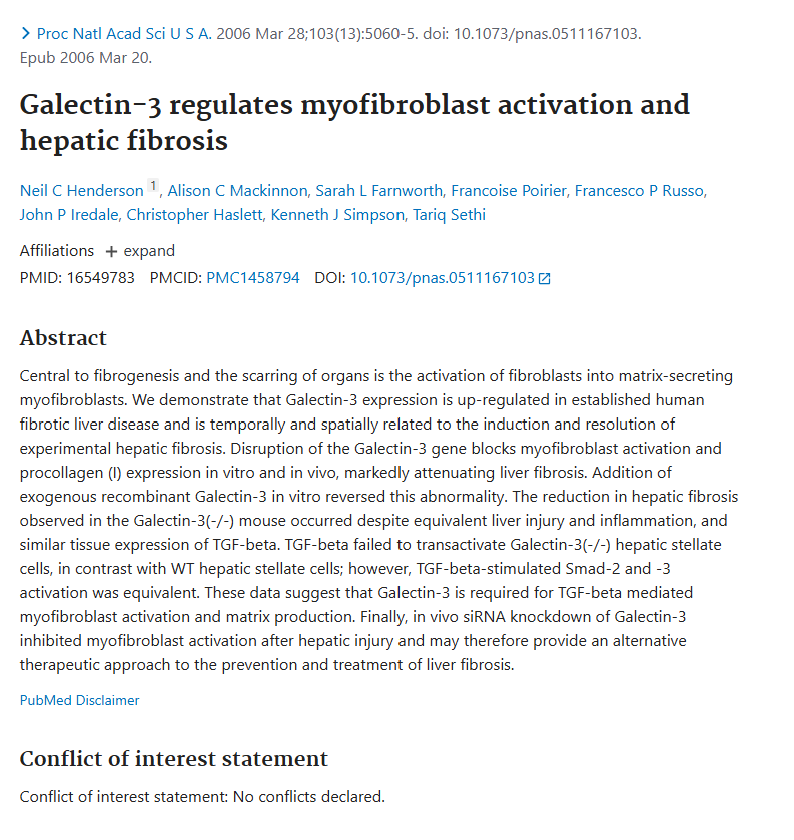
A 2006 study found increased Galectin-3 expression in human fibrotic liver tissue. In experimental liver injury, mice lacking Galectin-3 developed less myofibroblast activation and collagen production.
These findings connect Galectin-3 with scar-producing cell activation in experimental systems. [1]
The Link With TGF-β Signaling
The same study examined transforming growth factor beta (TGF-β), a signaling molecule involved in fibrosis. Galectin-3-deficient stellate cells responded abnormally to TGF-β despite preserved activation of some downstream signaling components.
The mice developed less fibrosis even though liver injury, inflammation, and tissue TGF-β expression were comparable. This suggests that Galectin-3 can influence how cells translate injury signals into matrix production.
These are mechanistic findings from cells and animal models. They do not, by themselves, show that suppressing Galectin-3 will reverse established liver scarring in patients. [1]
An Earlier Belapectin Trial Had Mixed Findings
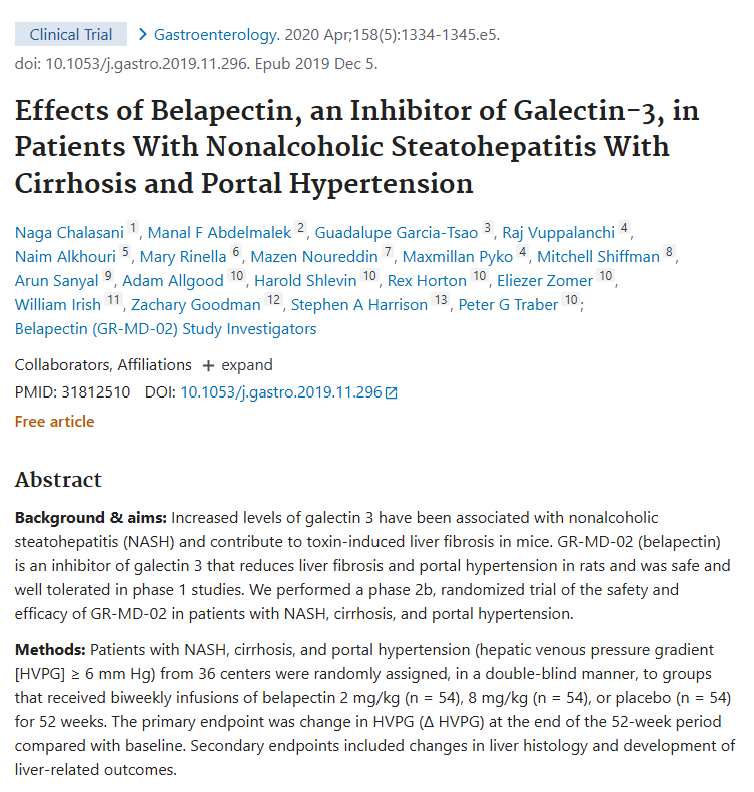
A randomized phase 2b study published in 2020 evaluated the Galectin-3 inhibitor belapectin in 162 patients with NASH cirrhosis and portal hypertension. The older term NASH is retained here because it was used in the trial.
After 52 weeks, the study did not demonstrate a significant overall improvement in hepatic venous pressure gradient or fibrosis compared with placebo.
A subgroup without esophageal varices at baseline showed a signal for lower portal pressure and reduced development of new varices at the lower dose. Subgroup findings are different from a positive overall trial result. [2]
The NAVIGATE Trial Adds More Recent Clinical Evidence
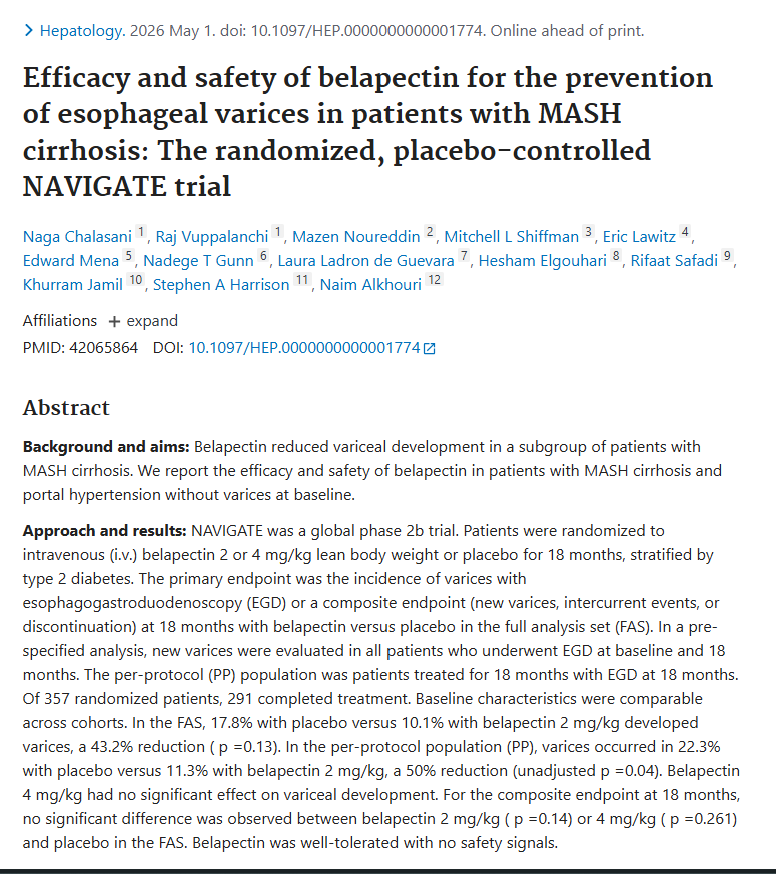
The NAVIGATE trial, published in 2026, studied belapectin in people with MASH cirrhosis and portal hypertension without baseline varices.
In the full analysis set, the lower-dose group had fewer new varices numerically, but the difference did not reach statistical significance. The composite endpoint also did not differ significantly. A per-protocol analysis showed a reduction in variceal development.
The distinction between full-analysis and per-protocol findings matters: restricting analysis to treatment completers can change how results should be interpreted. The endpoint concerned varices, not proof that liver fibrosis had been reversed. [3]
Why Is Galectin-3 of Scientific Interest?
The evidence connects Galectin-3 with:
Stellate-cell activation: the transition toward scar-producing cells.
Matrix production: regulation of collagen and related scar components.
Clinical translation: testing whether inhibition can change meaningful outcomes in cirrhosis.
Animal mechanisms, biopsy findings, portal-pressure measurements, and prevention of varices address different questions. Their results should not be presented as interchangeable.
The studies summarized here do not establish Galectin-3 inhibition as a treatment that reverses fibrosis or benefits every patient with liver disease. They support continued research with attention to the population, endpoint, and analysis used.
Scientific Foundations: The Evidence for Galectin-3 and Liver Fibrosis
-
![]()
Journal: Proceedings of the National Academy of Sciences
Galectin-3 regulates myofibroblast activation and hepatic fibrosis (2006)
-
![]()
Journal: Gastroenterology
Effects of Belapectin, an Inhibitor of Galectin-3, in Patients With Nonalcoholic Steatohepatitis With Cirrhosis and Portal Hypertension (2020)
-
![]()
Journal: Hepatology
Efficacy and safety of belapectin for the prevention of esophageal varices in patients with MASH cirrhosis: The randomized, placebo-controlled NAVIGATE trial (2026)