Galectin-3 and Kidney Fibrosis: Connecting Macrophage Signaling, Tissue Scarring, and Kidney Function
What Is Kidney Fibrosis?
Kidney fibrosis, also called renal fibrosis, involves excessive accumulation of scar-forming material in kidney tissue. Extensive scarring can interfere with the kidneys' ability to remove waste and excess fluid, and may contribute to lasting loss of function. [5]
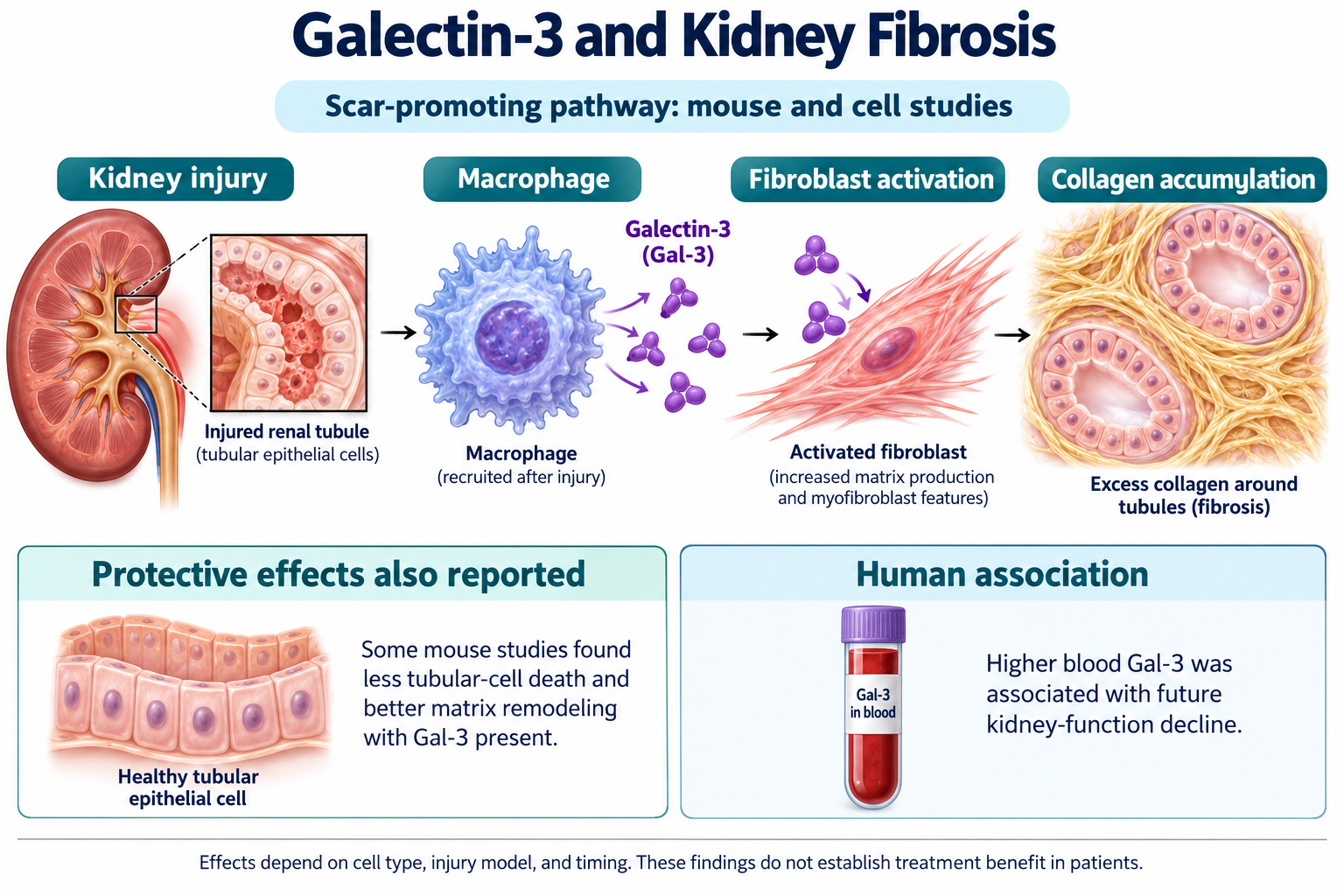
Galectin-3 (Gal-3) is a carbohydrate-binding protein investigated in kidney injury because it can affect immune-cell behavior, fibroblast activity, and tissue remodeling. Research suggests that its effects differ according to the cells involved, the type of injury, and the stage of disease.
Macrophage-Derived Galectin-3 Can Promote Scarring
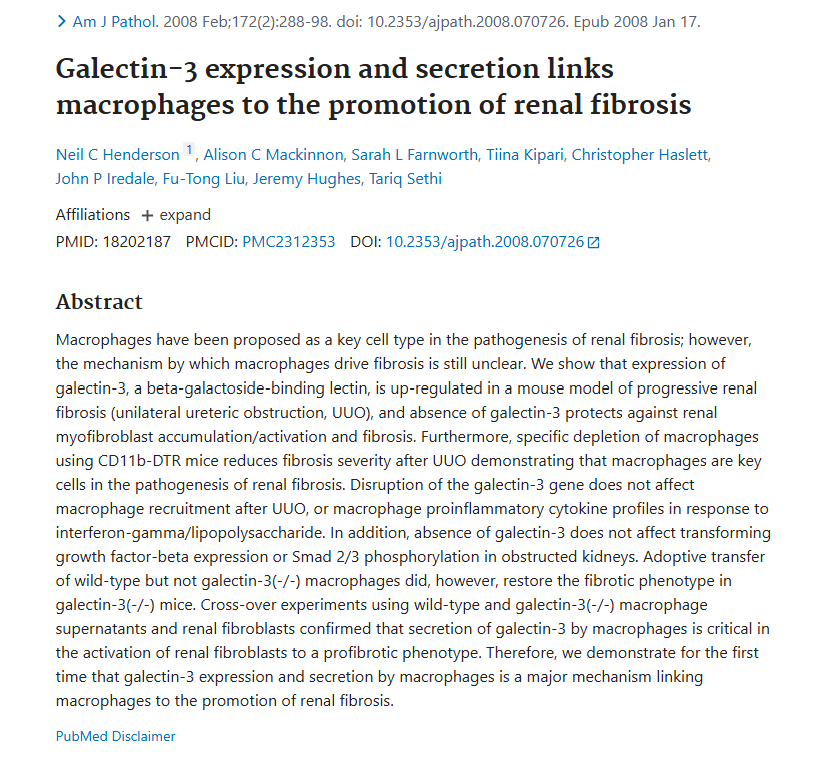
A 2008 study examined Galectin-3 in unilateral ureteric obstruction (UUO), a mouse model in which blocking urine drainage causes progressive kidney injury and fibrosis.
Mice lacking Galectin-3 developed less accumulation and activation of myofibroblasts, cells that produce scar-forming material, and less fibrosis. This was not explained simply by reduced macrophage recruitment.
Transferring normal macrophages into Galectin-3-deficient mice restored the fibrotic response, while transferring macrophages that also lacked Galectin-3 did not.
Cell-culture experiments further implicated Galectin-3 secreted by macrophages in activating renal fibroblasts. Together, these findings identify a mechanism linking immune cells to kidney scarring in this experimental model. [1]
Experimental Galectin-3 Blockade Has Reduced Renal Damage
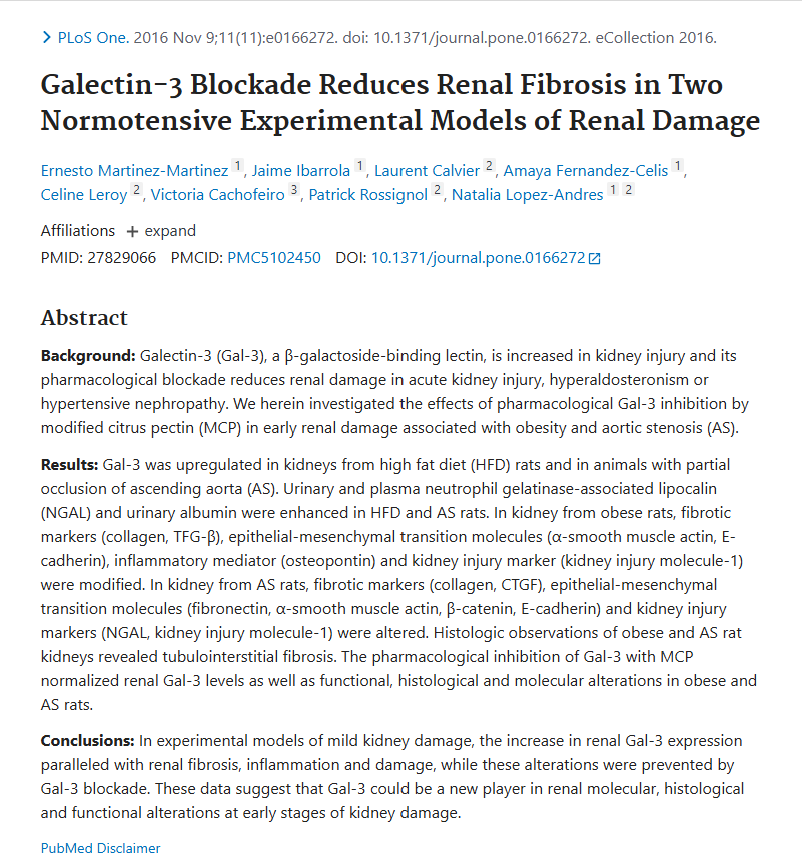
A 2016 study investigated Galectin-3 blockade using modified citrus pectin in rats with early kidney damage associated with a high-fat diet or experimentally induced aortic stenosis.
In both models, renal Galectin-3 expression increased alongside changes in markers of injury, inflammation, and fibrosis. Treatment attenuated several of these abnormalities, supporting further investigation of Galectin-3-related pathways.
These were animal experiments, not clinical trials in people with kidney fibrosis. The findings do not establish that modified citrus pectin or another Galectin-3-directed intervention safely prevents or reverses kidney fibrosis in patients. [2]
Galectin-3 Can Also Protect Tubules in Some Models
The evidence does not support describing Galectin-3 as uniformly harmful in the kidney.
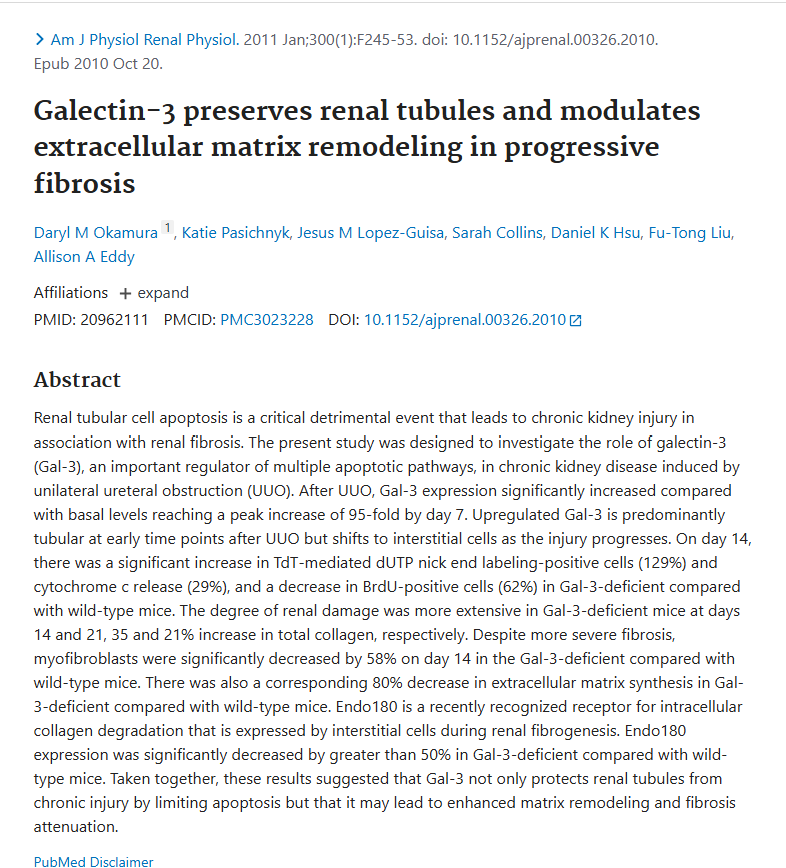
A separate study, published in 2011, followed mice after UUO and found more extensive kidney damage and collagen accumulation in Galectin-3-deficient animals at later time points, including days 14 and 21.
The findings linked Galectin-3 with reduced tubular-cell apoptosis and changes in extracellular-matrix remodeling. Despite having fewer myofibroblasts and less matrix synthesis, the deficient mice had more collagen accumulation, illustrating that scarring depends on matrix removal as well as production.
This contrasts with the earlier study focused on day-seven fibrosis. It highlights why timing and biological context matter when interpreting Galectin-3 experiments. [3]
Higher Blood Galectin-3 Is Associated With Future Kidney-Function Decline
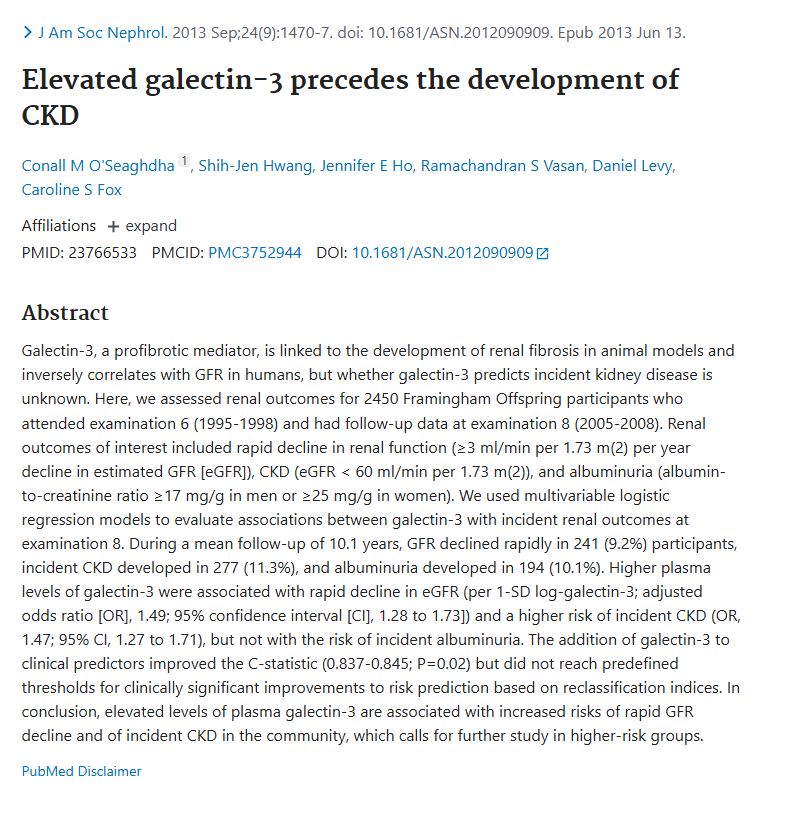
A 2013 study assessed kidney outcomes in 2,450 Framingham Offspring participants, with a mean follow-up of approximately ten years.
Higher baseline plasma Galectin-3 was associated with a greater risk of rapid decline in estimated glomerular filtration rate (eGFR) and development of chronic kidney disease.
Adding Galectin-3 to clinical predictors produced a modest statistical improvement in one prediction measure, but did not meet the study's predefined thresholds for clinically meaningful improvement in reclassification.
This was an observational association. It did not establish that Galectin-3 caused the decline, measure kidney fibrosis directly by biopsy, or show that lowering Galectin-3 improves kidney function. [4]
Why Is Galectin-3 of Scientific Interest?
Kidney research connects Galectin-3 with several interacting processes:
Macrophage–fibroblast communication: immune-cell signals can influence scar-producing cells.
Matrix accumulation and removal: both processes help determine the amount of fibrosis.
Tubular-cell survival: protective effects have been reported in some injury models.
Clinical risk assessment: blood levels have been associated with future loss of kidney function.
These findings make Galectin-3 a useful research target, while also showing that eliminating all of its activity may have different consequences from selectively modifying a specific pathway.
The studies summarized here do not establish Galectin-3 blockade as an effective treatment for human kidney fibrosis. Experimental changes in scar tissue, human biomarker associations, and demonstrated clinical treatment benefits are different forms of
Scientific Foundations: The Evidence for Galectin-3 and Kidney Fibrosis
-
![]()
Journal: The American Journal of Pathology
Galectin-3 expression and secretion links macrophages to the promotion of renal fibrosis (2008)
-
![]()
Journal: PLOS ONE
Galectin-3 Blockade Reduces Renal Fibrosis in Two Normotensive Experimental Models of Renal Damage (2016)
-
![]()
Journal: American Journal of Physiology–Renal Physiology
Galectin-3 preserves renal tubules and modulates extracellular matrix remodeling in progressive fibrosis (2011)
-
![]()
Journal: Journal of the American Society of Nephrology
Elevated galectin-3 precedes the development of CKD (2013)on goes here