Galectin-3 and Juvenile Idiopathic Arthritis: Connecting Joint Inflammation, Immune-Cell Persistence, and Disease Activity
What Is Juvenile Idiopathic Arthritis?
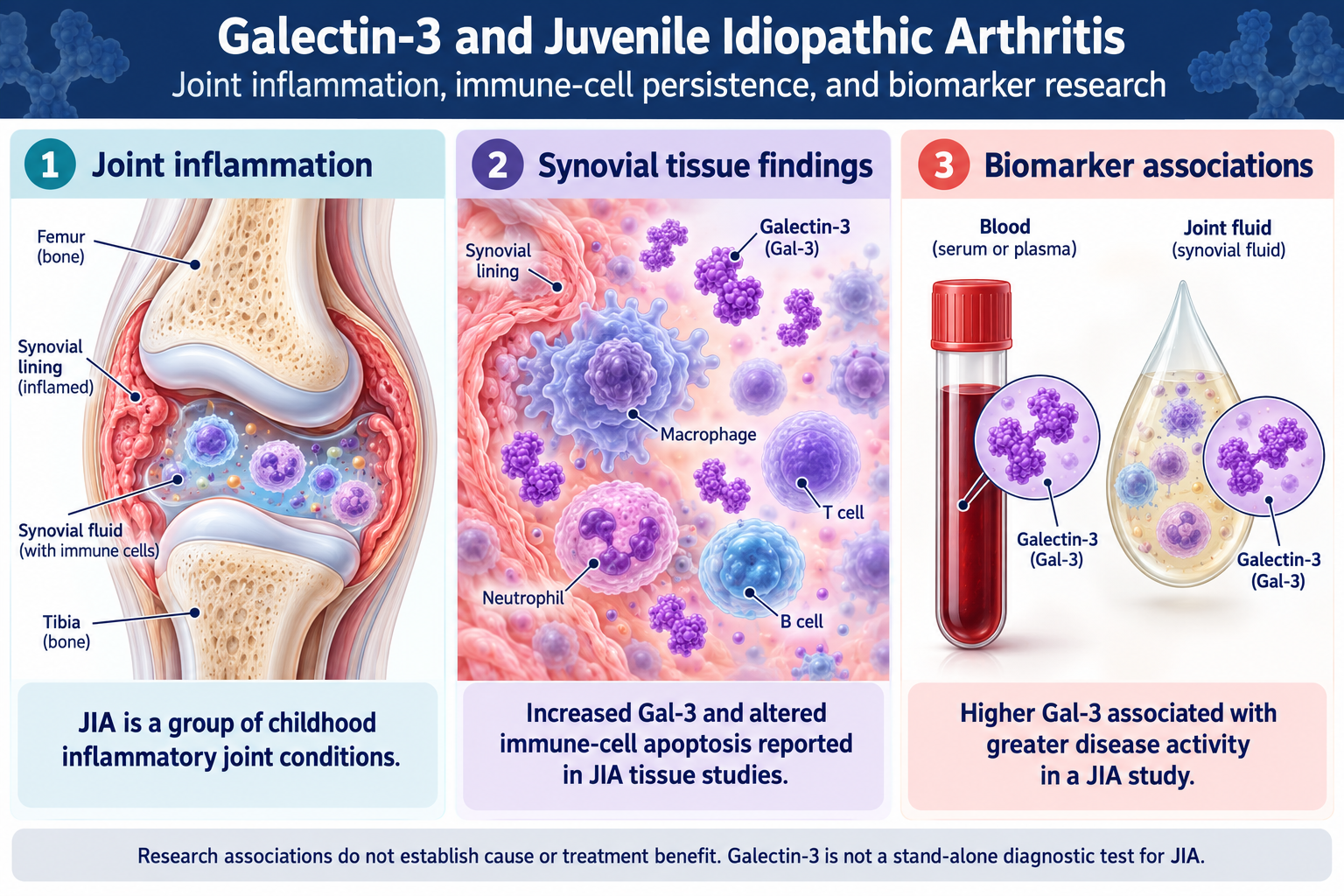
Juvenile idiopathic arthritis (JIA) is a group of inflammatory joint conditions that begin in childhood. Doctors consider JIA when a child younger than 16 has unexplained joint pain, stiffness, or swelling lasting at least six weeks, after other causes are considered.
Symptoms can include morning stiffness, joint swelling, and reduced movement. Some children develop eye inflammation called uveitis. JIA includes different disease types, so symptoms and clinical needs vary. [4]
Researchers are studying Galectin-3 (Gal-3) as a possible link between inflammation in the joint and measurable signs of disease activity.
Galectin-3 Is Increased in JIA Synovial Tissue
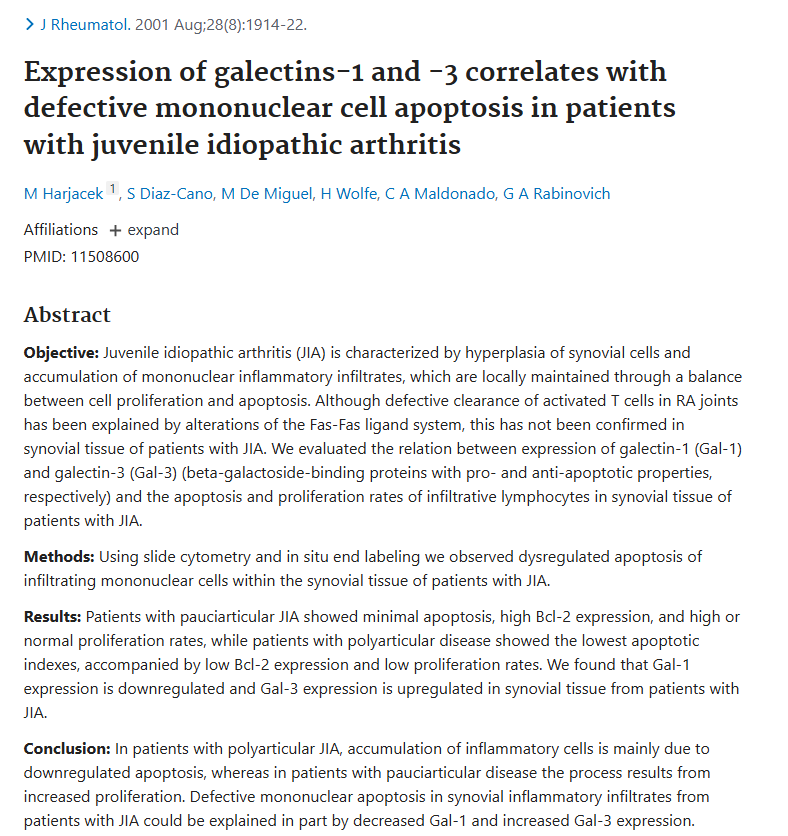
The synovium is the tissue lining a joint. In a 2001 study, researchers examined synovial tissue from patients with JIA and reported increased Galectin-3 expression, together with reduced Galectin-1 expression.
The study also found abnormalities in apoptosis, the controlled process through which cells are removed. Patterns differed between the disease groups studied: polyarticular disease showed especially low apoptotic activity, while increased proliferation contributed to inflammatory-cell accumulation in pauciarticular disease.
These findings connect altered galectin expression with the persistence of inflammatory cells in JIA tissue. They do not establish that Galectin-3 alone caused the abnormalities or that blocking it would correct them. [1]
Blood and Joint-Fluid Levels Are Linked to Disease Activity
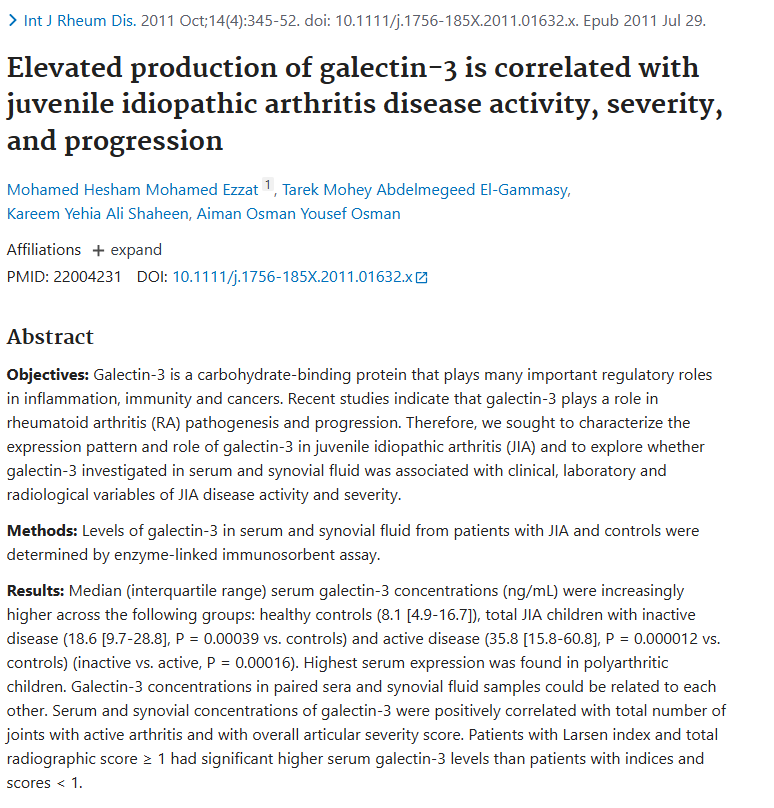
A 2011 study measured Galectin-3 in serum and synovial fluid, the fluid within joints, from patients with JIA and controls.
Serum levels were higher in children with active JIA than in those with inactive disease, and both groups had higher levels than healthy controls. The highest serum levels were found in children with polyarticular disease.
Galectin-3 concentrations were positively associated with the number of joints with active arthritis and overall articular severity. Higher serum levels were also reported among patients with greater radiographic abnormalities.
This supports further investigation of Galectin-3 as a potential biomarker. Because the study found associations, it does not prove that an elevated level predicts an individual child's future course or directly causes joint damage. [2]
Related Arthritis Research Offers Mechanistic Clues
Laboratory research in rheumatoid arthritis (RA) offers possible explanations for how Galectin-3 could participate in joint inflammation. RA evidence is relevant background, but it is distinct from evidence obtained in children with JIA.
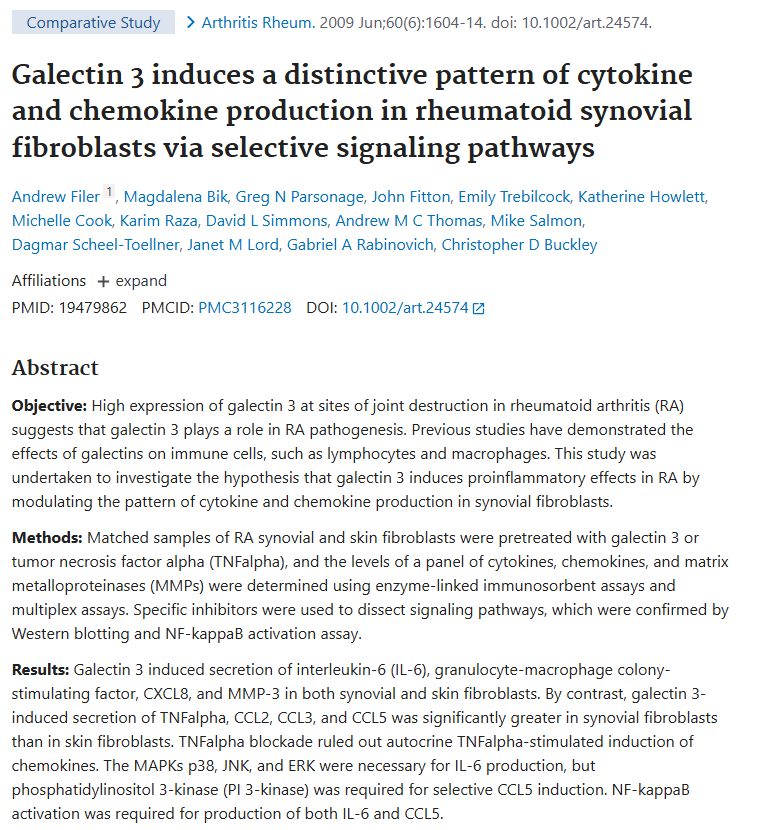
In a 2009 study using fibroblasts from RA tissues, Galectin-3 stimulated production of inflammatory mediators, including interleukin-6 (IL-6) and chemokines involved in immune-cell recruitment.
The experiments implicated signaling pathways including MAPKs, PI3K, and NF-κB. These results help frame hypotheses about inflammatory joint tissue; they do not demonstrate that the same mechanisms have the same importance in every JIA subtype. [3]
Why Is Galectin-3 of Scientific Interest?
The direct JIA studies connect Galectin-3 with three areas of research:
Inflammatory-cell persistence: altered galectin expression and abnormal cell turnover in synovial tissue.
Disease activity: associations with active joints and clinical severity.
Biomarker development: measurements in blood and joint fluid.
A useful clinical biomarker must be evaluated for accuracy, reproducibility, and usefulness beyond existing assessments. Elevated Galectin-3 is not specific to JIA, and the studies summarized here do not establish it as a stand-alone diagnostic test. [2] [4]
What Does This Mean for Treatment Research?
These findings provide a rationale for further research into Galectin-3 in JIA, particularly its relationship to immune-cell survival and joint inflammation.
The cited studies do not establish Galectin-3 inhibition as a safe or effective treatment for children with JIA. Tissue findings, biomarker associations, and experiments in RA fibroblasts answer different questions and should be interpreted separately.
JIA assessment and treatment remain individualized, with care guided by a child's clinical findings and specialist evaluation. [4]
Scientific Foundations: The Evidence for Galectin-3 and Juvenile Idiopathic Arthritis
-
![]()
Journal: The Journal of Rheumatology
Expression of galectins-1 and -3 correlates with defective mononuclear cell apoptosis in patients with juvenile idiopathic arthritis (2001)
-
![]()
Journal: International Journal of Rheumatic Diseases
Elevated production of galectin-3 is correlated with juvenile idiopathic arthritis disease activity, severity, and progression (2011)
-
![]()
Journal: Arthritis & Rheumatism
Galectin 3 induces a distinctive pattern of cytokine and chemokine production in rheumatoid synovial fibroblasts via selective signaling pathways (2009)