The "Trash" Collector Gone Rogue: Galectin-3 in Huntington’s Disease
Huntington’s Disease (HD)
A genetic neurodegenerative disorder caused by a mutation in the huntingtin (mHTT) gene. While the mutation is the core issue, recent research (2024–2026) highlights Galectin-3 as a primary driver of the brain's "secondary damage" through neuroinflammation and failed cellular cleaning.
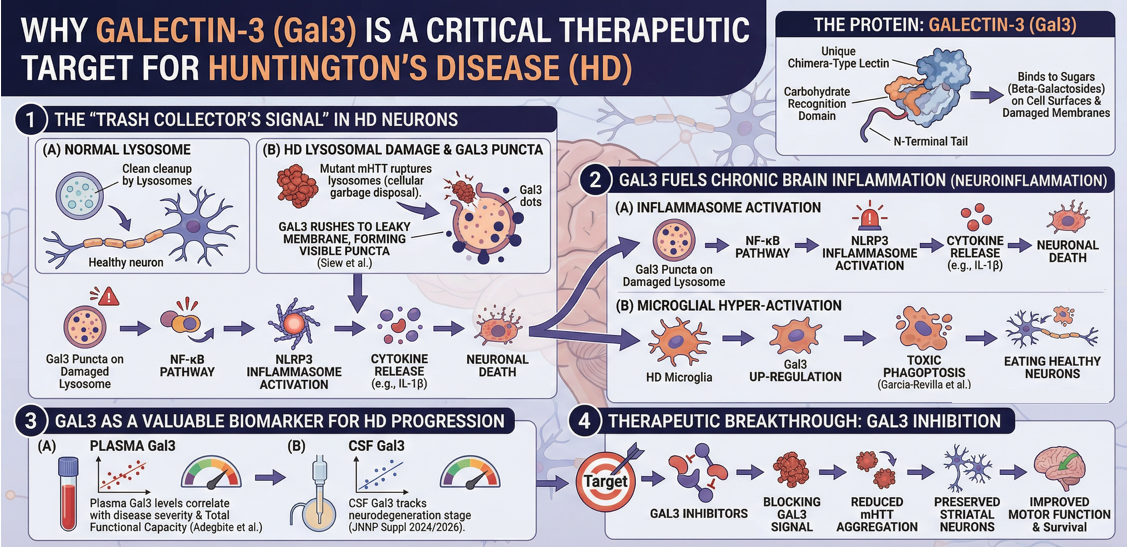
1. Marking the Damage: The Lysosomal Connection
In HD, the mutant huntingtin protein forms toxic clumps that rupture lysosomes (the cell's recycling centers).
The Gal3 Puncta: When a lysosome is damaged, Galectin-3 rushes to the leak and binds to the sugars exposed on the inner membrane. This forms "dots" or puncta visible under a microscope.
The Failed Cleanup: Scientists have found that while Gal3 marks these broken disposals, an overabundance of it actually signals the immune system to stay in a "hyper-inflammatory" state rather than fixing the cell.
2. Gal3 and Microglial Hyper-Activation
In the HD brain, specifically in the striatum (the area controlling movement), Galectin-3 is significantly upregulated in microglia.
Pro-Inflammatory Signaling: Research shows Gal3 activates the NLRP3 inflammasome—a molecular "alarm" that releases a flood of cytokines (like IL-1β).
Early Detection: Crucially, Gal3 levels are found to be elevated in the brain and plasma years before the first motor symptoms appear, making it a critical "pre-symptomatic" biomarker.
3.Gal3 as a "Prognostic Gauge"
Because Gal3 levels rise as the disease worsens, it is being studied as a biomarker. New clinical data (including studies from 2024 and 2025) confirms that Gal3 is a reliable indicator of disease severity:
Correlation with Severity: Higher concentrations of plasma Gal3 correlate with lower cognitive and motor scores in HD patients. Plasma and cerebrospinal fluid (CSF) Gal3 levels correlate with the "Total Functional Capacity" (TFC) of HD patients.
Specificity: Unlike other proteins, Gal3 specifically tracks the neurodegenerative phase, allowing doctors to distinguish between genetic "carriers" who are stable and those who are entering the active disease state.
Early Warning: Since Gal3 spikes before symptoms start, it could be used to identify the best window for starting treatment in "pre-manifest" patients.
4. Therapeutic Potential: Blocking the Signal
In groundbreaking animal studies (SOD1-G93A equivalents for HD), reducing or "knocking down" Galectin-3 led to:
Reduced mHTT Aggregation: Fewer toxic protein clumps formed in the brain. By calming the immune environment, cells may better clear the toxic huntingtin protein.
Motor Recovery: Slowing down the Gal3-mediated "attack" on neurons could delay the onset of chorea (involuntary movements). Significant improvement in balance and coordination.
Increased Survival: Mice lived longer when Gal3-driven inflammation was suppressed.
Scientific Foundations: The Evidence for Galectin-3 and HD
-
![]()
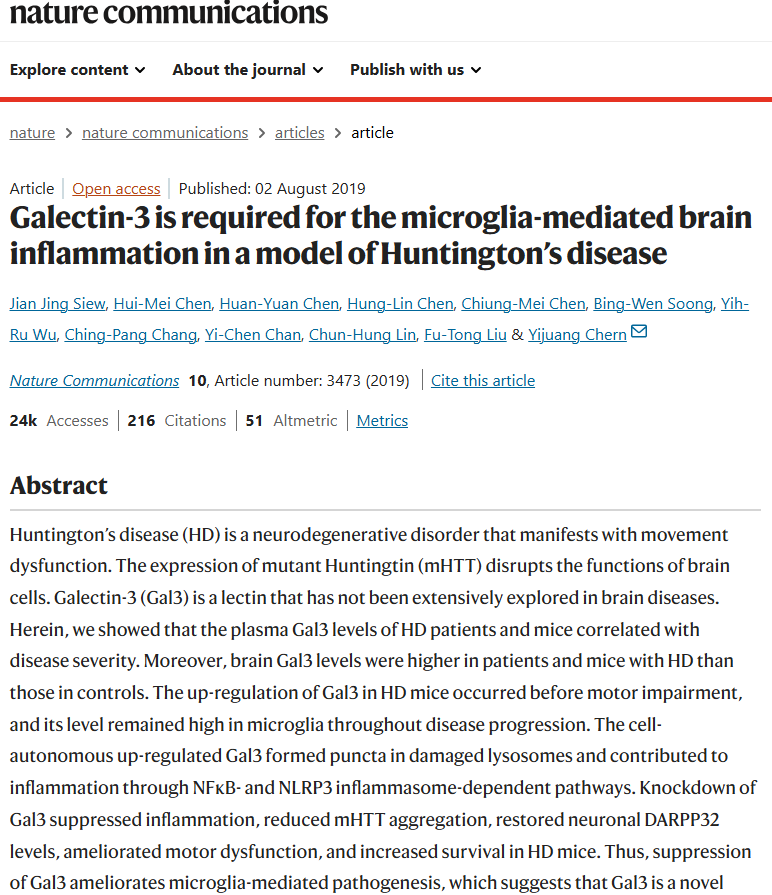
Journal: Nature Communications
Galectin-3 is required for the microglia-mediated brain inflammation in a model of Huntington’s disease (2019)
-
![]()
Journal: Front Cell Neuroscience
Galectin-3 shapes microglial phenotype through endogenous and exogenous mechanisms (2025)
-
![]()
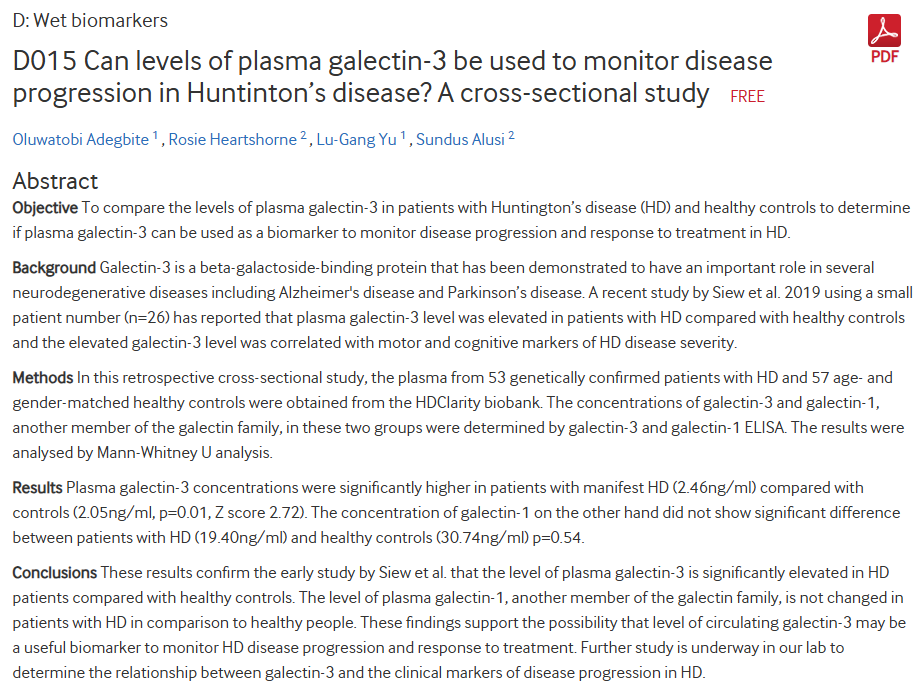
Journal of Neurology, Neurosurgery & Psychiatry
Can levels of plasma Galectin-3 be used to monitor disease progression in Huntington's Disease? A cross-sectional study (2024)
-
![]()
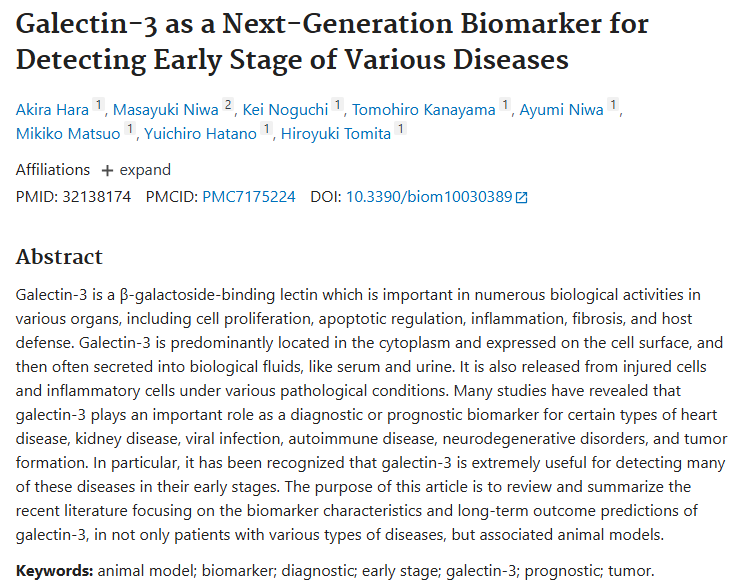
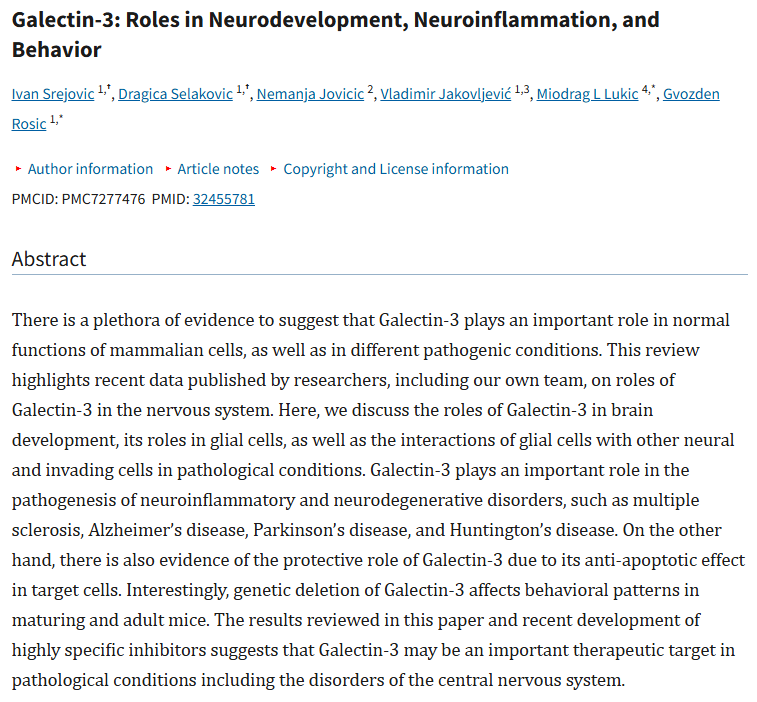
Journal: Biomolecules
Galectin-3: Roles in Neurodevelopment, Neuroinflammation, and Behavior (2020)