Breaking the Shield: The Role of Gal3 in Glioblastoma
Glioblastoma (GBM) is the most common and aggressive form of primary brain cancer in adults. Despite decades of research, surgery, radiation, and chemotherapy, it remains notoriously difficult to treat.
One of the biggest questions in oncology is: Why is Glioblastoma so resistant to treatment? The answer lies in the tumor's ability to manipulate its surrounding environment. Scientists are increasingly pointing to a master regulatory protein called Galectin-3 (Gal3) as the architect behind the tumor's ultimate defense system.
By understanding and targeting Gal3, we are opening a vital new frontier in the fight against brain cancer.
What is the Tumor Microenvironment (TME)?
To understand Glioblastoma, we have to look past the tumor itself and look at its neighborhood—known as the Tumor Microenvironment (TME).
A Glioblastoma tumor doesn't grow in isolation. It aggressively recruits surrounding healthy cells, blood vessels, and immune cells, brainwashing them into protecting and feeding the cancer. Recent breakthrough research has identified Gal3 as one of the primary signaling molecules the tumor uses to hijack this environment.
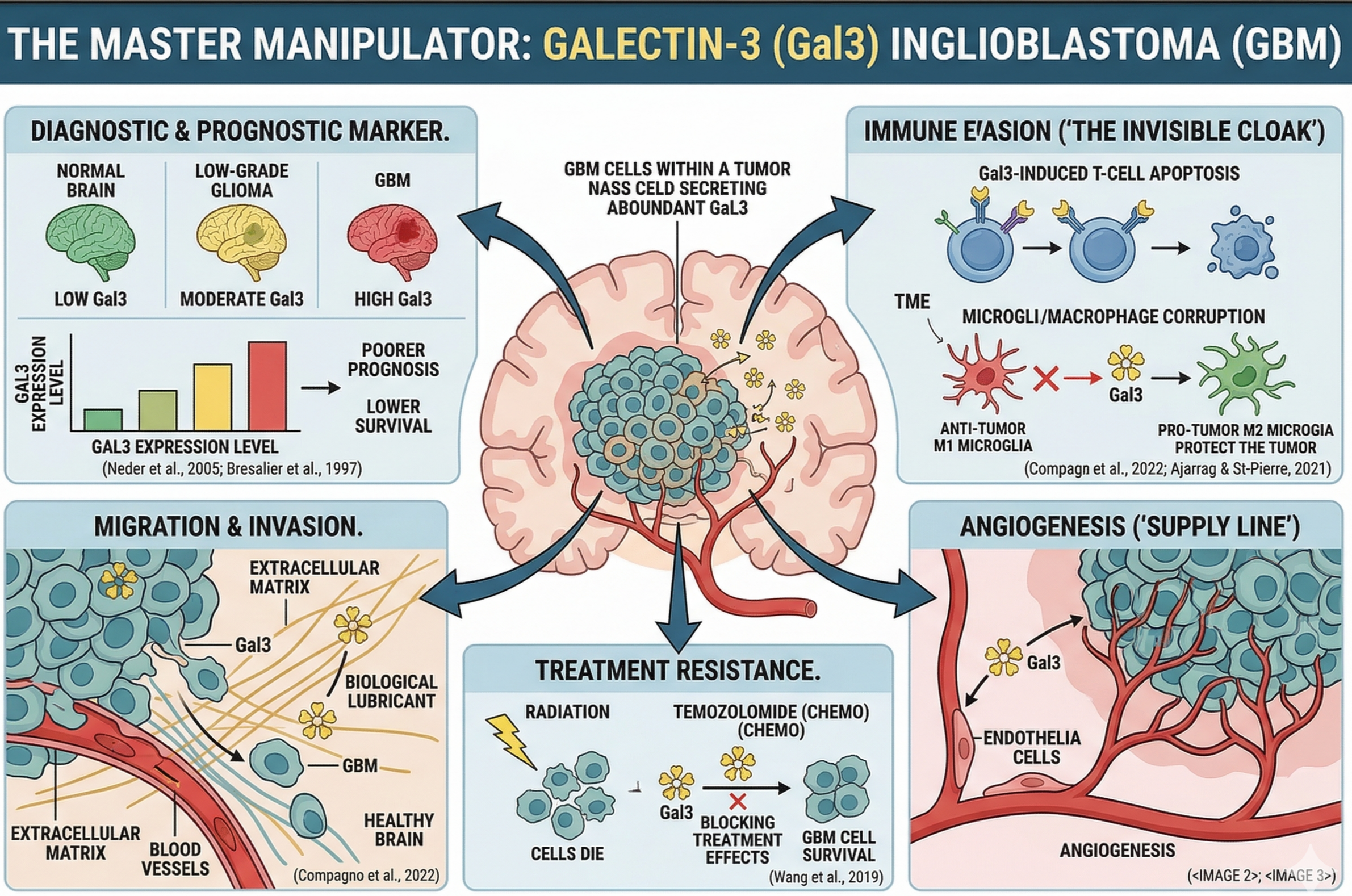
In healthy brain tissue, Gal3 levels are very low. But in Glioblastoma, the tumor cells produce massive amounts of Gal3. In fact, clinical data shows that the higher the Gal3 levels in a patient's brain, the more aggressive the tumor and the poorer the prognosis.
How Gal3 Protects and Drives Glioblastoma
Gal3 acts as a biological "Swiss Army knife" for Glioblastoma, helping the tumor survive, spread, and resist treatment through three primary mechanisms:
1. The Invisible Cloak (Immune Evasion) The human body has cancer-killing immune cells (like T-cells) designed to hunt down and destroy tumors. However, Glioblastoma tumors use Gal3 as an invisible shield.
T-Cell Destruction: The tumor secretes Gal3 into the surrounding tissue. When cancer-killing T-cells enter the area, Gal3 binds to their surface receptors and actually triggers the T-cells to self-destruct (apoptosis).
Corrupting Microglia: Just as we see in Alzheimer's and Parkinson's, Gal3 hijacks the brain's resident immune cells (microglia and macrophages). Instead of attacking the tumor, Gal3 forces these immune cells into a "pro-tumor" state, forcing them to build a protective wall around the cancer.
2. The Invader (Migration and Infiltration) Unlike tumors in other parts of the body that form hard, solid lumps, Glioblastoma is highly invasive. It sends microscopic, root-like tendrils deep into healthy brain tissue, making it nearly impossible for surgeons to remove entirely.
The Biological Lubricant: Gal3 interacts with the scaffolding of the brain (the extracellular matrix). It alters the stickiness of the cancer cells, allowing them to easily detach from the main tumor, migrate, and invade deep into healthy neural tissue.
3. The Supply Line (Angiogenesis) Tumors need a massive blood supply to grow.
Building Blood Vessels: Gal3 acts as a powerful signaling molecule that stimulates angiogenesis—the rapid formation of new, abnormal blood vessels. This ensures the Glioblastoma is constantly fed with the oxygen and nutrients it needs to aggressively expand.
Scientific Foundations: The Evidence for Galectin-3 and GBM
-
![]()
Journal: Cancer Med
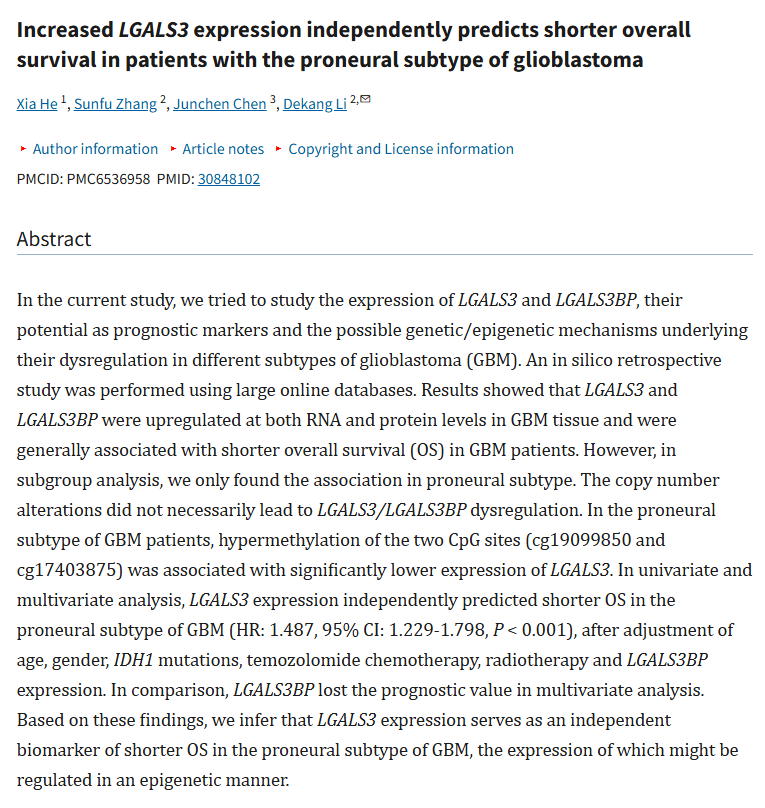
Increased LGALS3 expression independently predicts shorter overall survival in patients with the proneural subtype of glioblastoma (2019)
-
![]()
Journal: Cancer Epidemiol Biomarkers
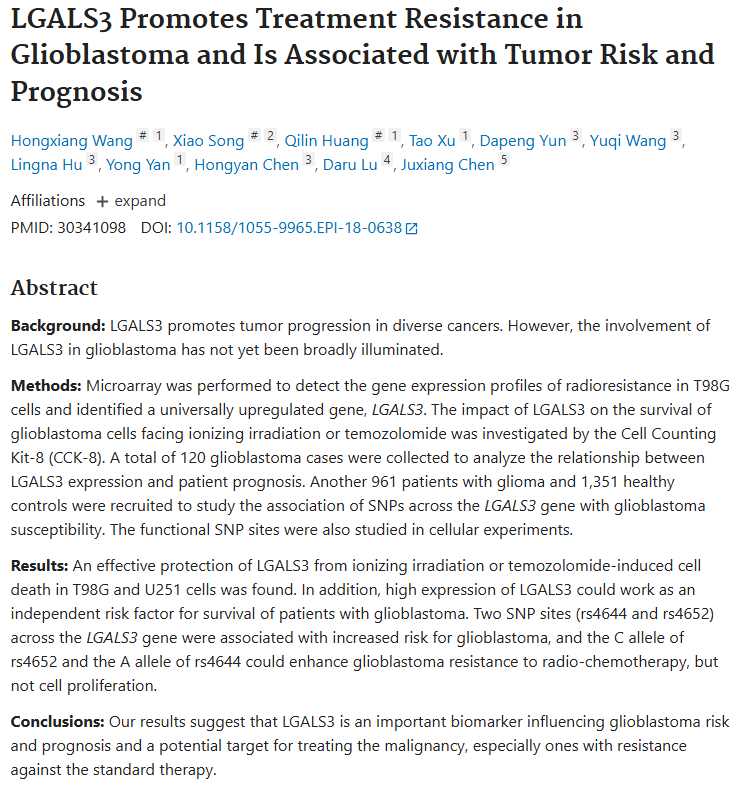
LGALS3 Promotes Treatment Resistance in Glioblastoma and Is Associated with Tumor Risk and Prognosis (2019)
-
![]()
Journal: Cancers (Basel)
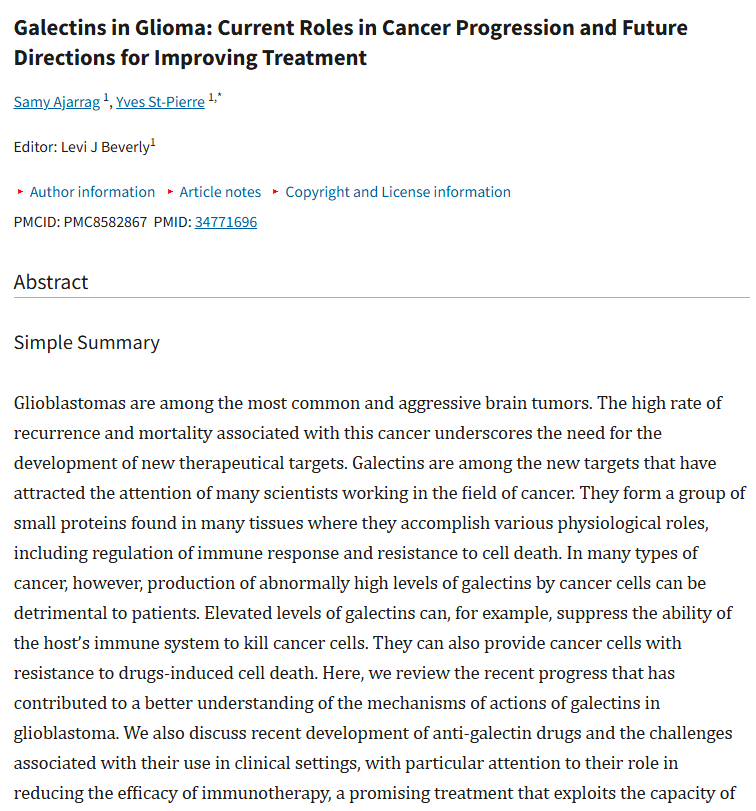
Galectins in Glioma: Current Roles in Cancer Progression and Future Directions for Improving Treatment (2021)
-
![]()
Journal: Cancer Letters
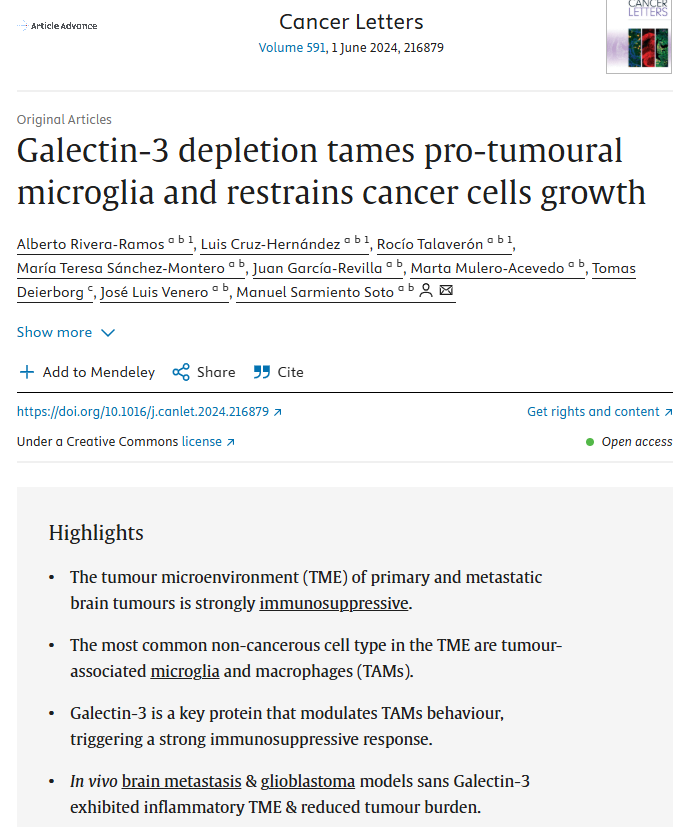
Galectin-3 depletion tames pro-tumoural microglia and restrains cancer cells growth (2024)
-
![]()
Journal: Cancer
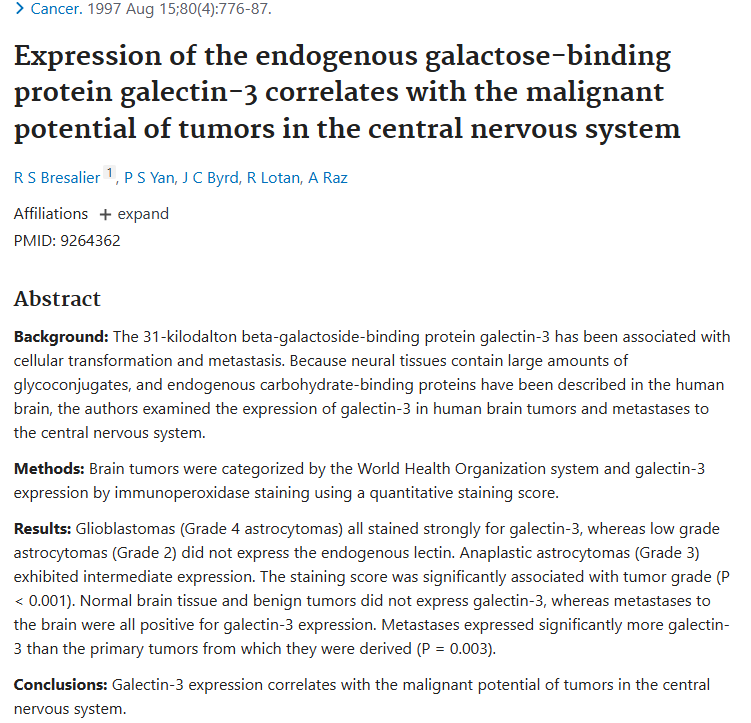
Expression of the endogenous galactose-binding protein galectin-3 correlates with the malignant potential of tumors in the central nervous system (1997)
-
![]()
Journal: Int J Molecular Sciences
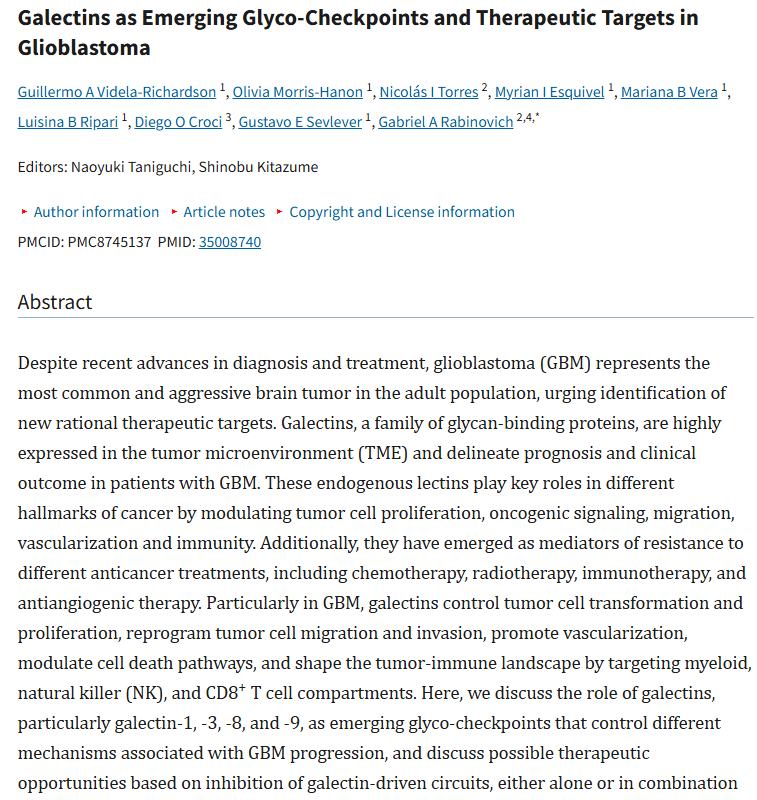
Galectins as Emerging Glyco-Checkpoints and Therapeutic Targets in Glioblastoma (2021)
-
![]()
Journal: Brain Pathology
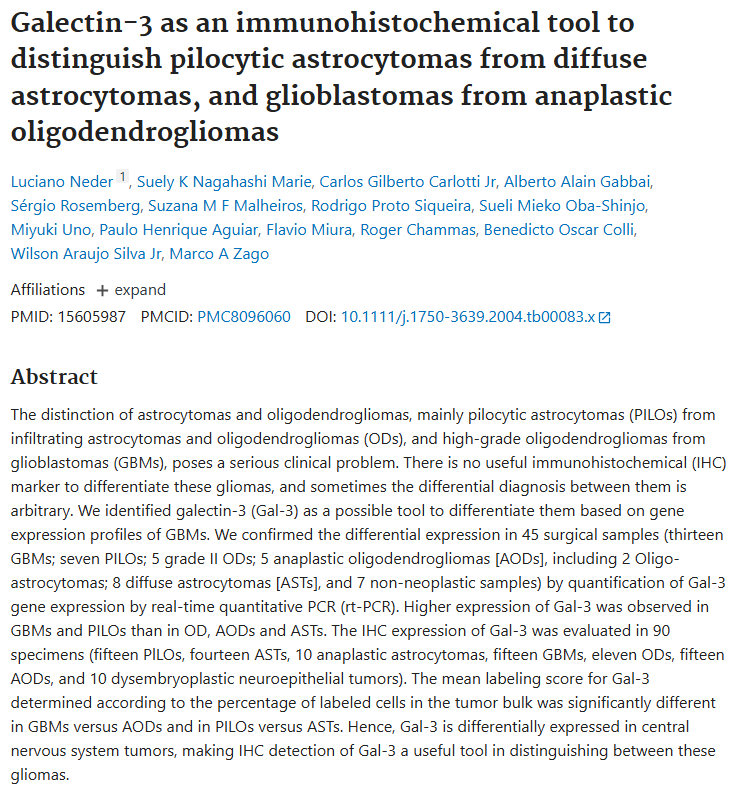
Galectin-3 as an immunohistochemical tool to distinguish pilocytic astrocytomas from diffuse astrocytomas, and glioblastomas from anaplastic oligodendrogliomas (2005)