Galectin-3 and Fibrosis: How a Key Inflammatory Protein May Contribute to Tissue Scarring
What Is Fibrosis?
Fibrosis is the excessive accumulation of scar-like extracellular matrix within tissues. It usually develops when a normal wound-healing response becomes persistent or dysregulated.
After tissue injury, inflammatory and repair pathways activate fibroblasts and related cells. These cells can transform into myofibroblasts, which produce collagen and other extracellular matrix proteins needed for tissue repair.
Normally, this process resolves once healing is complete. In chronic disease, however, myofibroblasts may remain activated and continue producing extracellular matrix. Over time, excessive matrix deposition can distort tissue structure and interfere with normal organ function.
Fibrosis can occur in many organs, including the:
liver
lungs
heart
kidneys
skin
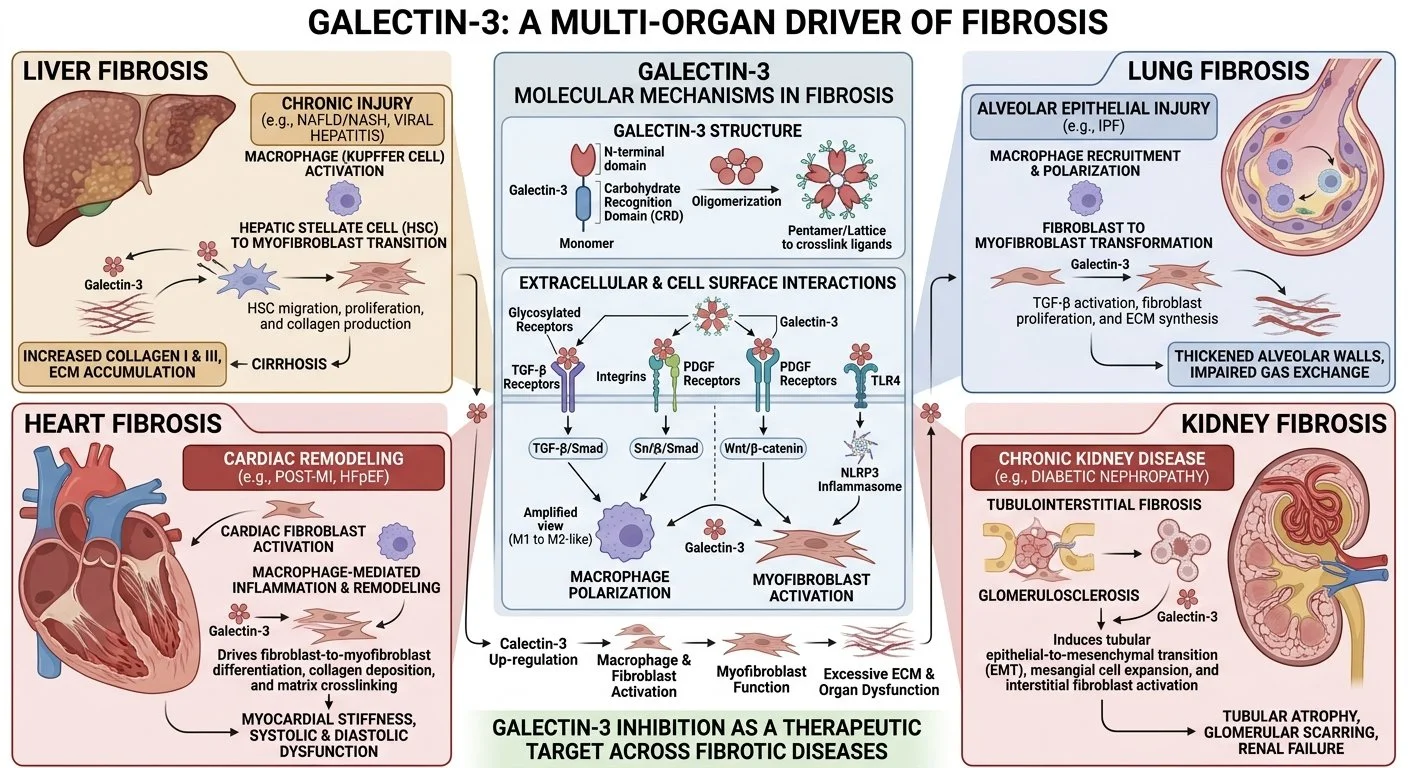
Research increasingly suggests that Galectin-3 (Gal-3) is involved in several of the cellular and molecular processes that drive fibrosis.
How May Galectin-3 Contribute to Fibrosis?
Fibrosis is not caused by a single molecule. It results from a network of inflammatory and tissue-repair pathways.
Galectin-3 appears to participate at several points in this process.
1. Tissue Injury Activates Immune Cells
Following chronic injury, macrophages and other immune cells accumulate within damaged tissue.
Activated macrophages can produce Galectin-3 along with cytokines, chemokines, and growth factors that influence nearby cells.
In several experimental models, Galectin-3 expression rises in parallel with the development of fibrosis.
2. Galectin-3 Promotes Myofibroblast Activation
One of the most important events in fibrosis is the transformation of fibroblasts or related precursor cells into matrix-producing myofibroblasts.
Myofibroblasts express markers such as α-smooth muscle actin (α-SMA) and produce large amounts of collagen.
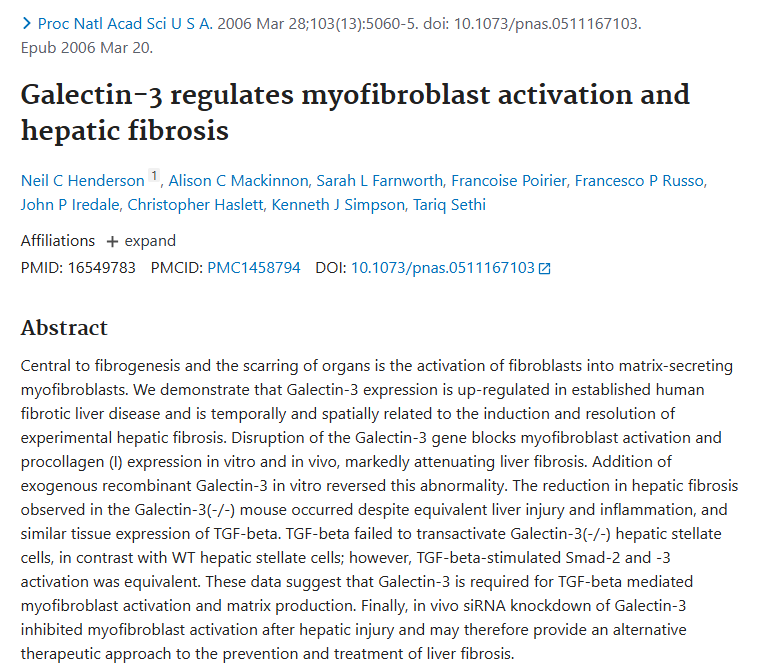
A landmark liver fibrosis study showed that mice lacking Galectin-3 had substantially impaired myofibroblast activation and reduced collagen production following liver injury.
When Galectin-3 was added back experimentally, myofibroblast activation could be restored.
These findings suggest that Galectin-3 may act as an important regulator of the cellular transition that leads to scar formation.
Galectin-3 and TGF-β Signaling
Transforming growth factor-β, or TGF-β, is one of the most important signaling molecules involved in fibrosis.
TGF-β promotes:
fibroblast activation → myofibroblast formation → collagen production → extracellular matrix accumulation
Research indicates that Galectin-3 can interact with this pathway.
In experimental liver fibrosis, Galectin-3 deficiency impaired TGF-β-driven myofibroblast activation even though overall TGF-β levels and conventional Smad2/3 signaling remained present.
In pulmonary fibrosis, studies have also demonstrated interactions between Galectin-3 and TGF-β signaling.
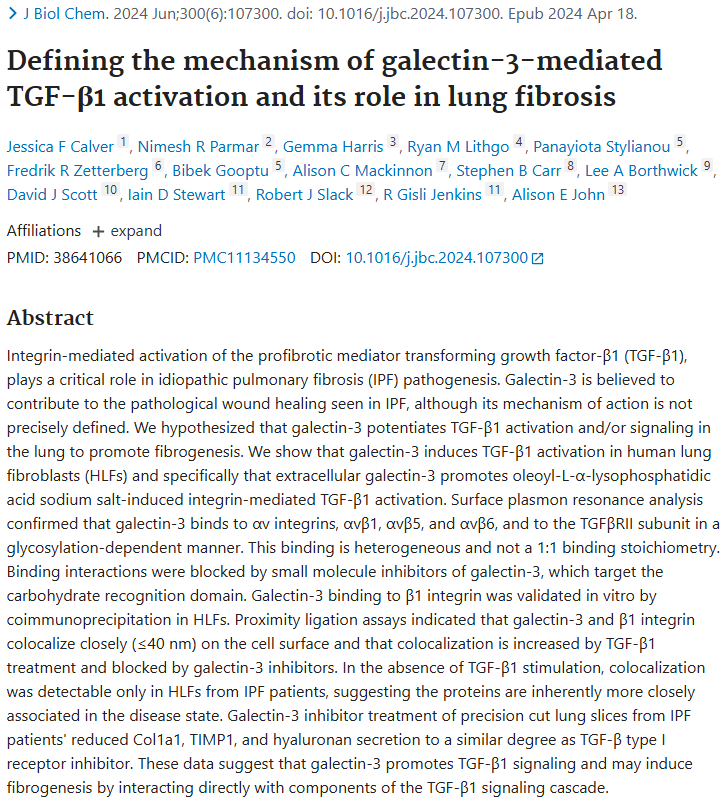
A 2024 mechanistic study using human lung fibroblasts found that extracellular Galectin-3 can facilitate integrin-mediated activation of TGF-β1. Galectin-3 was shown to interact with several αv integrins as well as the TGF-β receptor II subunit.
This provides one possible molecular mechanism through which Galectin-3 may amplify fibrotic signaling.
Galectin-3 and Liver Fibrosis
Some of the strongest early evidence connecting Galectin-3 to fibrosis came from liver studies.
Researchers examined Galectin-3 in human cirrhotic liver tissue as well as experimental models of hepatic fibrosis.
Galectin-3 expression was low in normal liver but markedly increased in human cirrhotic tissue. In animal models, Galectin-3 expression increased as fibrosis developed and declined as fibrosis resolved.
When the Galectin-3 gene was deleted in mice, chronic liver injury resulted in substantially less collagen accumulation and reduced expression of markers associated with activated hepatic stellate cells and myofibroblasts.
The study also demonstrated that reducing Galectin-3 with siRNA decreased myofibroblast activation and procollagen expression in both mouse and human hepatic stellate cells.
These experiments provide evidence that Galectin-3 may participate directly in hepatic fibrogenesis rather than simply serving as a marker of scar tissue.
Galectin-3 and Pulmonary Fibrosis
Galectin-3 has also been extensively investigated in pulmonary fibrosis.
In patients with idiopathic pulmonary fibrosis, or IPF, Galectin-3 has been detected at increased levels in fibrotic lung environments, including bronchoalveolar lavage fluid and activated alveolar macrophages. Experimental work has shown that Galectin-3 can stimulate fibroblast migration and collagen production.
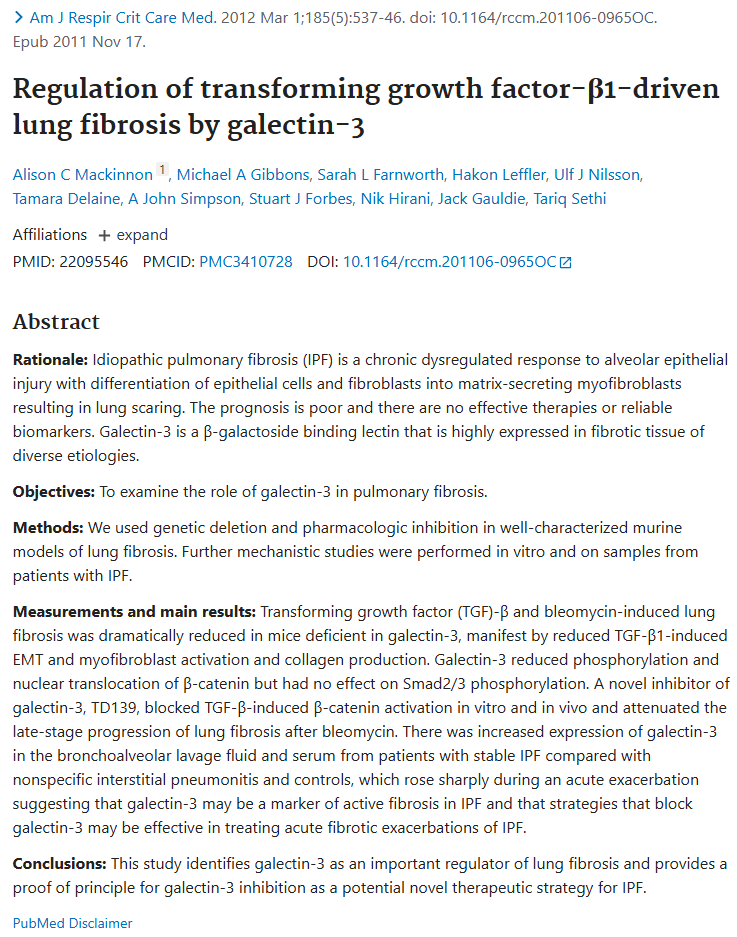
A major experimental study published in the American Journal of Respiratory and Critical Care Medicine examined both TGF-β1-induced and bleomycin-induced pulmonary fibrosis.
Mice genetically lacking Galectin-3 developed substantially less lung fibrosis and accumulated less collagen than wild-type animals. Galectin-3 deficiency was also associated with reduced myofibroblast activation.
The researchers also tested pharmacologic Galectin-3 inhibition and observed reduced progression of experimental pulmonary fibrosis.
Together, these findings helped establish Galectin-3 as an important experimental regulator of lung fibrosis.
Galectin-3 and Cardiac Fibrosis
Fibrosis of the heart can develop in association with hypertension, hormonal signaling, chronic inflammation, and cardiac injury.
Galectin-3 has been studied as a potential connection between inflammatory macrophage activity and activation of cardiac fibroblasts.
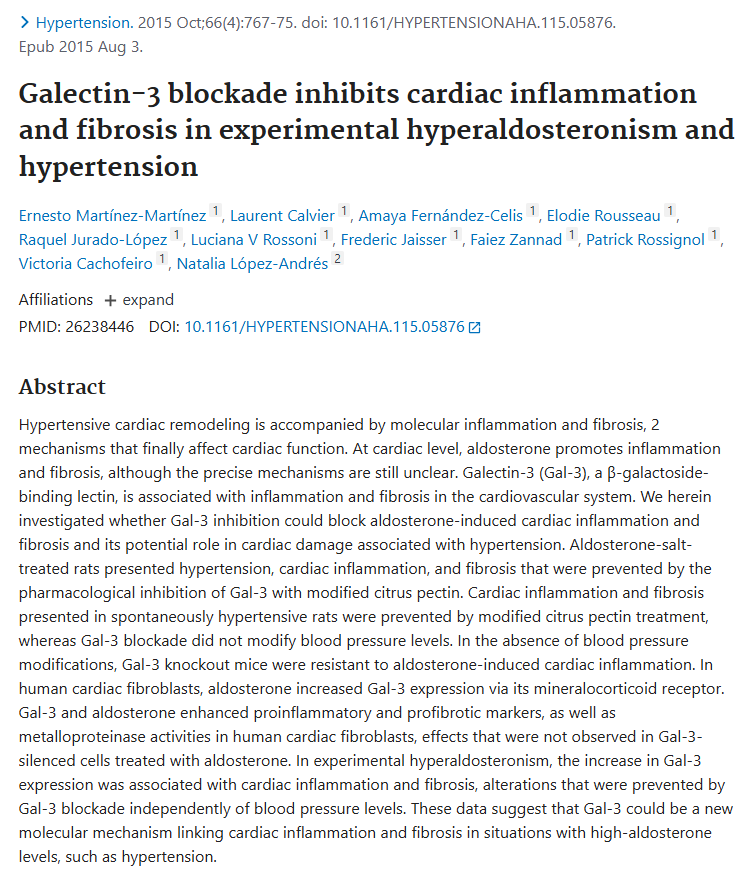
In experimental hyperaldosteronism and hypertension, increased Galectin-3 was associated with cardiac inflammation and fibrosis.
Researchers found that Galectin-3 knockout mice were resistant to several of these aldosterone-induced inflammatory changes. In human cardiac fibroblasts, aldosterone increased Galectin-3 expression, while Galectin-3 promoted inflammatory and profibrotic signaling. Blocking Galectin-3 reduced these responses.
These findings suggest that Galectin-3 may participate in the signaling network connecting inflammation, hormonal stimulation, and extracellular matrix remodeling in the heart.
Galectin-3 and Kidney Fibrosis
Galectin-3 is also altered during chronic kidney injury.
However, its role in renal fibrosis appears to be more context-dependent than in some other organs.
Some experimental models show that Galectin-3 can promote profibrotic signaling, while others suggest that Galectin-3 may also protect renal tubular cells from apoptosis and influence extracellular matrix remodeling.
For example, in a unilateral ureteral obstruction model, Galectin-3 expression increased markedly after kidney injury. Surprisingly, Galectin-3-deficient animals developed greater overall collagen accumulation despite having fewer myofibroblasts, suggesting that Galectin-3 can have both protective and profibrotic effects depending on the cell type and stage of injury.
More recent studies using other chronic kidney disease models have reported reduced renal fibrosis after genetic or pharmacologic Galectin-3 inhibition.
These findings highlight an important principle: the biological role of Galectin-3 can vary according to the organ, disease model, cell population, and timing of injury.
Why Is Galectin-3 of Scientific Interest in Fibrosis?
Galectin-3 is particularly interesting because it may connect two important phases of chronic disease:
inflammation → tissue remodeling
Activated macrophages are major sources of Galectin-3, while fibroblasts and myofibroblasts are major producers of fibrotic extracellular matrix.
Galectin-3 may therefore function as part of the communication network between inflammatory immune cells and tissue-remodeling cells.
Research has linked Galectin-3 with:
myofibroblast activation, collagen synthesis, TGF-β signaling, macrophage activity, fibroblast migration, extracellular matrix remodeling, and chronic tissue injury.
This combination has made Galectin-3 an important research target in fibrotic diseases.
Scientific Foundations: The Evidence for Galectin-3 and Fibrosis
-
![]()
Journal: Am J Respir Crit Care Med
Regulation of transforming growth factor-β1-driven lung fibrosis by galectin-3 (2012)
-
![]()
Journal: Hypertension
Galectin-3 blockade inhibits cardiac inflammation and fibrosis in experimental hyperaldosteronism and hypertension (2015)
-
![]()
Journal: Biol Chem
Defining the mechanism of galectin-3-mediated TGF-β1 activation and its role in lung fibrosis (2024)
-
![]()
Journal: PNAS
Galectin-3 regulates myofibroblast activation and hepatic fibrosis (2006)