The Enteric Switch: How Galectin-3 Destroys the Gut’s Nervous System)
Introduction
The Shift in Research For decades, functional gastrointestinal disorders and motility issues were treated primarily as local muscular or hormonal dysfunctions. Today, research recognizes the Enteric Nervous System (ENS)—a complex network of over 500 million neurons and glia embedded in the GI wall—as the "second brain" controlling digestion, immune responses, and gut-brain communication.
What is Gal3 in the Enteric Nervous System?
Galectin-3 (Gal-3) is a carbohydrate-binding protein produced by activated enteric glial cells (EGCs), mucosal macrophages, and damaged intestinal epithelial cells. While involved in acute tissue repair, chronic overexpression of Gal-3 in the gut wall converts supportive glial cells into neurotoxic drivers, leading to enteric neuronal loss, myenteric plexus degradation, and severe dysmotility.
How Gal3 Destroys the Enteric Nervous System:
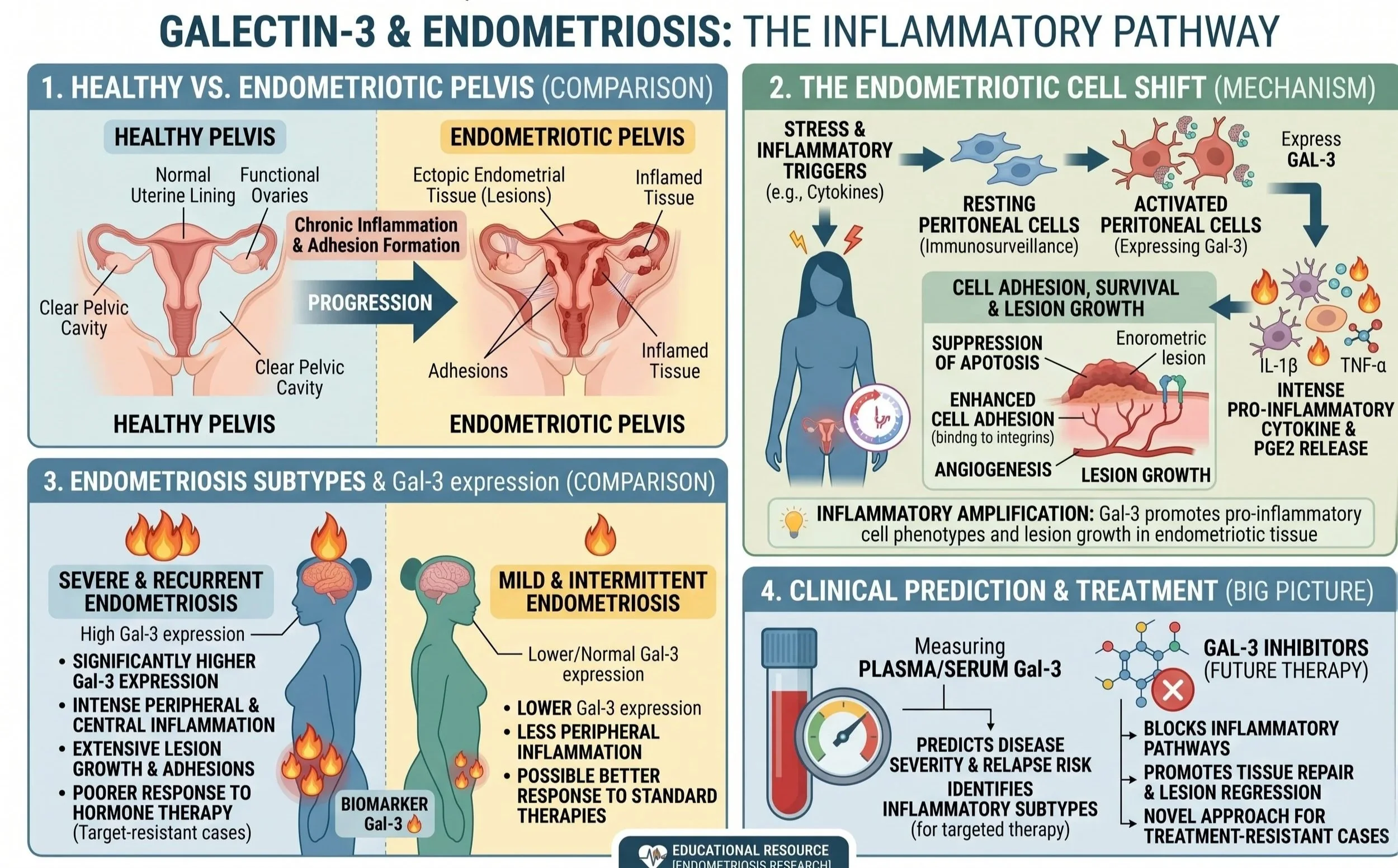
What is Gal3 in Endometriosis? Galectin-3 (Gal-3) is a pro-inflammatory lectin secreted by peritoneal macrophages, vascular endothelial cells, and ectopic endometrial cells. While Gal-3 normally regulates tissue repair and immune response, its pathological overexpression in the pelvic cavity creates a permissive environment that allows endometrial tissue to attach outside the uterus, evade immune clearance, construct new blood vessel networks, and form painful fibrotic adhesions.
How Gal3 Drives Endometriotic Lesion Progression:
1.Enteric Glial Cell Reactivity (The Neurotoxic Switch)
Enteric glial cells (EGCs) normally support neuronal health and maintain gut barrier integrity.
The Gal3 Effect: Under conditions of dysbiosis or chronic inflammation, EGCs overexpress Gal-3. Gal-3 acts in an autocrine loop, locking glia into a "reactive/pro-inflammatory" state. Instead of protecting neurons, reactive glia release damaging inflammatory cytokines (TNF-$\alpha$, IL-1$\beta$, and IL-6).
2. TLR4 Activation & Cytokine Storm
Extracellular Gal-3 released into the neuromuscular layers of the gut wall acts as a Damage-Associated Molecular Pattern (DAMP).
The Gal3 Effect: Gal-3 binds directly to Toll-Like Receptor 4 (TLR4) on enteric neurons and immune cells. This triggers downstream NF-$\kappa$B signaling, causing localized neuroinflammation and driving oxidative stress through inducible nitric oxide synthase (iNOS) expression.
3. Enteric Neuronal Loss & Plexus Degeneration
Peristalsis and gut motility rely on coordinated firing between nitrergic (inhibitory) and cholinergic (excitatory) motor neurons in the myenteric (Auerbach's) plexus.
The Gal3 Effect: Sustained Gal-3-driven neuroinflammation induces selective apoptosis (cell death) of enteric neurons. This loss of neuronal density leads directly to intestinal dysmotility (gastroparesis, chronic constipation, pseudo-obstruction) and visceral hypersensitivity (chronic abdominal pain).
4. Epithelial Barrier Degradation ("Leaky Gut")
The submucosal (Meissner's) plexus regulates epithelial permeability and blood flow.
The Gal3 Effect: Gal-3-induced inflammation disrupts epithelial tight junction proteins (such as ZO-1 and Occludin). This increases mucosal permeability, allowing bacterial toxins (LPS) to enter the circulation and exacerbate both local intestinal and systemic inflammation along the gut-brain axis.
Therapeutic Potential: Blocking Gal3 to Restore Gut Function
Traditional therapies for GI motility focus on symptomatic stimulation (prokinetics) without addressing underlying neuronal loss.
Targeting Galectin-3 offers a neuroprotective strategy:
Prevents Enteric Neuron Death: Inhibiting Gal-3 blocks TLR4-mediated neurotoxicity, preserving myenteric plexus integrity.
Restores Gut Motility: Halting Gal-3 production calms reactive glia, restoring synchronized smooth muscle contractions and normal intestinal transit.
Repairs the Intestinal Barrier: Blocking Gal-3 downregulates mucosal inflammatory cytokines, strengthening tight junctions and sealing "leaky gut."
Scientific Foundations: The Evidence for Galectin-3 and Endometriosis
-
![]()
Journal: Mol Cell Endocrinol
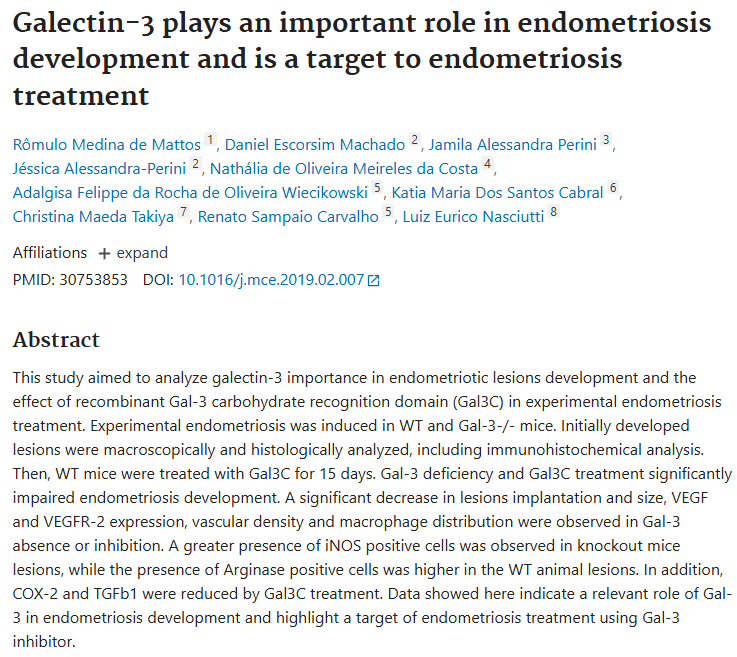
Galectin-3 plays an important role in endometriosis development and is a target to endometriosis treatment (2019)
-
![]()
Journal: Gynecol Endocrinol
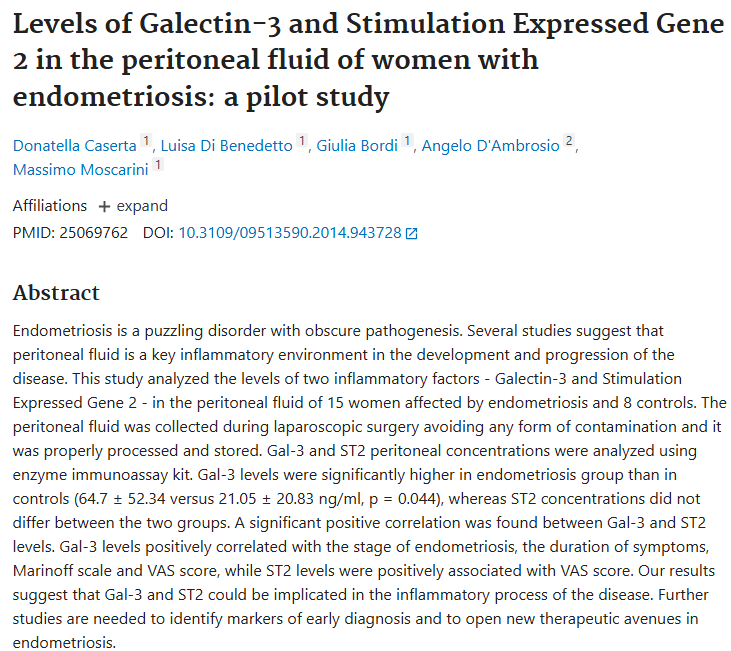
Levels of Galectin-3 and Stimulation Expressed Gene 2 in the peritoneal fluid of women with endometriosis: a pilot study (2014)
-
![]()
Journal: Int J Molecular Sciences
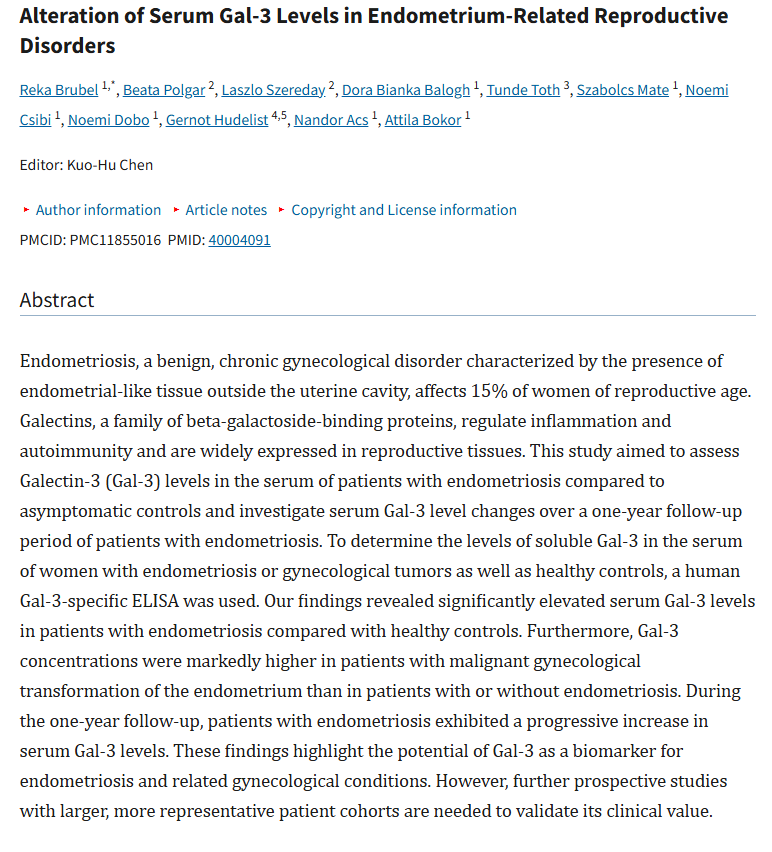
Alteration of Serum Gal-3 Levels in Endometrium-Related Reproductive Disorders (2025)
-
![]()
Journal: Peer J
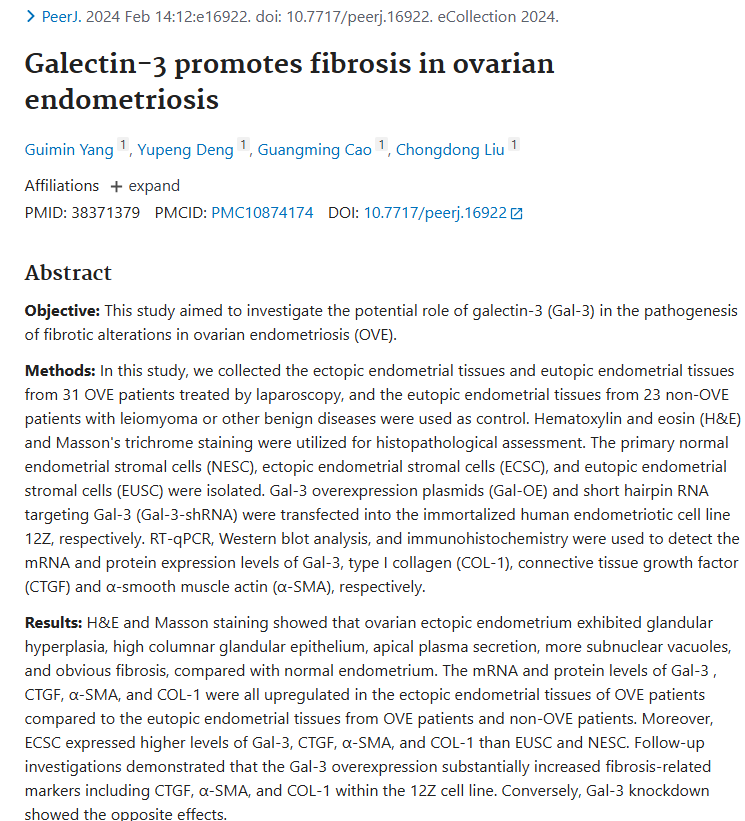
Galectin-3 promotes fibrosis in ovarian endometriosis (2024)