The Diabetes Intercept: How Galectin-3 Blocks Insulin and Damages Organs
Introduction
We are accustomed to hearing that type 2 diabetes is caused by genetics, poor diet, or a lack of exercise. But what if a single protein in your body was actively acting like an "unplugged wire," short-circuiting how your cells respond to insulin?
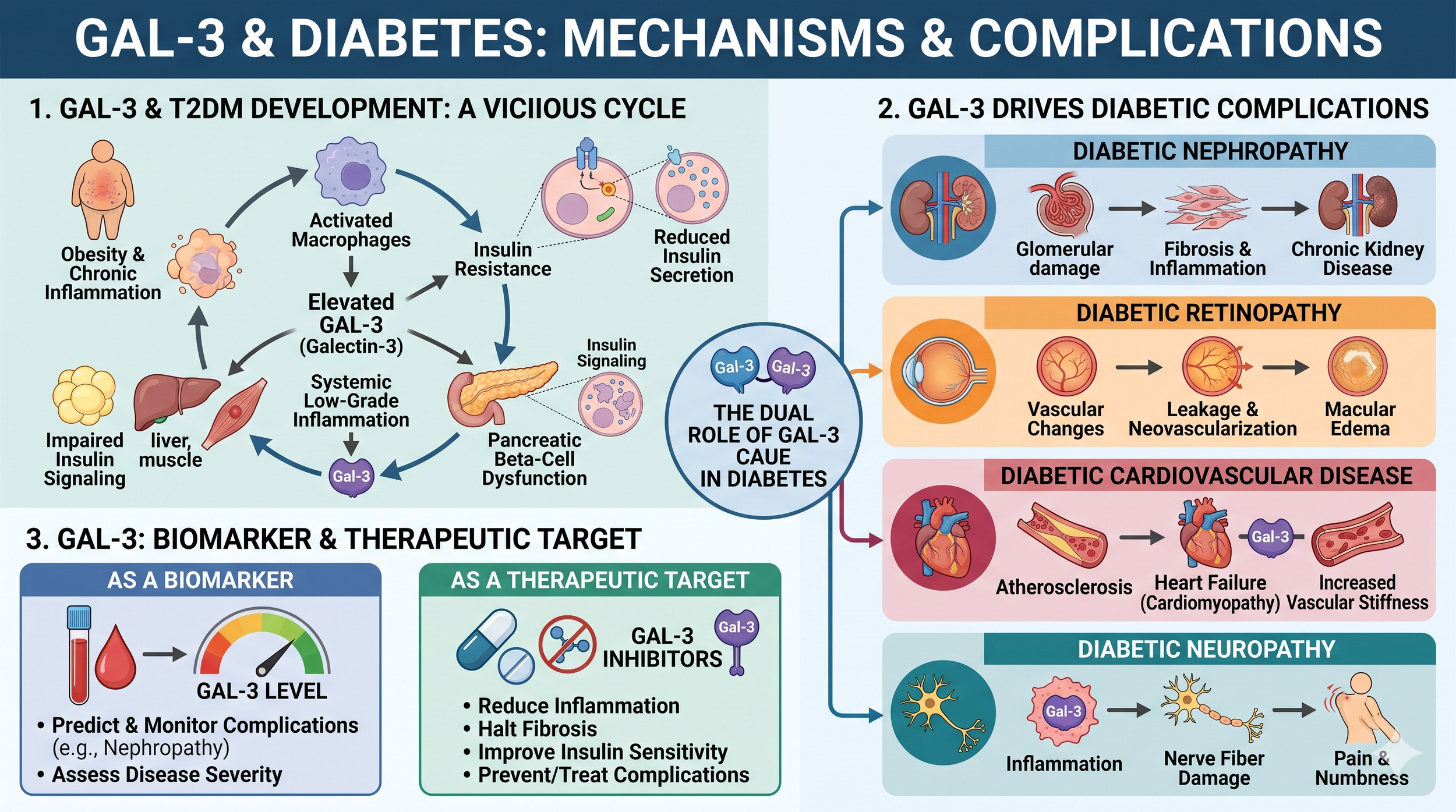
Emerging science has identified Galectin-3 (Gal-3) as a critical hidden link between chronic low-grade inflammation, insulin resistance, and long-term diabetic complications.
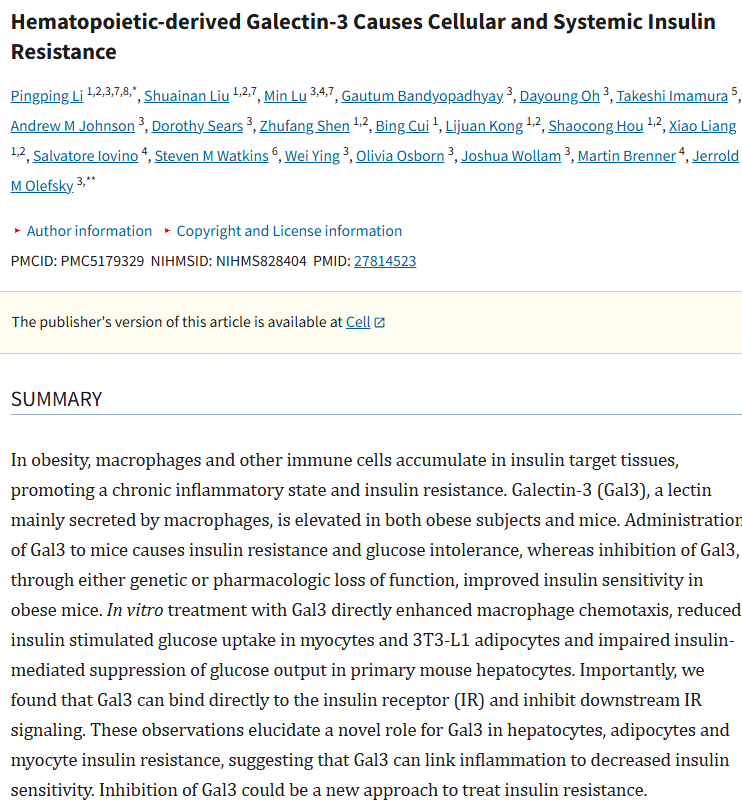
The Molecular Sabotage: How Gal-3 Locks Out Insulin
In a healthy body, the hormone insulin binds to an insulin receptor on a cell’s surface, opening a metaphorical "door" that allows glucose (sugar) to exit the bloodstream and enter the cell for energy.
In individuals with obesity or chronic inflammation, specialized immune cells called macrophages gather in fatty tissues and pump out massive amounts of Galectin-3.
🚫 The Blockade Mechanism: Gal-3 acts like a broken key jammed inside a lock. It binds directly to the insulin receptor, physically preventing actual insulin from docking. Because insulin cannot attach, the cell remains locked, glucose piles up in the bloodstream, and systemic insulin resistance is born.
Beyond Blood Sugar: Gal-3 and Diabetic Complications
The danger of elevated Gal-3 doesn't stop at insulin resistance. Because Gal-3 promotes rapid tissue scarring (fibrosis) and ongoing cell stress, it acts as a primary driver for major diabetic complications:
1. Diabetic Nephropathy (Kidney Damage)
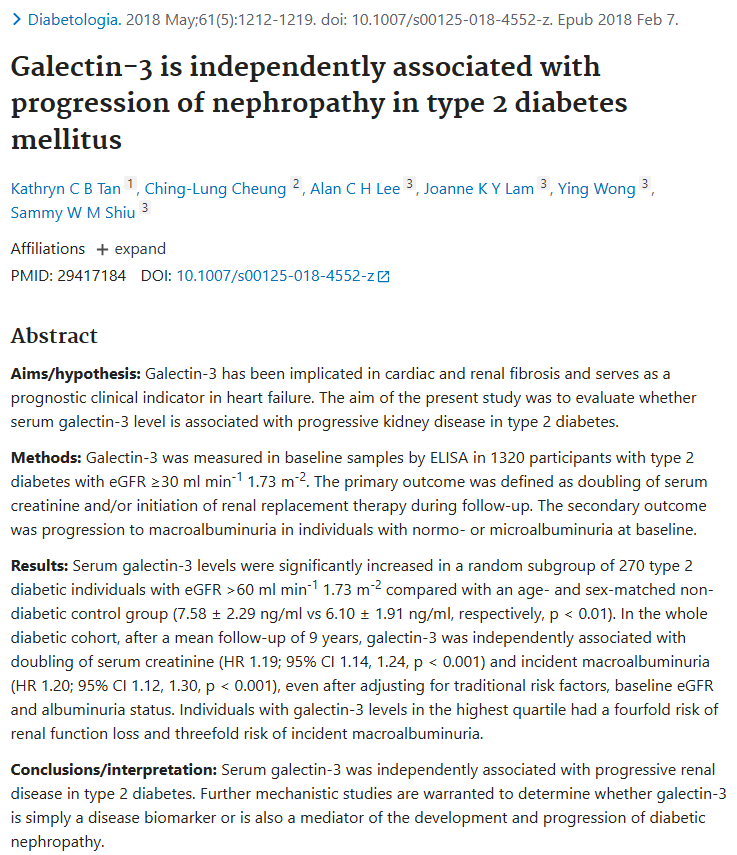
The kidneys act as the body's filtration system. High circulating levels of Gal-3 cause inflammation in the kidney's filtering units, triggering tubulointerstitial fibrosis (scarring). Long-term clinical studies show that diabetic patients with the highest quartile of Gal-3 face up to a fourfold risk of losing renal function.
2. Diabetic Cardiomyopathy (Heart Failure)
Diabetes increases the risk of heart failure, even in the absence of coronary artery disease. Gal-3 stimulates structural remodeling of the heart muscle. By driving excess collagen deposition, it forces the heart walls to become stiff, thick, and less capable of pumping blood efficiently.
Scientific Foundations: The Evidence for Galectin-3 and Diabetes Mellitus
-
![]()
Journal: Cell
Hematopoietic-derived Galectin-3 Causes Cellular and Systemic Insulin Resistance (2017)
-
![]()
Journal: Diabetologia
Galectin-3 is independently associated with progression of nephropathy in type 2 diabetes mellitus (2018)
-
![]()
Journal: Clinical Endocrinol Metab
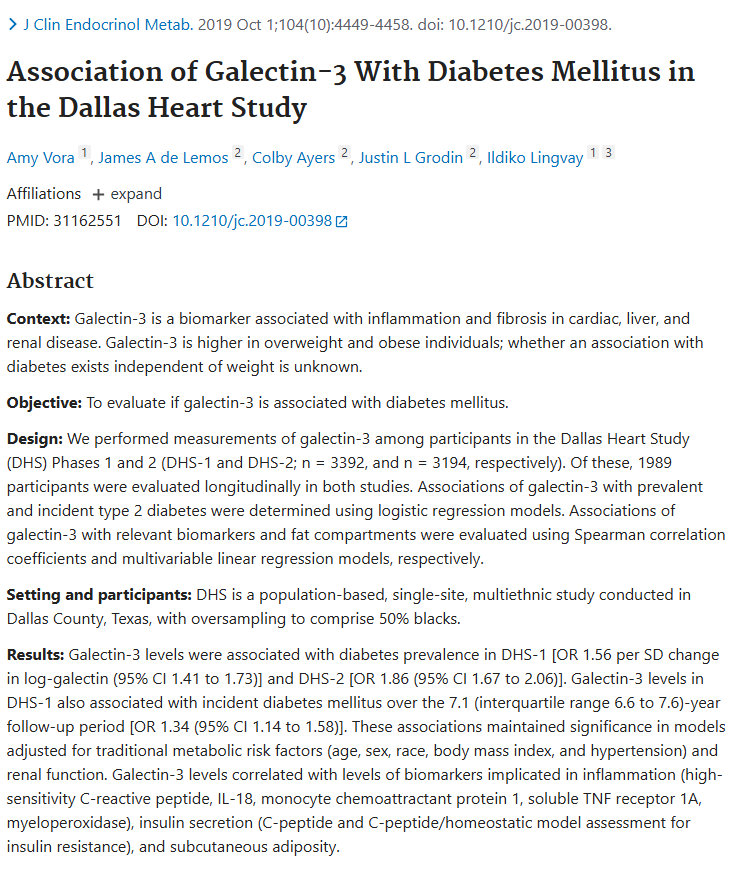
Association of Galectin-3 With Diabetes Mellitus in the Dallas Heart Study (2019)