The Hidden Spark: Is Galectin-3 the "Missing Link" in Major Depressive Disorder?
Introduction
The Shift in Depression Research For decades, the "Monoamine Hypothesis"—the idea that depression is caused solely by an imbalance of chemicals like serotonin and dopamine—has dominated the field. However, with many patients failing to respond to traditional antidepressants (SSRIs), researchers have had to look deeper. High-impact studies now suggest that a major culprit isn't just a chemical imbalance, but a chronic neuroinflammatory response within the brain. At the center of this inflammatory storm is a versatile protein called Galectin-3 (Gal-3).
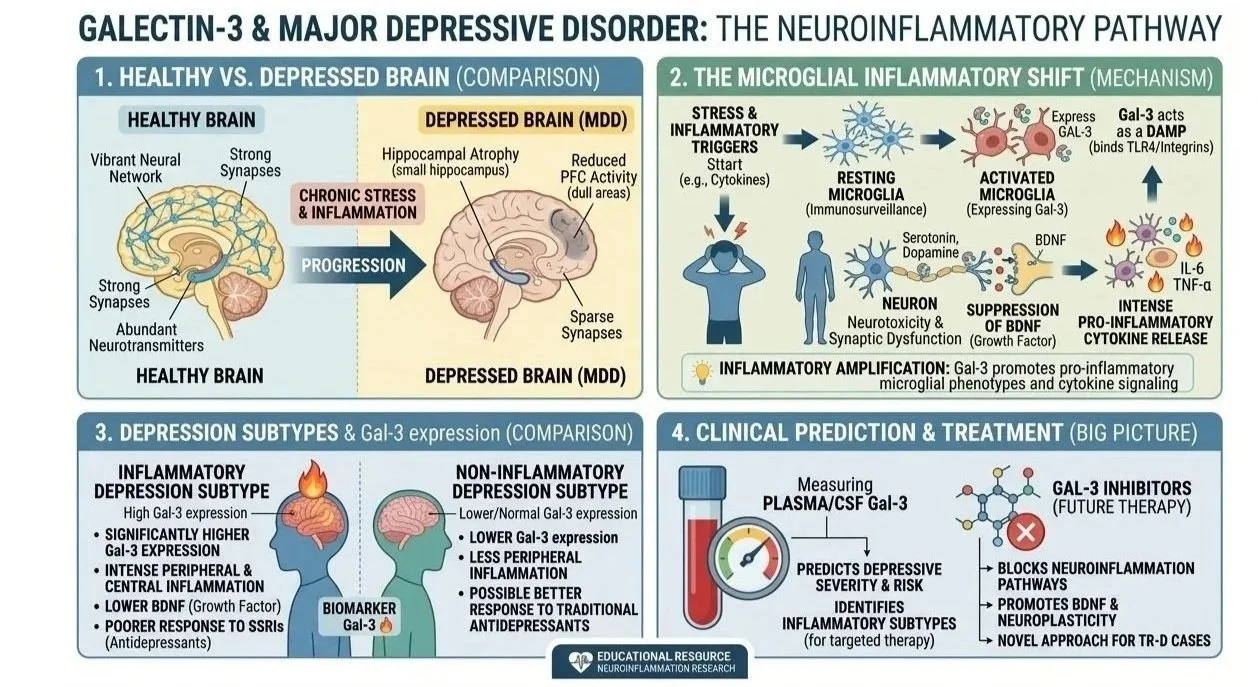
How Gal3 Builds Toxic Roadblocks in the Depressed Brain To understand why Galectin-3 is so dangerous in clinical depression, we have to look at how it interacts with the brain's immune cells. Gal3 doesn't just watch from the sidelines—it acts as an amplifier, cementing the brain in a state of chronic stress. Here is how Gal3 teams up with the brain's inflammatory systems to drive depressive symptoms:precisely time a valve replacement procedure.
1. Microglial Activation: The Immune Switch When the brain experiences chronic psychosocial stress or trauma, microglia (the brain’s immune sentinels) rush to the scene.
The Gal3 Effect: Gal3 acts as the master switch. It forces microglia into a relentless "pro-inflammatory" state. Instead of protecting the brain, these activated microglia begin releasing toxic inflammatory chemicals (cytokines like IL-6 and TNF-α) that damage surrounding healthy neurons.
2. BDNF Suppression: The Growth Blocker Brain-Derived Neurotrophic Factor (BDNF) is like "Miracle-Gro" for the brain, helping neurons grow and form new connections (neuroplasticity)—a process vital for emotional regulation and mood.
The Gal3 Effect: The massive inflammation triggered by Gal3 actively suppresses the production of BDNF in the hippocampus. Without BDNF, the brain loses its ability to adapt, repair, and form positive emotional pathways.
3. Synaptic Pruning: Destroying Connections Healthy cognition and mood rely on synapses (the connections between neurons) firing properly.
The Gal3 Effect: Driven by Gal3-induced inflammation, overactive microglia begin physically "eating" (pruning) healthy synapses. This loss of synaptic density leads directly to the core symptoms of depression: brain fog, anhedonia (inability to feel pleasure), and persistent low mood.
Can We Block Gal3 to Treat Depression? If Gal3 is the fuel for neuroinflammation, can we cut off the supply? This is a major frontier in psychiatric research. By developing Gal3 Inhibitors (antibodies or small molecules designed to block the Gal3 binding site), researchers aim to "calm" the microglia, halt the cytokine storm, and give the brain a chance to restore its natural BDNF levels—offering a powerful new mechanism for patients who do not respond to standard antidepressants.
Scientific Foundations: The Evidence for Galectin-3 and Depression
-
![]()
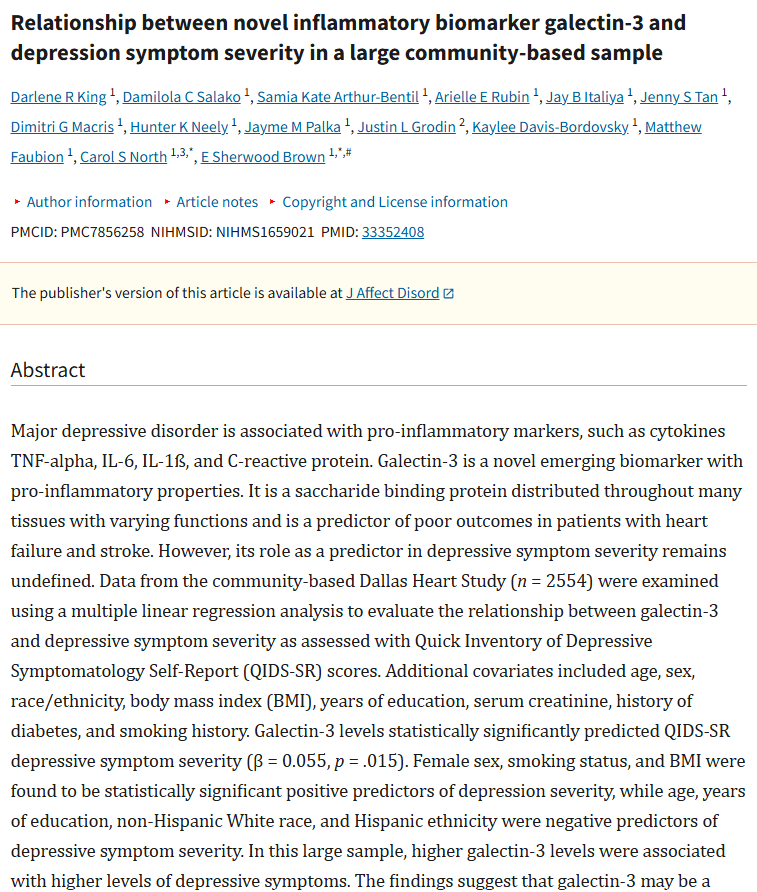
Journal: Affective Disorders
Relationship between novel inflammatory biomarker galectin-3 and depression symptom severity in a large community-based sample (2022)
-
![]()
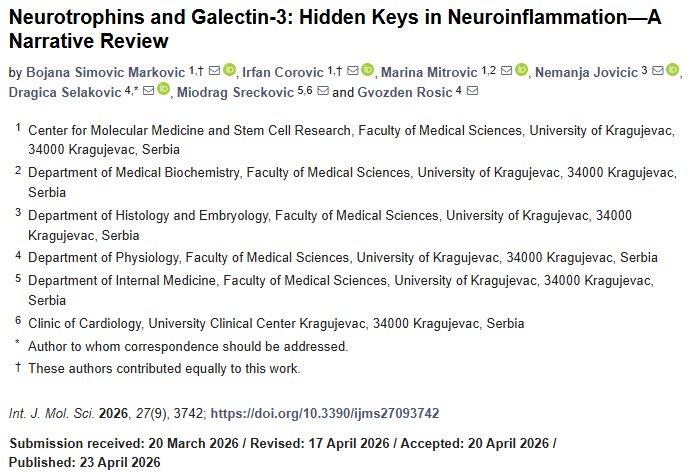
Journal: International Journal Molecular Sciences
Neurotrophins and Galectin-3: Hidden Keys in Neuroinflammation—A Narrative Review (2026)
-
![]()
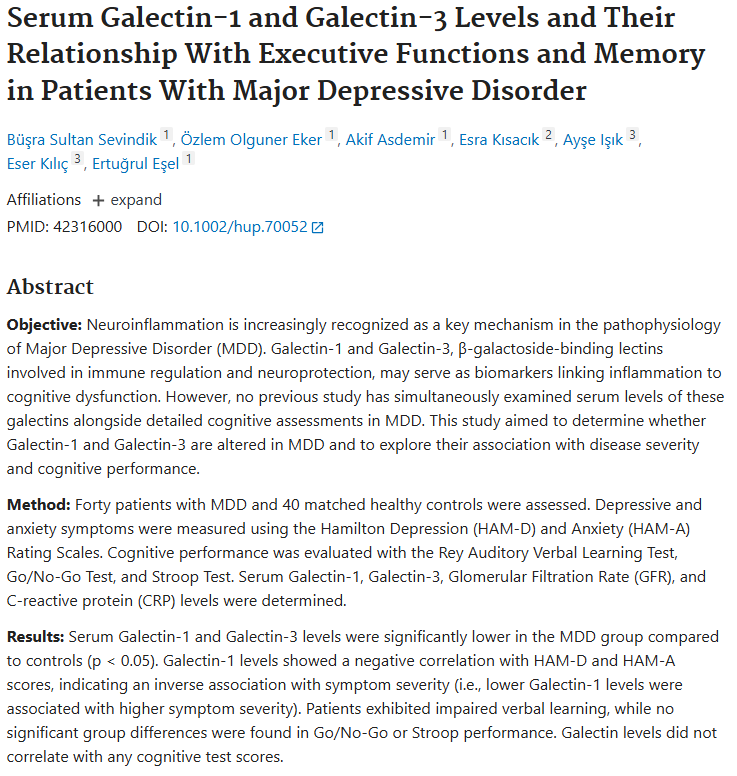
Journal: Human Psychopharmacology-Clinical and Experimental
Serum Galectin-1 and Galectin-3 Levels and Their Relationship With Executive Functions and Memory in Patients With Major Depressive Disorder (2026)