The Calcified Gateway: How Galectin-3 Turns Heart Valves to Bone
Introduction
Imagine the heart's main exit door—the aortic valve—slowly turning into solid stone. This is the reality of Degenerative Aortic Stenosis (AS). For decades, scientists viewed this condition as simple "wear and tear," a mechanical byproduct of getting older.
However, modern molecular biology has flipped that script. We now know that aortic stenosis is an active, inflammatory disease. Sitting right at the center of this destructive process is a cellular ringleader: Galectin-3 (Gal-3).
From Flexible Tissue to Solid Bone: The Osteogenic Shift
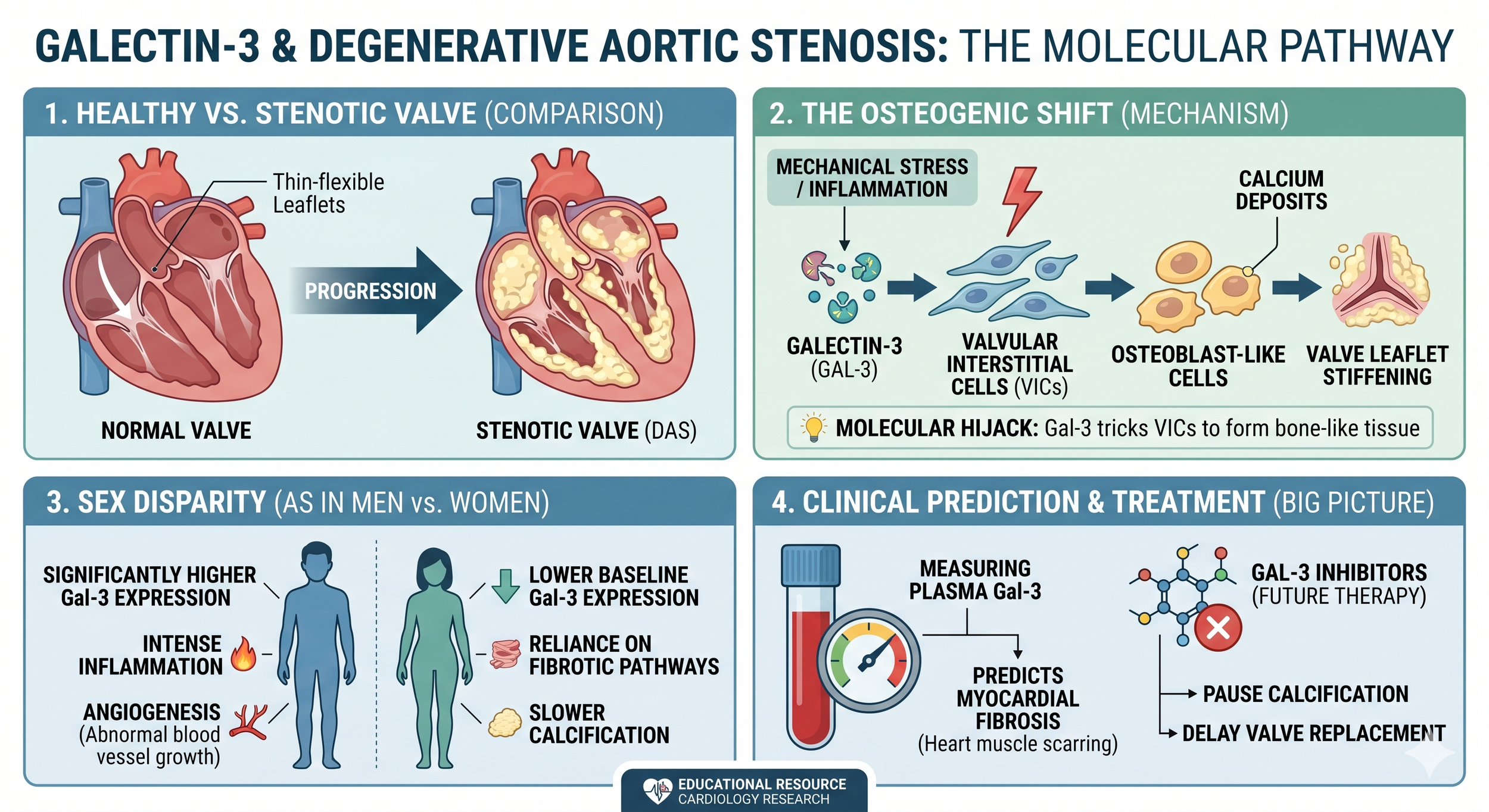
Your aortic valve relies on ultra-flexible flaps called leaflets to open and close over 100,000 times a day. Nestled inside these leaflets are Valvular Interstitial Cells (VICs), which normally keep the valve healthy and pliable.
When chronic mechanical stress or high cholesterol damages the valve, it rings an alarm that triggers a surge of Galectin-3.
🦴 The Molecular Hijack: When Gal-3 floods the valve tissue, it forces the healthy VICs to undergo an "osteogenic differentiation." In plain English, Gal-3 tricks your heart valve cells into acting like bone cells. They begin secreting calcium and bone-related proteins (like BMP-2 and Osteopontin), transforming a soft tissue valve into a rigid, calcified shell.
The Sex Disparity: Why Men Face a Different Battle
One of the most striking breakthroughs in recent cardiovascular research is that degenerative aortic stenosis behaves differently depending on biological sex.
Higher Expression in Men: Tissue samples show that men with severe AS have significantly higher concentrations of Gal-3 in their aortic valves than women with the exact same disease severity.
Triple Threat Pathway: In men, Gal-3 doesn’t just cause calcification and inflammation; it uniquely promotes angiogenesis (the formation of abnormal, leaky blood vessels within the valve leaflets), which accelerates the stiffening process.
A Crystal Ball for Cardiologists
Beyond causing physical damage inside the valve itself, Galectin-3 acts as a vital signaling beacon in a patient's blood.
When a patient has severe aortic stenosis, the left ventricle of the heart must pump with immense force to push blood through the narrowed valve. This extreme pressure leads to heart muscle scarring (myocardial fibrosis). By measuring circulating plasma Gal-3 levels, doctors can gauge exactly how much stress the heart muscle is under, allowing them to predict a patient's risk of heart failure and precisely time a valve replacement procedure.
Scientific Foundations: The Evidence for Galectin-3 and Degenerative Aortic Stenosis
-
![]()
Journal: International Journal Molecular Sciences
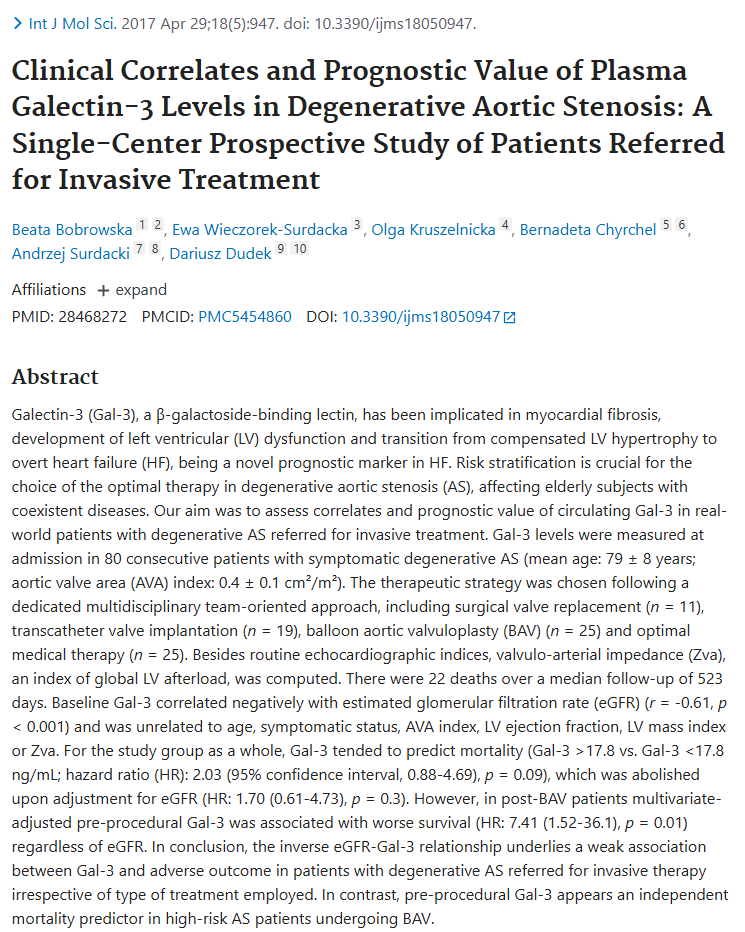
Clinical Correlates and Prognostic Value of Plasma Galectin-3 Levels in Degenerative Aortic Stenosis: A Single-Center Prospective Study of Patients Referred for Invasive Treatment (2017)
-
![]()
Journal: American Heart Association
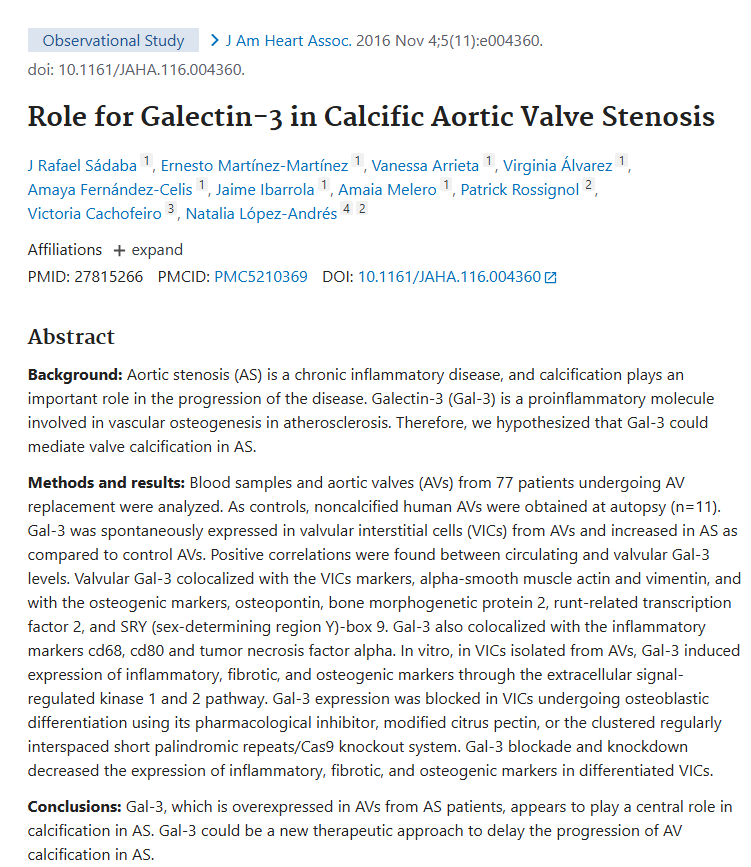
Role for Galectin-3 in Calcific Aortic Valve Stenosis (2016)
-
![]()
Journal: Biology of Sex Differences
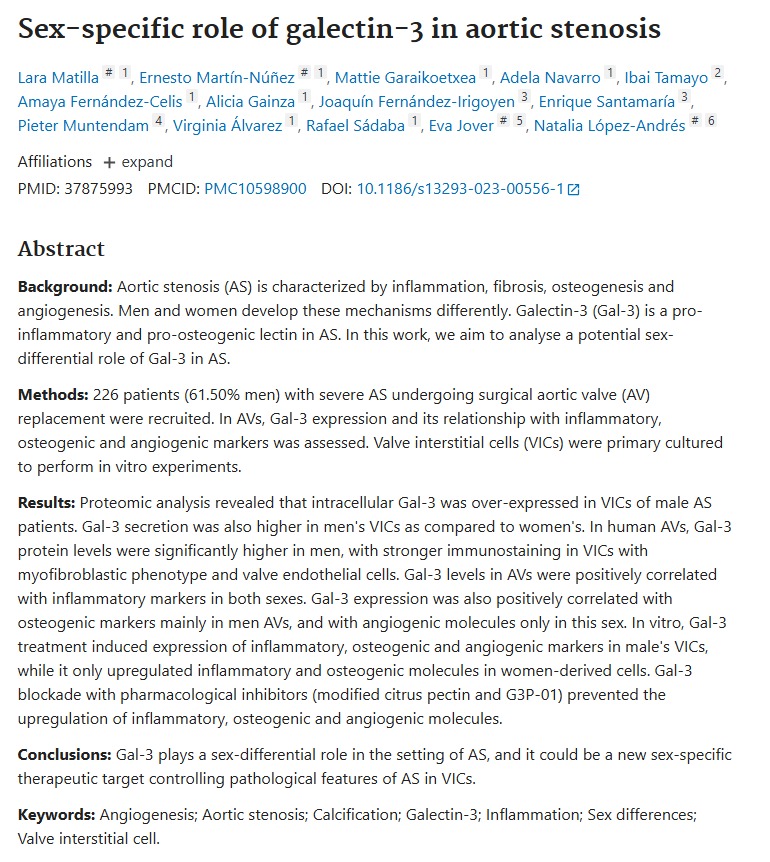
Sex-specific role of galectin-3 in aortic stenosis (2023)