The Cellular Switch: How Galectin-3 Fuels COPD and Airway Inflammation
Introduction
Chronic Obstructive Pulmonary Disease (COPD) is more than just a "smoker's cough." It is a progressive, debilitating lung condition characterized by chronic inflammation and irreversible airflow limitation. But what is happening at the microscopic level to cause this damage?
Enter Galectin-3—a unique, multi-functional protein that scientists have pinned down as a major driver in the progression of COPD.1. The Brain's "Damage Signal"
Following a cerebral infarction, the brain’s resident immune cells (microglia) become activated. These cells are the primary source of Gal-3 in the central nervous system.
Acute Response: Within 24–72 hours of a stroke, Gal-3 levels spike. It helps stabilize the damaged area by promoting the formation of a "glial scar," which prevents the injury from spreading to healthy brain tissue.
Chronic Neuroinflammation: If Gal-3 remains high, it shifts microglia into a "pro-inflammatory" state. This creates a cycle of chronic inflammation that kills surviving neurons and prevents the brain from repairing its neural connections (neurogenesis).
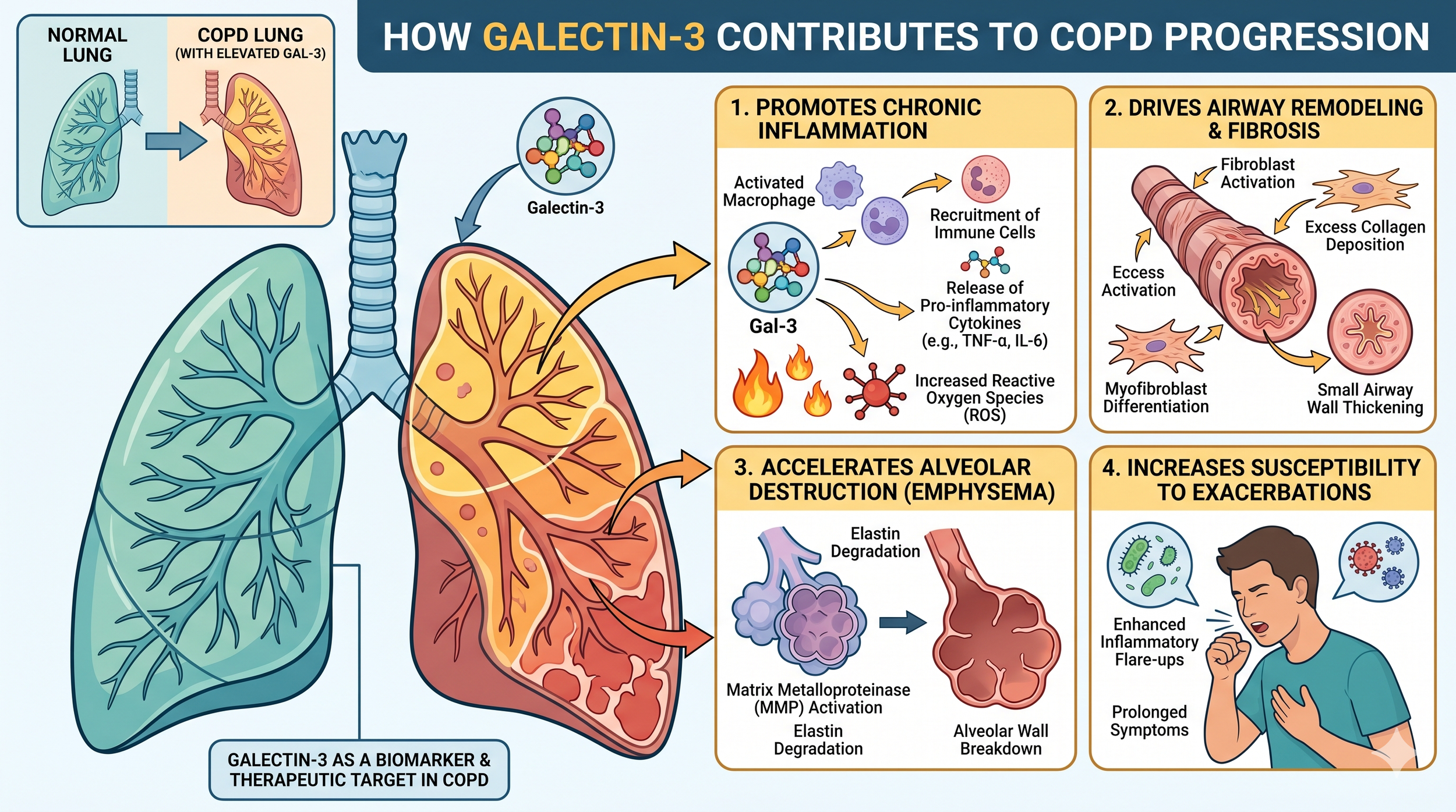
The Connection: How Galectin-3 Impacts COPD
Recent clinical research has revealed a direct link between high levels of Galectin-3 and the severity of COPD. The protein impacts the lungs in two primary ways:
1. Small Airway Remodeling
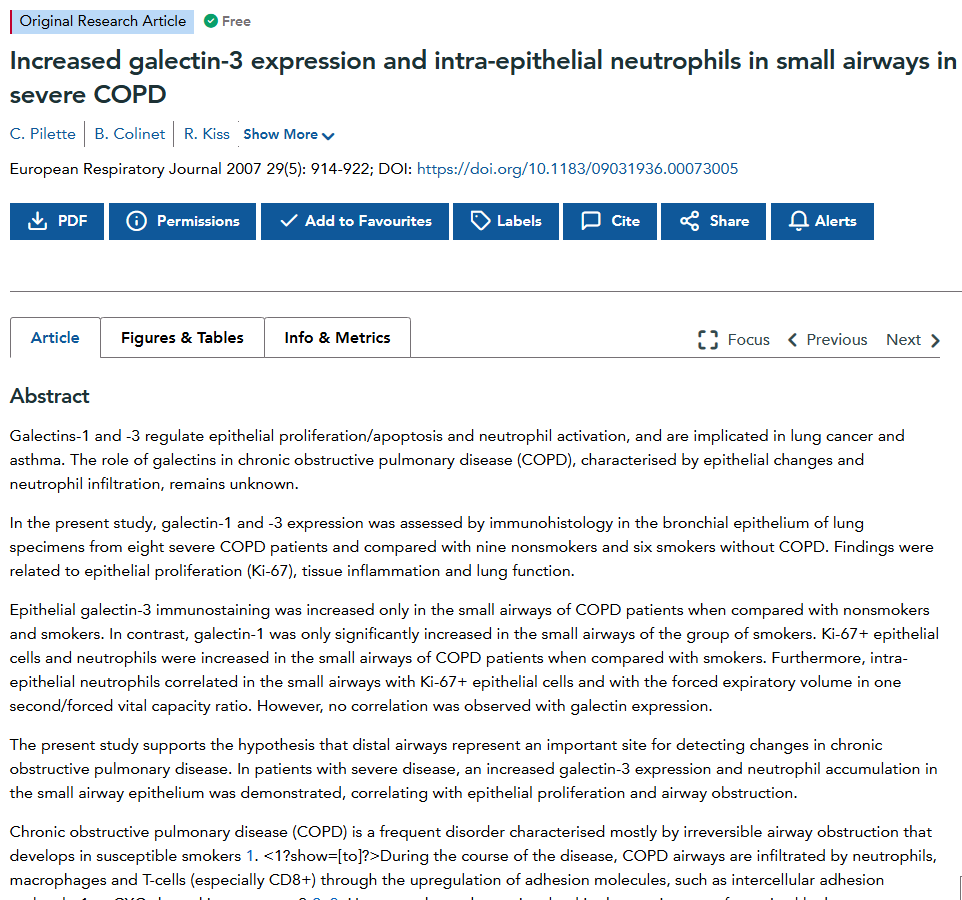
The deepest parts of your lungs contain tiny airways that are highly susceptible to damage. Research shows that patients with severe COPD have an intense concentration of Galectin-3 in these small airways. This overabundance attracts neutrophils (white blood cells), leading to chronic swelling and permanent scarring that makes breathing incredibly difficult.
2. Triggers for Acute Flare-Ups (Exacerbations)
COPD patients often experience sudden, severe worsening of their symptoms, known as acute exacerbations, which frequently require hospitalization.
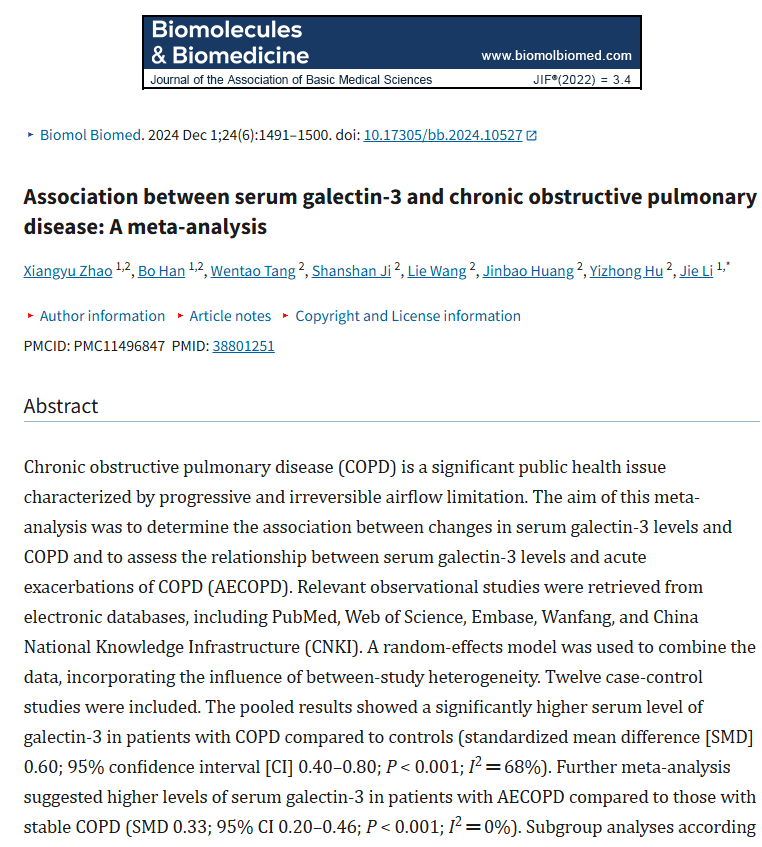
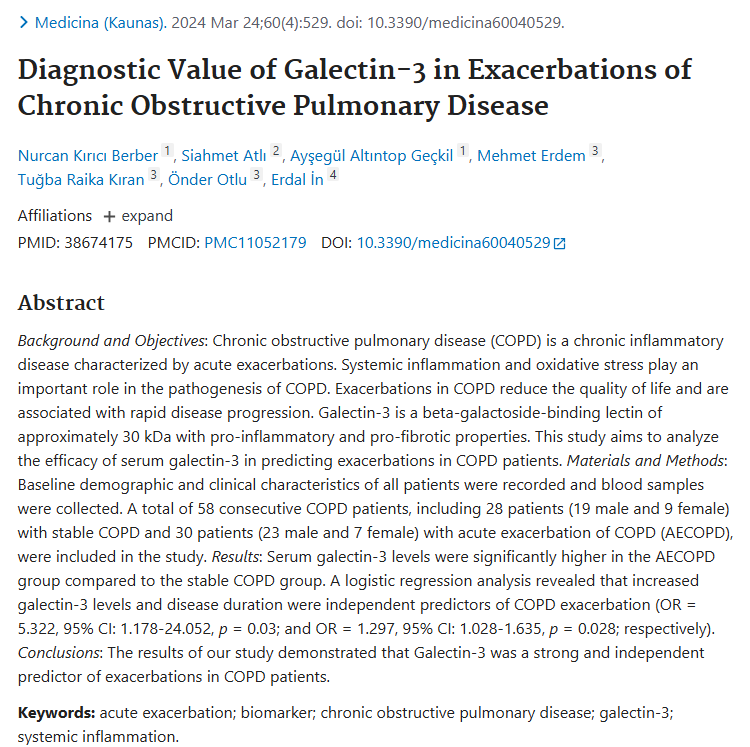
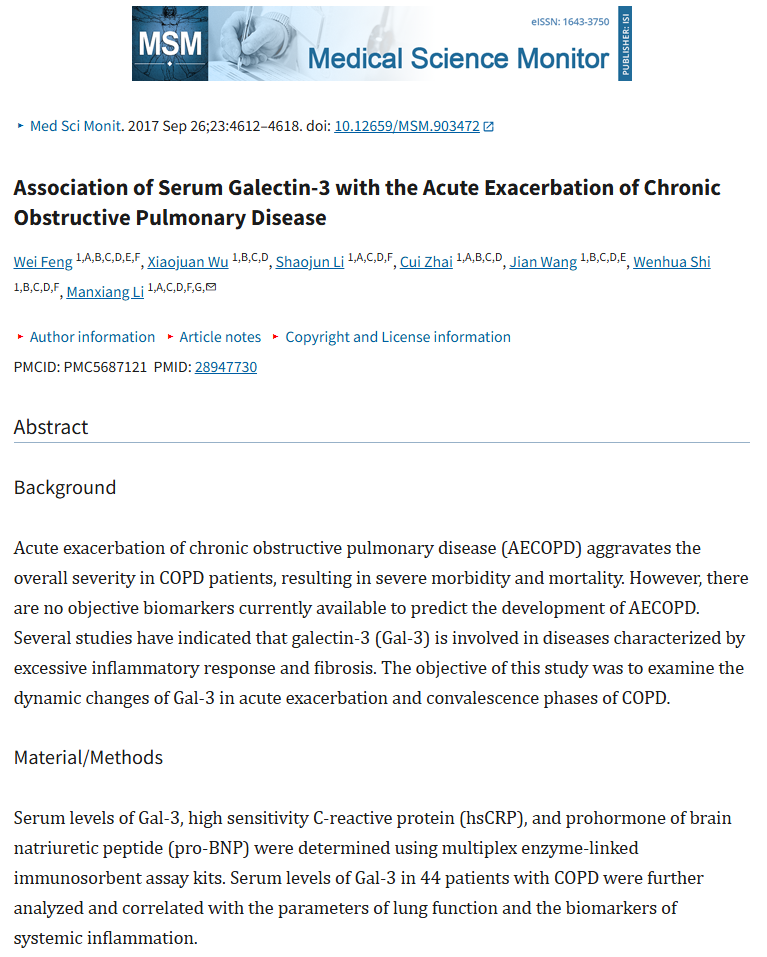
The Biomarker Link: During an active flare-up, Galectin-3 levels in the blood spike significantly.
The Recovery Path: As a patient recovers and lung inflammation subsides, Galectin-3 levels visibly drop back down.
Why Does This Matter for the Future of Medicine?
Understanding Galectin-3 opens up exciting new frontiers for treating lung diseases:
Better Diagnostics: Doctors can use a simple blood test to measure Galectin-3, using it as a "crystal ball" to predict which patients are at the highest risk for severe flare-ups.
Targeted Therapies: Scientists are currently researching Galectin-3 inhibitors—drugs designed to block this protein and potentially halt lung scarring before it even starts.
Scientific Foundations: The Evidence for Galectin-3 and COPD
-
![]()
Journal: Respiratory Medicine
Increased galectin-3 expression and intra-epithelial neutrophils in small airways in severe COPD (2007)
-
![]()
Journal: Biomolecules and Biomedicine
Association between serum galectin-3 and chronic obstructive pulmonary disease: A meta-analysis (2024)
-
![]()
Journal: Medicina
Diagnostic Value of Galectin-3 in Exacerbations of Chronic Obstructive Pulmonary Disease (2024)
-
![]()
Journal: Medical Science Monitor
Association of Serum Galectin-3 with the Acute Exacerbation of Chronic Obstructive Pulmonary Disease (2017)