The Brain's Gardeners: How Gal3 Disrupts Neural Wiring in Autism
Autism Spectrum Disorder (ASD)
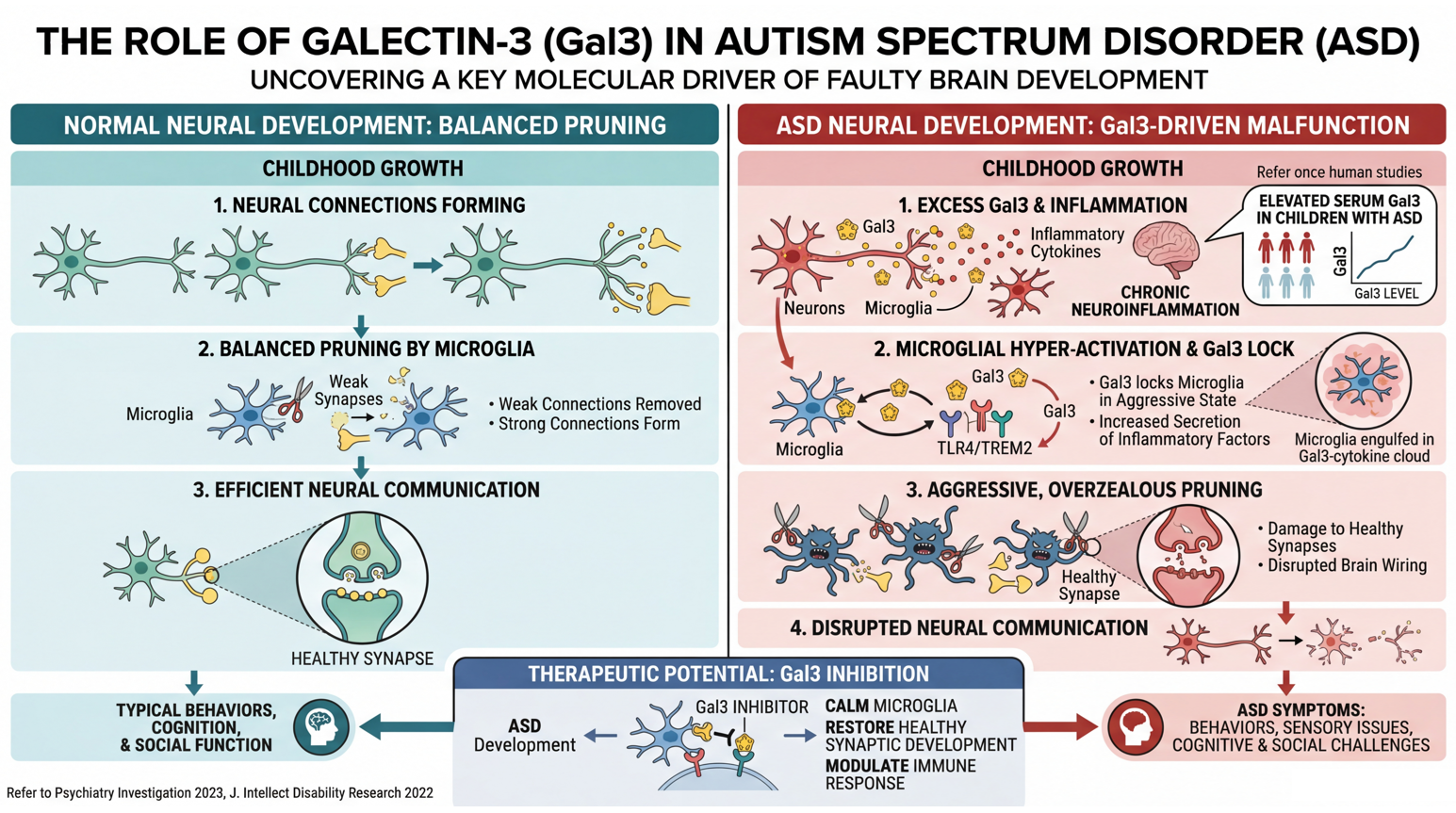
For many individuals and their families, the severe behavioral, cognitive, and sensory challenges associated with it can be profoundly difficult to navigate. For decades, science has viewed ASD almost exclusively as a genetic or behavioral condition. But a revolutionary shift is happening in neuroscience. Researchers are discovering that in many cases of ASD, the brain is experiencing chronic neuroinflammation—and a master immune protein called Galectin-3 (Gal3) appears to be pulling the strings.
By targeting Gal3, science is moving beyond just managing symptoms and looking toward treating the underlying biology of the autistic brain.
The Brain's Gardeners: Microglia and Synaptic Pruning
To understand how Gal3 impacts autism, we have to look at how a healthy brain develops during childhood.
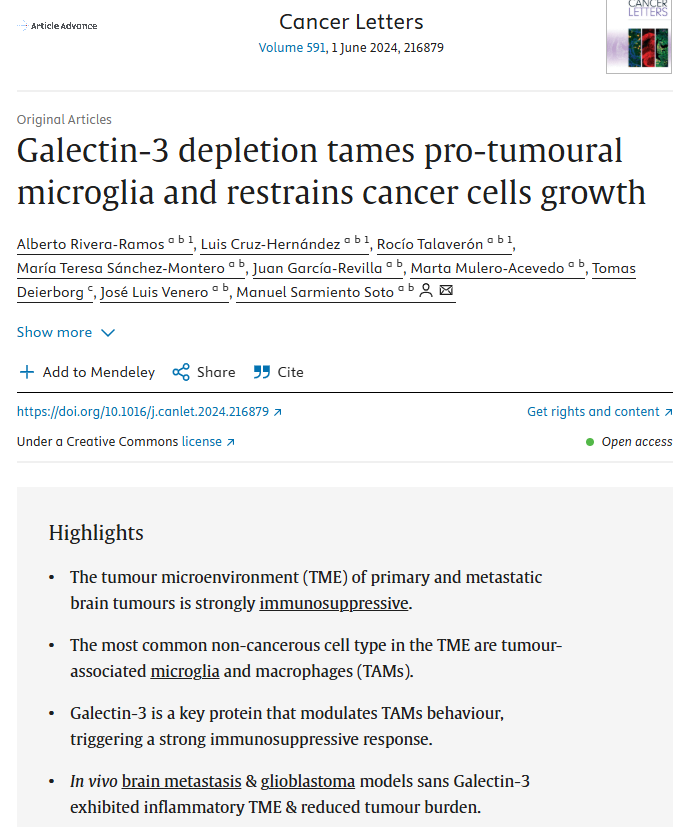
Our brains contain immune cells called microglia. During early development, microglia act like master gardeners. They perform a critical process called synaptic pruning—carefully trimming away weak or unnecessary connections between neurons so that the most important neural pathways can grow strong and efficient.
The Gal3 Disruption: In a brain developing with ASD, this delicate gardening process often goes off the rails. Recent research indicates that an overproduction of Gal3 is a primary trigger for this malfunction.
The Inflammatory Lock: Gal3 binds to microglia and locks them into a hyper-active, inflammatory state.
Overzealous Pruning: Instead of carefully trimming neural connections, these Gal3-fueled microglia become aggressive, damaging healthy synapses and disrupting the brain's ability to communicate efficiently.
The Result: This faulty wiring and chronic inflammation manifest as the core behavioral, social, and cognitive symptoms of autism.
The Clinical Proof: What the Data Shows
The link between Gal3 and ASD is not just theoretical; it is visible in human clinical data. Recent breakthrough studies have provided concrete evidence that Gal3 levels are fundamentally altered in individuals with autism:
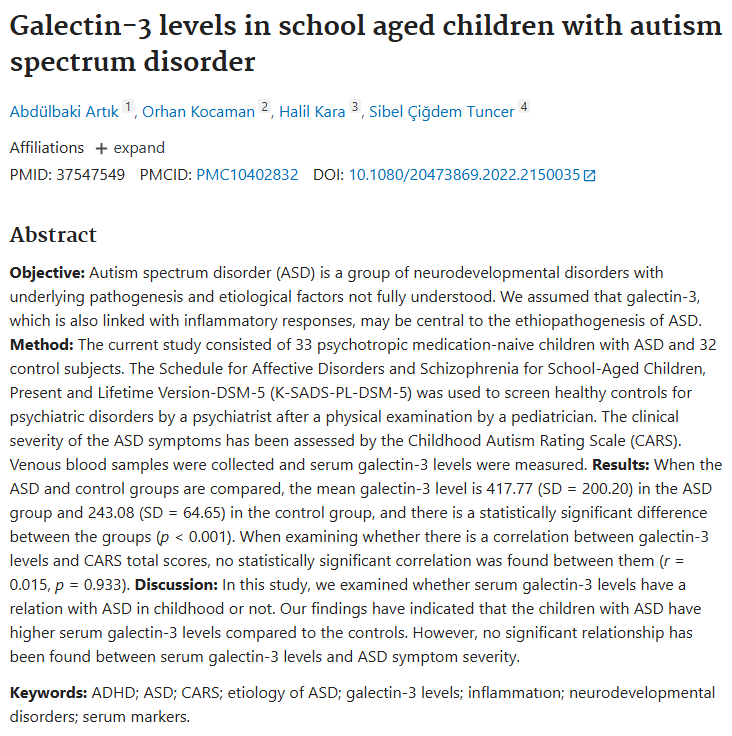
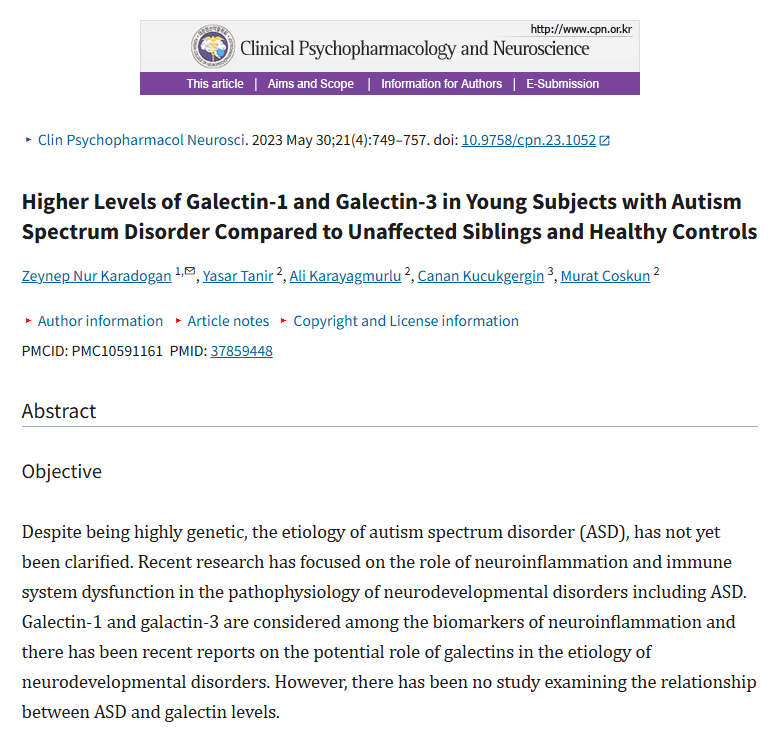
The Biomarker: In cross-sectional clinical studies, researchers discovered that school-aged children and young adults diagnosed with ASD have significantly elevated levels of Gal3 in their blood compared to their neurotypical siblings and healthy controls—in some studies, the Gal3 levels were nearly double.
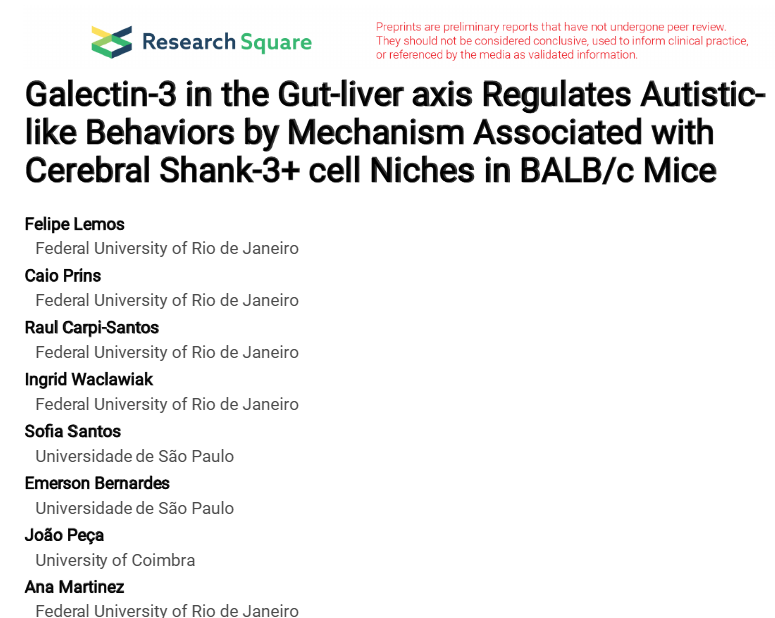
The Gut-Brain Connection: Science has long known that many individuals with ASD suffer from severe gastrointestinal issues. New animal studies suggest that Gal3 acts as a bridge in the "gut-brain axis," translating systemic inflammation in the gut directly into neuroinflammation in the brain.
Behavioral Impact: In preclinical models, when researchers pharmacologically lowered the abnormally high levels of Gal3 in the brain, neuroinflammation plummeted, and severe autism-like behaviors significantly improved.
"In the developing brain, abnormally high Gal3 acts as a false alarm, forcing the immune system to interfere with the delicate wiring of neural networks."
Scientific Foundations: The Evidence for Galectin-3 and ASD
-
![]()
Journal: Intellectual Disability Research
Galectin-3 levels in school-aged children with autism spectrum disorder (2022)
-
![]()
Journal: Clinical Psychopharmacology and Neuroscience
Higher Levels of Galectin-1 and Galectin-3 in Young Subjects with Autism Spectrum Disorder Compared to Unaffected Siblings and Healthy Controls (2023)
-
![]()
Journal: Int J Dev Neuroscience
Amelioration of propionic acid-induced autism-like behaviors in rats by fenofibrate: A focus on reduction of brain galectin-3 levels (2024)
-
![]()
Research Gate
Galectin-3 in the Gut-Liver Axis Regulates Autistic-like Behaviors by Mechanism Associated with Cerebral Shank-3+ cell Niches in BALB/c Mice (2021)