The Joint Destroyer: Galectin-3 in Arthritis
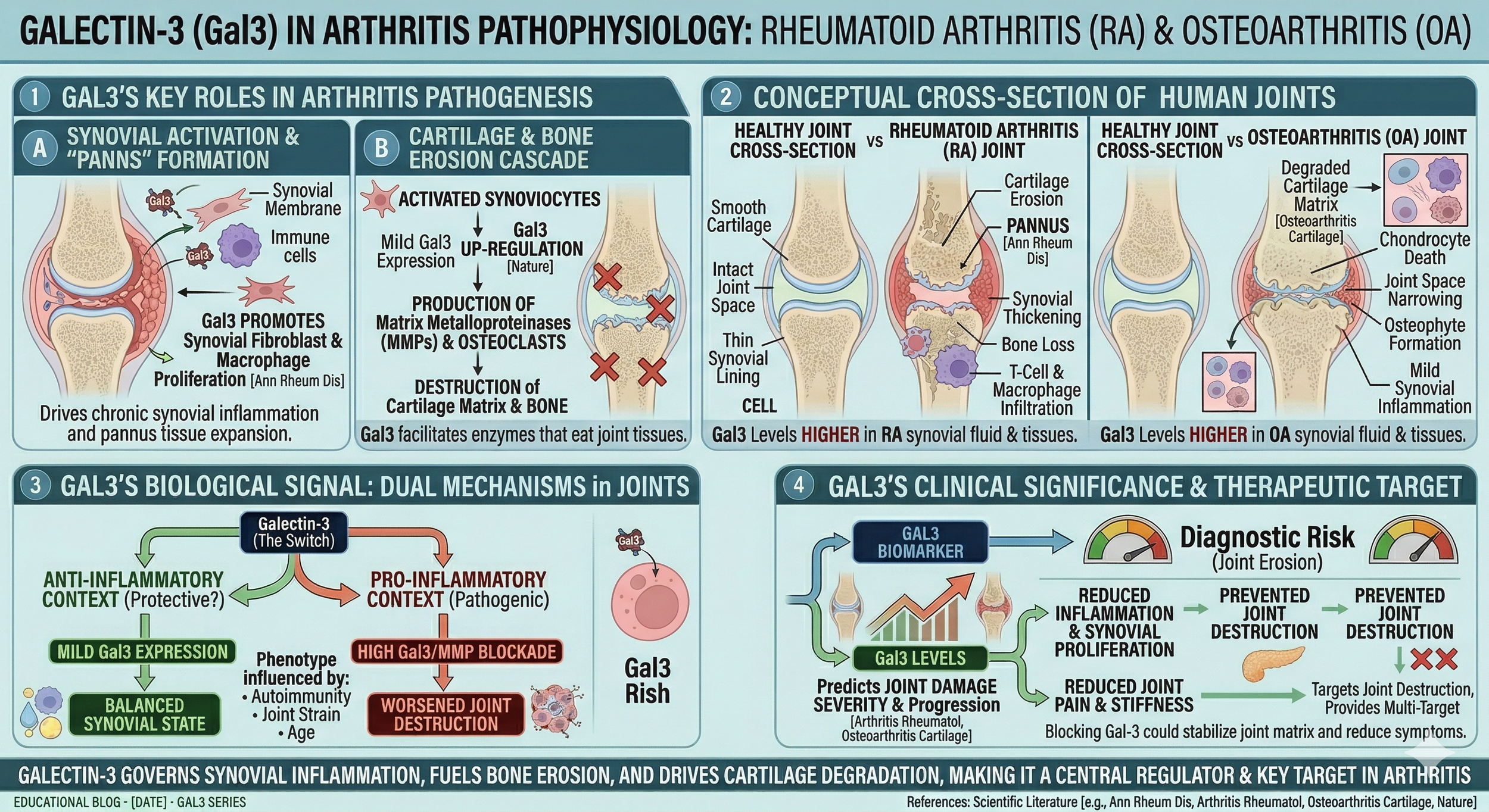
Arthritis is characterized by the breakdown of joint cartilage and inflammation of the synovial membrane (the lining of the joint). Gal3 is found in high concentrations in the synovial fluid of patients with active arthritis, where it serves as a key player in the disease's progression.
1. Rheumatoid Arthritis (RA): The Inflammatory Cascade
RA is an autoimmune disease where the body attacks its own joints. Gal3 is a major "alarm" signal in this process:
Synovial Expansion: Gal3 promotes the aggressive growth of synoviocytes (cells in the joint lining). These cells form a "pannus"—a thick layer of tissue that invades and dissolves bone and cartilage.
Cytokine Storm: Gal3 binds to receptors on macrophages and T-cells within the joint, triggering the release of TNF-alpha and Interleukin-6 (IL-6), which sustain chronic inflammation.
2. Osteoarthritis (OA): Cartilage Degradation
Once thought to be simple "wear and tear," OA is now recognized as having a significant inflammatory component driven by Gal3:
Matrix Metalloproteinases (MMPs): Gal3 stimulates the production of MMPs—enzymes that act like "molecular scissors," physically cutting and breaking down the collagen matrix of the cartilage.
Chondrocyte Death: Gal3 can trigger apoptosis (programmed cell death) in chondrocytes, the only cells responsible for maintaining healthy cartilage.
3. Gal3 as a Biomarker for Joint Damage
Clinical studies show that Gal3 levels in the blood and synovial fluid correlate directly with the severity of joint damage seen on X-rays and MRIs.
Early Detection: Elevated Gal3 can signal the transition from minor joint discomfort to aggressive tissue erosion.
Monitoring Treatment: A drop in Gal3 levels is often seen in patients who respond well to "biologic" therapies (like TNF-inhibitors).
Scientific Foundations: The Evidence for Galectin-3 and Arthritis
-
![]()
Journal: Arthritis Rheum
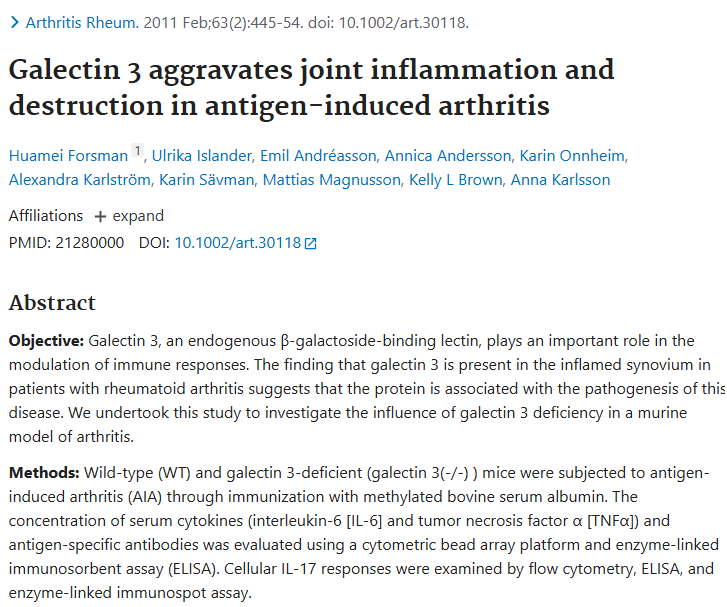
Galectin 3 aggravates joint inflammation and destruction in antigen-induced arthritis (2011)
-
![]()
Journal: Lab Invest
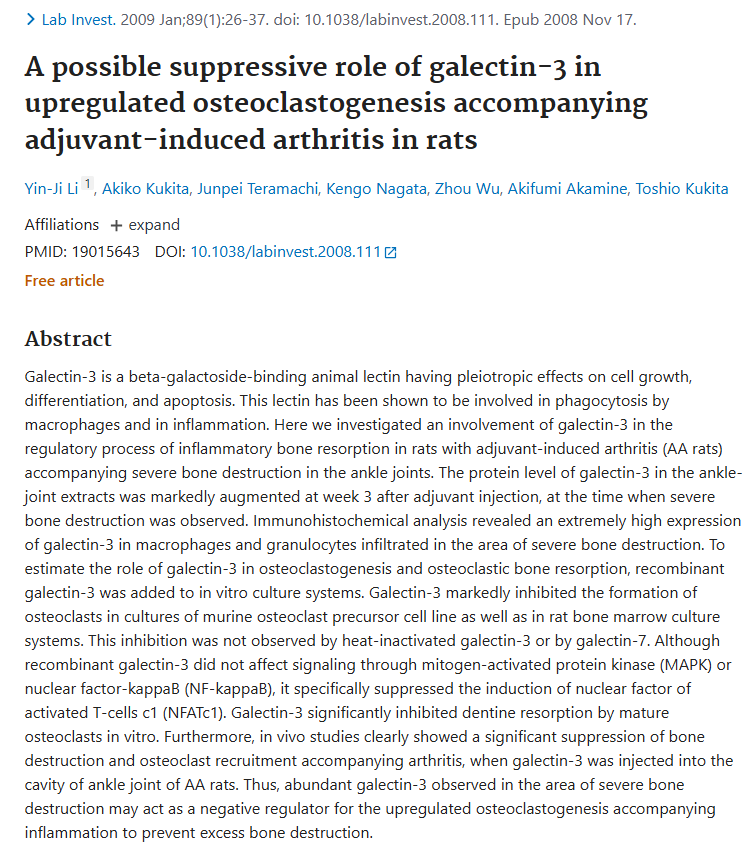
A possible suppressive role of galectin-3 in upregulated osteoclastogenesis accompanying adjuvant-induced arthritis in rats (2009)
-
![]()
Journal: Int Journal of Molecular Sciences
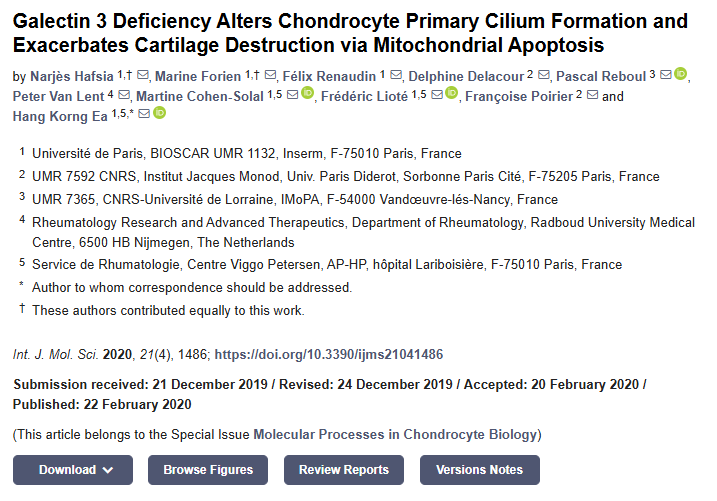
Galectin 3 Deficiency Alters Chondrocyte Primary Cilium Formation and Exacerbates Cartilage Destruction via Mitochondrial Apoptosis (2020)
-
![]()
Journal: Trends in Molecular Medicine
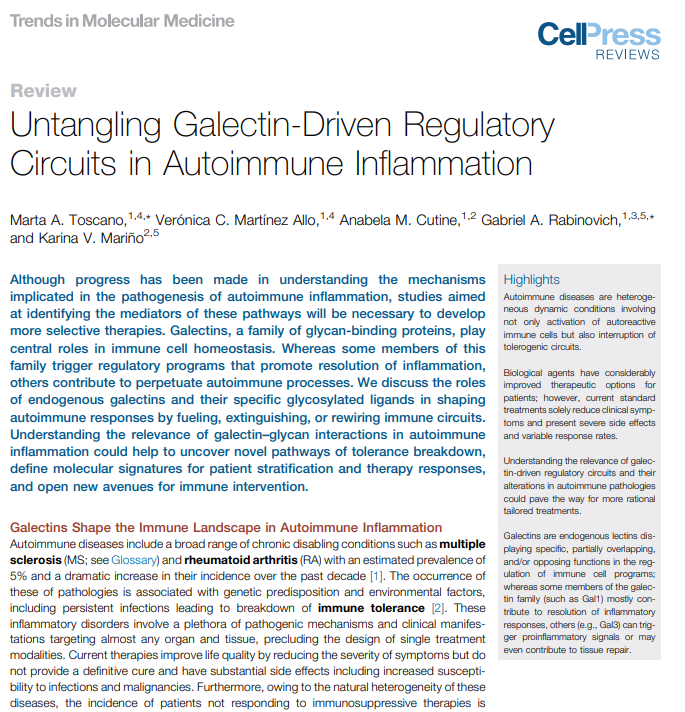
Untangling Galectin-Driven Regulatory Circuits in Autoimmune Inflammation (2018)