The Silent Driver: How Galectin-3 Fuels ALS Progression
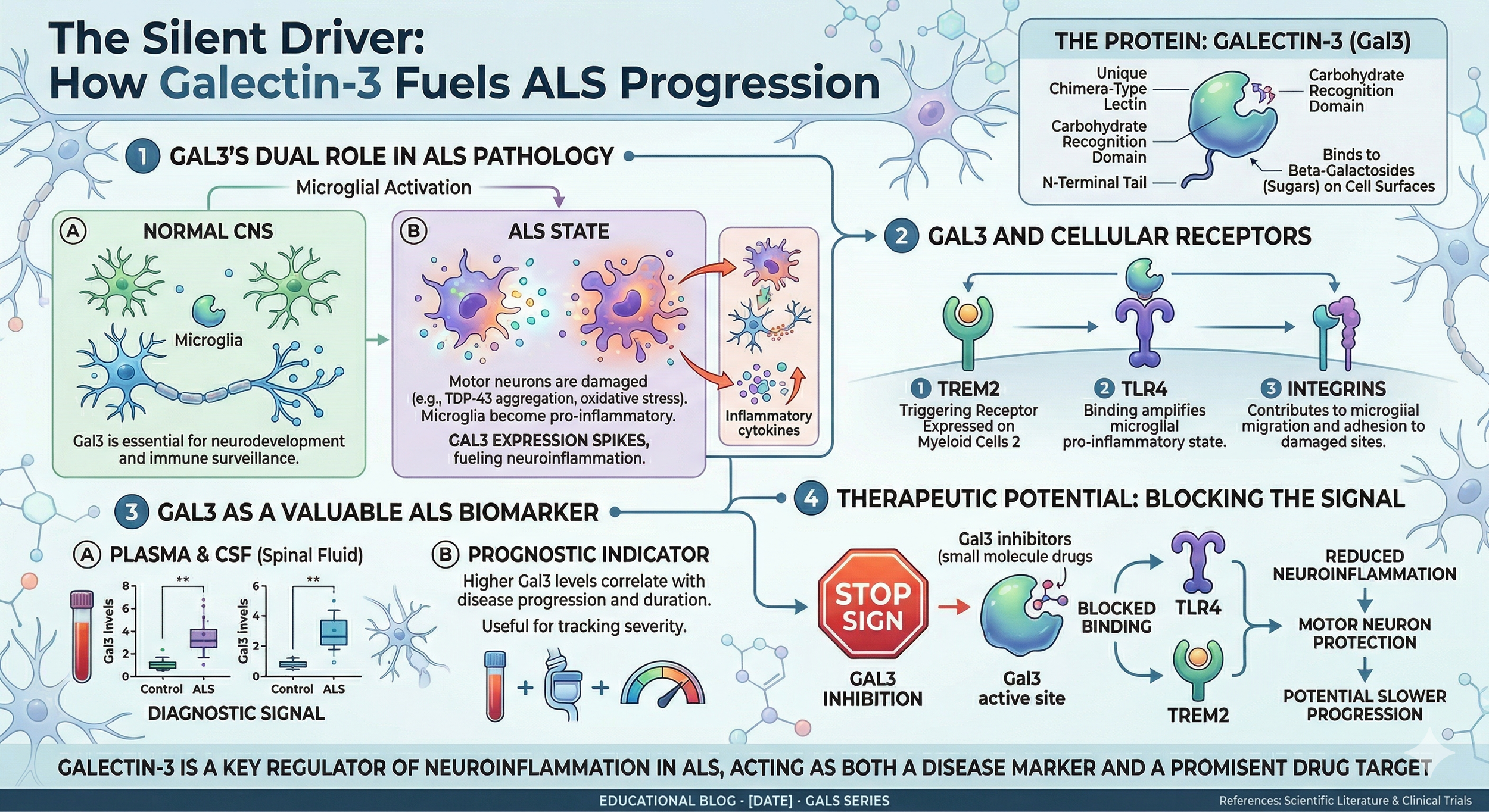
Amyotrophic Lateral Sclerosis (ALS) is a devastating neurodegenerative disease characterized by the progressive loss of motor neurons. While the exact cause is often elusive, researchers have identified a key "villain" in the microenvironment of the spinal cord and brain: Galectin-3.
The Role of Gal3 in the ALS Brain
In ALS, the death of motor neurons isn't just a "solo" event; it is heavily influenced by the surrounding immune cells, specifically microglia.
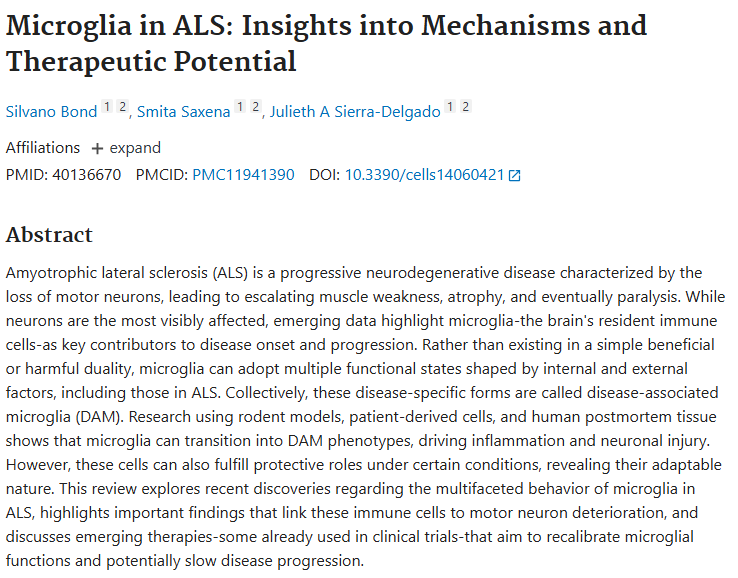
Microglial Activation: When motor neurons are stressed or dying, microglia (the brain's immune cells) flip into a "pro-inflammatory" state. Gal3 is the switch.
The Pro-Inflammatory Loop: Research shows that Gal3 levels are significantly elevated in the spinal cords of ALS patients. It binds to receptors like TLR4 and TREM2, triggering a flood of cytokines that further damage neurons.
Protein Aggregation: Much like in Alzheimer's, Gal3 may play a role in how toxic proteins (like TDP-43) aggregate and spread throughout the nervous system.
Gal3 as a "Bio-Marker" (The Smoke Signal)
One of the biggest challenges in ALS is early diagnosis. Gal3 is proving to be a powerful tool for doctors:
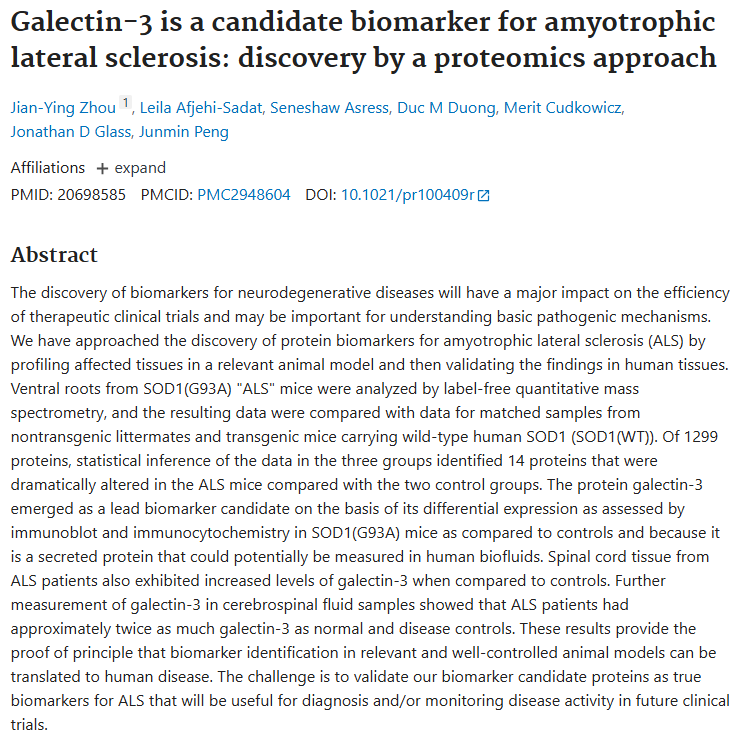
Elevated in CSF: Patients with ALS often show twice the amount of Gal3 in their cerebrospinal fluid compared to healthy individuals.
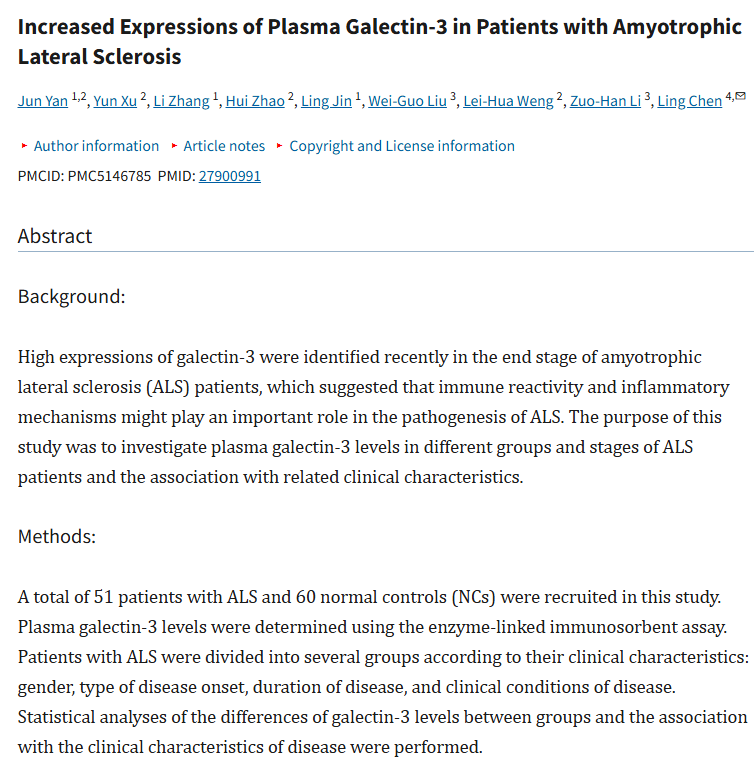
Predicting Progression: Higher levels of plasma Gal3 have been correlated with longer disease duration and specific types of onset (such as limb-onset ALS), making it a potential "gauge" for how fast the disease is moving.
Can We Block Gal3 to Treat ALS?
If Gal3 is the fuel, can we cut off the supply? This is the "holy grail" of current Gal3 research.
Genetic Deletion: In animal models (SOD1 mice), removing the gene for Gal3 has been shown to slow down disease progression and improve motor function.
Gal3 Inhibitors: Small and large molecules designed to block the Gal3 binding site are currently in various stages of clinical trials. The goal is to "calm" the microglia and give motor neurons a fighting chance.
Scientific Foundations: The Evidence for Galectin-3 and ALS
-
![]()
Journal: Proteome Research
Galectin-3 is a candidate biomarker for amyotrophic lateral sclerosis: discovery by a proteomics approach (2010)
-
![]()
Journal: Cells
Microglia in ALS: Insights into Mechanisms and Therapeutic Potential (2025)
-
![]()
Journal: Chinese Medical Journal
Increased Expressions of Plasma Galectin-3 in Patients with Amyotrophic Lateral Sclerosis