The Sticky Signal: Is Galectin-3 the "Missing Link" in Alzheimer’s?
The Shift in Alzheimer’s Research
For decades, the "Amyloid Hypothesis"—the idea that protein plaques alone cause Alzheimer’s—has dominated the field. However, recent clinical failures have led researchers to look deeper. Many high-impact papers suggest that the real culprit isn't just the plaque itself, but the chronic inflammatory response it triggers.
At the center of this response is a versatile protein called Galectin-3 (Gal-3).
What is Gal3?
Galectin-3 (Gal3) is a naturally occurring protein found throughout the human body. It acts as a biological "glue" and a signaling molecule, helping cells communicate and respond to injury. While it usually plays a helpful role in the immune system, recent groundbreaking research shows that in the aging brain, Gal3 can go rogue and actively drive the progression of Alzheimer's disease.
How Gal3 Builds Toxic Roadblocks in the Brain
To understand why Galectin-3 (Gal3) is so dangerous in Alzheimer's disease, we have to look at how it interacts with the specific proteins that destroy brain cells. Gal3 doesn't just stand by while damage happens—it acts like an architect and a biological "superglue," actively forcing toxic proteins to clump together.
Here is how Gal3 teams up with the brain's three most notorious troublemakers:
1. Amyloid-Beta 42 (Aβ42): The Sticky Bricks While there are different types of amyloid proteins, Aβ42 is the most toxic and the most prone to clumping. On its own, Aβ42 can eventually form plaques. However, when Gal3 enters the picture, it binds directly to the Aβ42 proteins.
The Gal3 Effect: Gal3 acts as a catalyst, rapidly accelerating the speed at which Aβ42 proteins stick together. It cements these proteins into tight, hard-to-break-down plaques, making it nearly impossible for the brain's natural cleanup crew to dissolve them.
2. Phosphorylated Tau (p-tau): The Tangled Wires In a healthy brain, tau proteins act like railroad ties, keeping the nutrient transport tubes inside brain cells straight and stable. In Alzheimer's, these proteins undergo a chemical change called phosphorylation (becoming p-tau), causing them to collapse into toxic, cell-killing tangles.
The Gal3 Effect: The massive inflammation triggered by Gal3 acts as a chemical signal that actively encourages normal tau to mutate into toxic p-tau. Furthermore, recent studies suggest Gal3 helps these toxic p-tau tangles spread from one dying neuron to the next, accelerating the shrinking of the brain.
3. APOE4: The Genetic Accomplice You may have heard of APOE4—it is the strongest known genetic risk factor for late-onset Alzheimer's. While not everyone with Alzheimer's has the APOE4 gene, those who do have a much harder time clearing toxic proteins from their brain.
The Gal3 Effect: Scientists are discovering a dangerous synergy between APOE4 and Gal3. The presence of the APOE4 gene seems to send the brain's immune cells into a panicked state, causing them to churn out even more Gal3. Together, APOE4 and Gal3 create a devastating tag-team: APOE4 weakens the brain's defenses, while Gal3 rapidly builds the toxic plaques and tangles, fast-tracking the disease's progression.
Microglia: The Double-Edged Sword
Our brains have resident immune cells called microglia. In a healthy brain, they are neuroprotective, clearing debris and supporting synapse health. But in Alzheimer’s, microglia undergo a "phenotypic shift"—they stop being protectors and become "pro-inflammatory" engines that damage neurons. Think of microglia as the brain's "trash collectors" and first responders. Their job is to patrol the brain, clean up cellular waste, and protect healthy neurons.
Here is how Gal3 disrupts this delicate system:
The Alarm Bell: When amyloid plaques begin to form, microglia rush to the scene to clean them up.
The Gal3 Trap: In the presence of Alzheimer's pathology, these microglia start producing massive amounts of Gal3.
Chronic Inflammation: The overproduction of Gal3 locks the microglia into a chronically activated, hyper-inflammatory state. Instead of clearing the plaques, they release toxic inflammatory chemicals that damage surrounding healthy neurons.
A Vicious Cycle: Gal3 binds to key receptors on the microglia (like TREM2 and TLR4), creating a feedback loop of runaway neuroinflammation that accelerates memory loss and cognitive decline.
How Galectin-3 Drives the Pathology
Orchestrating the "Lattice": Gal-3 is a unique chimeric lectin. It can "self-associate" to form a molecular web or lattice on the surface of microglia. This lattice traps receptors in an "active" position, keeping the inflammatory signal turned "ON" indefinitely.
The "Danger Signal" (PAMP/DAMP): Gal-3 is released by stressed cells as a "Damage-Associated Molecular Pattern." It signals to the surrounding tissue that there is a crisis, causing a cascade of neuroinflammation that is often more damaging than the original plaque.
Amyloid Aggregation: Gal-3 doesn't just watch from the sidelines; it has a high affinity for Amyloid-beta. It can actually bind to these plaques, making them more insoluble and harder for the body to clear.
The Therapeutic Opportunity
What makes Gal-3 a "goldilocks" target for drug development is its specificity. In a healthy brain, Gal-3 levels are nearly undetectable. It only appears in high concentrations during pathological stress.
By inhibiting Galectin-3, we aren't just treating a symptom; we are potentially halting the upstream signal that tells the brain's immune system to attack itself.
Scientific Foundations: The Evidence for Galectin-3 and Alzheimer’s
-
![]()
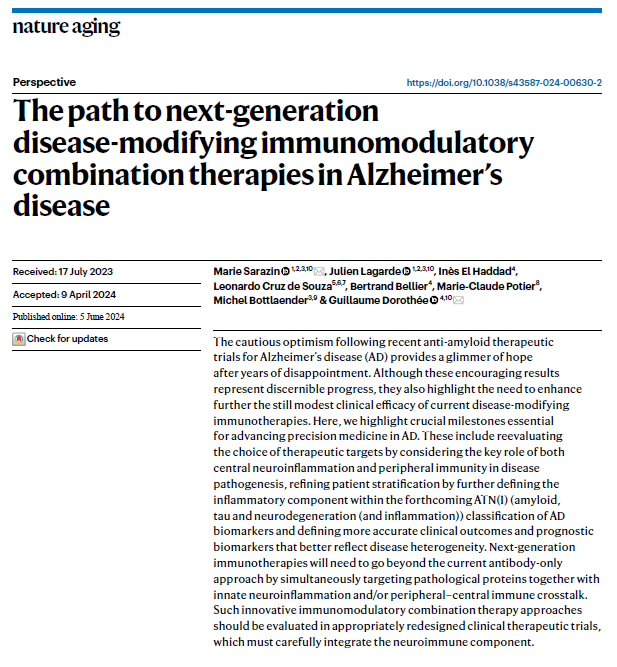
Journal: Nature Aging
The path to next-generation disease-modifying immunomodulatory combination therapies in Alzheimer’s disease
-
![]()
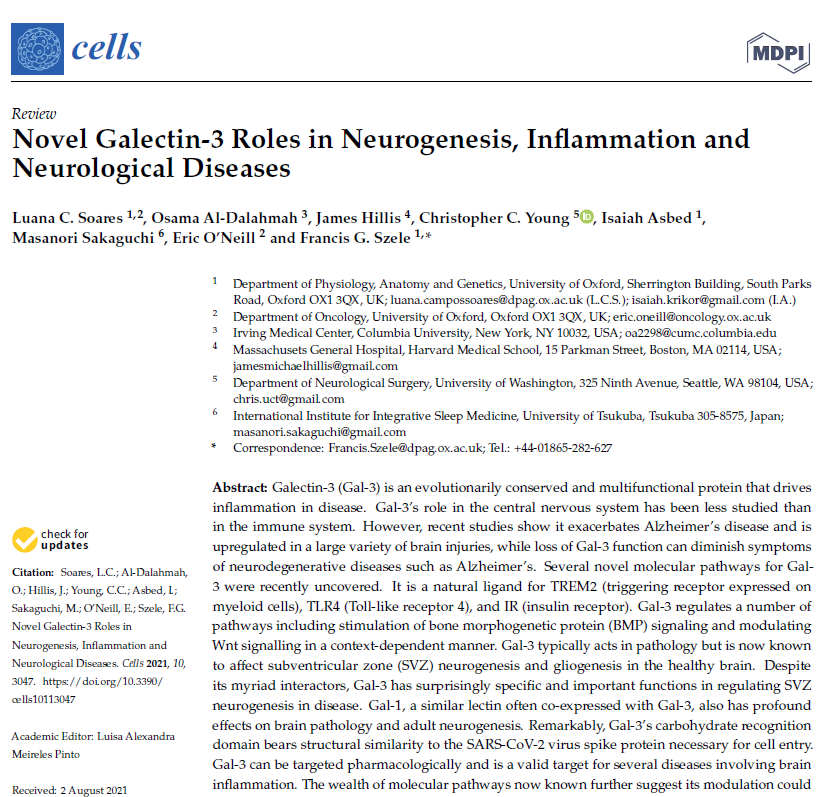
Journal: Cells
Novel Galectin-3 Roles in Neurogenesis, Inflammation and Neurological Diseases
-
![]()
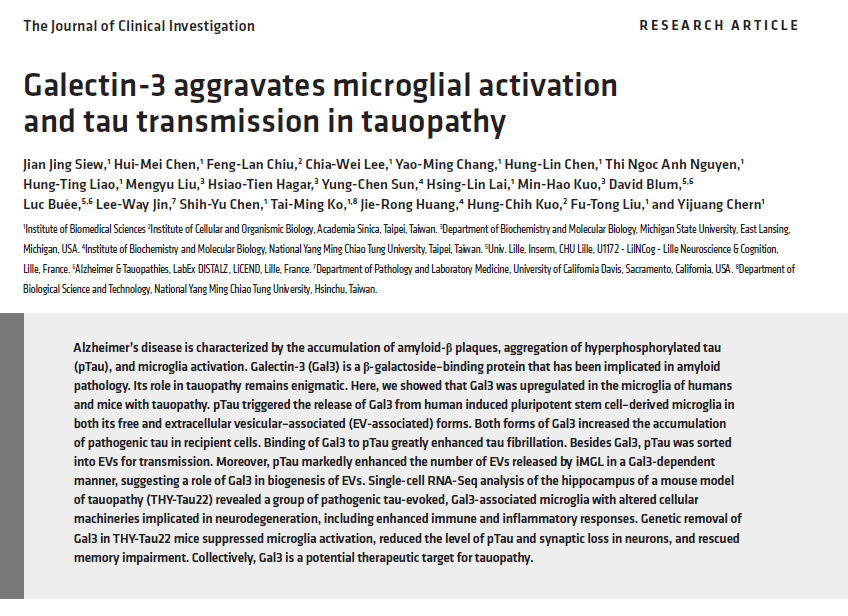
Journal: The Journal of Clinical Investigation
Galectin-3 aggravates microglial activation and tau transmission in tauopathy
-
![]()
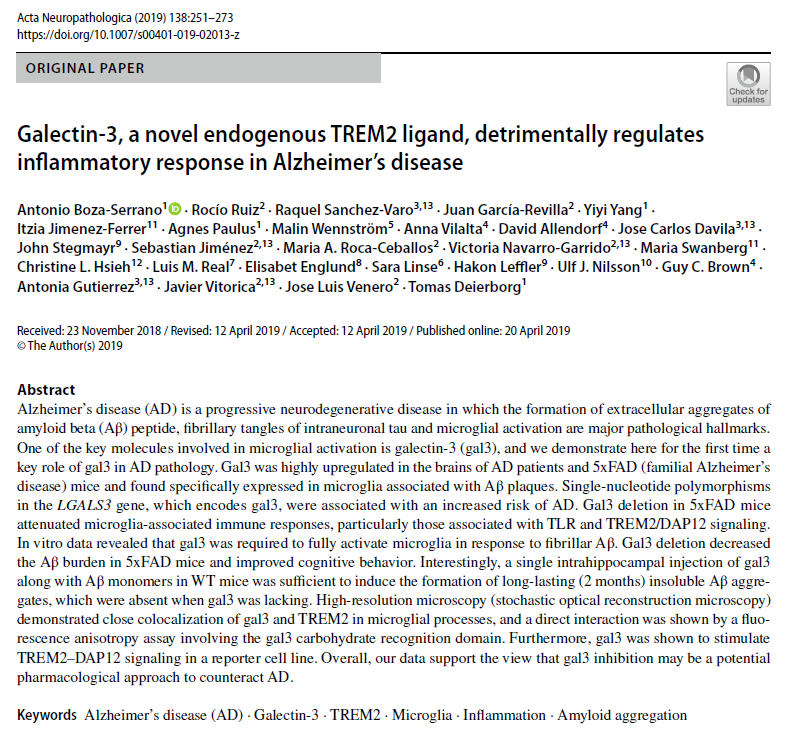
Journal: ACTA Neuropathologica
Galectin‑3, a novel endogenous TREM2 ligand, detrimentally regulate inflammatory response in Alzheimer’s disease
-
![]()
Journal: ACTA Neuropathologica
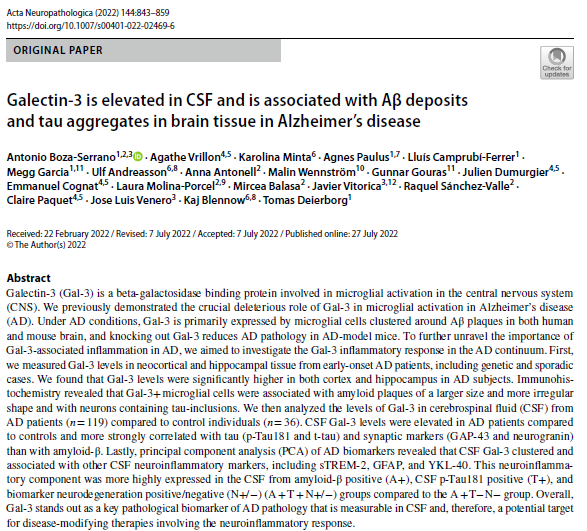
Galectin‑3 is elevated in CSF and is associated with Aβ deposits and tau aggregates in brain tissue in Alzheimer’s disease